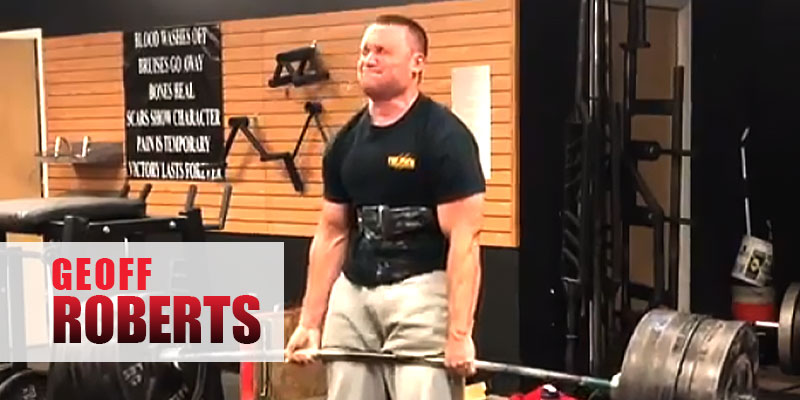
Imagine perusing the noble acquisition of greater strength while everything is pushing back at you. While your body isn't cooperating. Everyone and everything is telling you you can't. But you believe with every fiber of your being that you can. Meet the autoimmune train-wreck and his discovery of how to change his outcome.
{mp3}https://dts.podtrac.com/redirect.mp3/superhumanradio.net/components/com_podcast/media/mp3s/SHR_Show_2326.mp3{title}SHR_Show_2326{end-mp3}
Show Notes:
[4:00] Geoff was diagnosed with type I diabetes in 1995.
- About ten years later he was diagnosed with Hashimoto’s at the age of 21.
- After that, Geoff suffered Addison’s disease, an auto immune disorder that attacks the adrenal glands and results in bottomed out levels of cortisol, DHEA, ACE, and aldosterone.
- The sodium drop is the most dangerous part of Addison’s. In the same way that extremely high potassium levels can stop your heart, sodium levels that are too low can do the same.
- Addiosn’s affects around 2 in every 1 million men.
- Geoff is now on cortico steroids to replace cortisol and aldosterone.
[11:00] Geoff started lifting early on.
- He claims to be a chubby kid, and muscle appealed to him.
- Around his jr./ sr. Year of high school Geoff really started to pay attention to nutrition for basketball.
- Carl and Geoff discuss how you can always spit out something that you will regret later on.
[13:50] Geoff stumbled upon Pumping Ironat a video rental store as a teen.
- This was pre Addison’s disease.
[15:30] Using insulin to grow?
- Can obvioulsy be dangerous.
- Carl and Geoff discuss the insulin protocols of Milos Sarchev.
[17:40] “Endomorphs” and insulin.
- Insulin pre-workout for powerlifting protocols is discussed.
- Geoff prefers to err on the side of caution and use the minimum effective dose of insulin.
- Exogenous insulin can take a toll on one’s organs, as can exogenous cortisol.
[31:05] Does Geoff train fasted?
- No. He does fast though.
- He usually skips breakfast
- Carl and Geoff discuss the pros and cons of ground beef ( it is already partially digested, therefore more easily assimilated. Watch the iron levels though.)
- Geoff prefers less frequent, larger meals for satiation purposes.
- His diet consists mainly of low GI foods with healthy fats and ample amounts of protein.
- His diet is more paleo than keto.
- Geoff uses a “progressive overload” type of concept similar to that in Stan Efferding’s “vertical diet”.
[38:00] Adding fats to a meal lowers gasstric emptying and indirectly lowers GI of meals.
- Keto alone will not fix brain cancer. A caloric deficit is required.
[48:00] Geoff had to overcome negativity and block out comments from people that told him his goal was not achievable with his conditions.
[49:20] It took time to learn how to train hard and deal with the cortico steroids.
- Cortisone can make you feel great, but it will wreak havoc on the body.
- Laying in the sun or using small doses of melanotan 2 could help fine tune the adrenal receptors.
- Geoff’s disorder may be affecting the melanin in his skin, which could contribute to his problems.
[55:08] Geoff’s lifts.
- Stronger than he’s ever been.
- Has to reduce volume/ frequency.
- 685 competition deadlift.
[59:20] Sleep.
- Now that Geoff has his cortico steroids and diet in order, his sleep is much better than it was.
- He allows himself at least 8 hours of sleep.
- Geoff loves lion’s mane. He feels that it played a role in his ability to make a return to power lifting.
- Carl feels that nootropics such as lion’s mane improves bandwidth in the brain.
- Geoff feels that it helps to deal with heavy emotional endeavors as well.
- Geoff is also a fan of other medicinal mushrooms such as reishi, cordyceps, and turkey tail.
[1:06:41] Geoff further discusses his meet lifts.
- His best bench is 385.
- Carl recommends a liquid skin type bandage to Geoff in case of lost callouses.
- Geoff doesn’t squat competitively but he has squatted 525 for several reps.
[1:12:45} Geoff’s thoughts on how his disorders came to be.
- Possibly hereditary (diabetes)
- Living around power lines.
- Carl recommends LL-37 to Geoff for potentially aiding in gut health (and thusly auto-immune disorders)
[1:17:00] Geoff purposefully consumes as much sodium as he can.
- This is common practice in powerlifting and was popularized by Stan Efferding.
- Dr’s may tell you to reduce sodium intake if you have kidney problems. However, studies show that taking baking soda or regular table salt reduces chronic kidney issue symptoms.
- If you don’t have salt in your diet, the kidneys actually have to work harder to sequester sodium from other places.
- Lack of minerals in the diet can actually speed up kidney disease.
{spoiler spoilerID,Click to read Show Transcript,Click me to close}
[00:00:00] Hey, welcome back to another episode of superhuman radio. I had intended to have a Facebook live going this morning, but we ran into some camera problems. I really thought a need to start doing the camera test days before the actual podcast. I've been so lucky with the having things work out. But lately it's been less and less more and more problematic to get all these different [00:01:00] cameras working at the same time.
[00:01:01] So we're doing the fall back. Which is really what built this shown that is the audio podcast and those of you who are listening to the live stream are here but those who are going to Facebook live. Probably wondering what the hell happened. Sorry about that at any rate, you know, we've started to do a series called meat off super humans, and these are people who are in the audience average people doing amazing things with their lives in the face of adversity challenges.
[00:01:33] They are not sitting back and saying woe is me why me, you know who's going to help me but they're literally grabbing ahold of life in a headlock and saying no. No, you're coming with me. I'm not doing what you want me to do. And Jeff Roberts is one of those guys. I've known Jeff for a long time.
[00:01:53] Hey, welcome to the show Joe. Hey Carl, thanks for having me on man. It's a pleasure. Yeah, so, I mean your [00:02:00] story is really inspiring yet. You don't really tooth the whole inspiration horn you you're not one of those guys out there going, you know, if you have excuses look at me. In fact, I didn't even know you had or have the challenges that you have.
[00:02:17] Watching your Instagram posts and stuff like that. So let's let's start with this before we talk about how you became interested in physical culture. When when when was the earliest that you started getting diagnosed with what is really as you like to call it the trifecta? No. No you call it the the autoimmune Trainwreck.
[00:02:37] I'm calling it The autoimmune Trifecta. When did you first discover that you had some problems? Yeah, I guess technically it's called colleague glandular syndrome. I believe I'm saying that right. Were you you develop three separate autoimmune disorders before the age of 30, which is exactly how it happened with me, but it would be geez, [00:03:00] I guess 1995 when I was 8 years old.
[00:03:04] I was diagnosed with type 1 diabetes. I spent a week in the hospital. And then live with that until you know until today honestly, but I got I was diagnosed with Hashimoto's which is thyroid disease when I was I was 20 years old 21, maybe I probably had it longer than that, but it's easy to go on guys going to tell you it's a lot easier to live with a malfunctioning thyroid than it is to live with a malfunctioning pancreas because one will kill you.
[00:03:40] They absolutely yeah, but the signs of the obviously the signs of diabetes were obvious. I mean, I was clean constantly drinking constantly losing weight for no for no reason and I was a chubby kid. So when I became skinny in one summer, we knew something was up something [00:04:00] was awry but and then in April.
[00:04:05] April 2013. I was training for a meat actually and my buddy my old my training partner then TJ. We went to his house. We're doing a bench workout is just warming up, you know and hundred eighty-five pounds. And as I as I warmed up my body just started to. ache ache all over it's hard to even explain like it was just aching everywhere thing with wrong you something.
[00:04:32] Oh, yeah, you knew something was wrong. Oh, yeah severely wrong, so I drove home. And I told you know, my wife was she she's used to she's used to me complaining about different. I mean, I was a powerlifter, right so I had pains and aches and you know, whatever like she didn't really take it that seriously, but she was going to go get groceries and I told her I'm like hang out here because I don't feel [00:05:00] good at all and luckily she did and long story short.
[00:05:03] I ended up in the hospital. Almost died from I mean most Addison's patients will tell you that it almost took them out at some point because it's so rare that they don't know what it is. When you go to the hospital which in hindsight was kind of ridiculous because I already had two autoimmune disorders and then I had very very low sodium in very very high CPK numbers.
[00:05:28] So the doctors. I was so my numbers were so abnormal. The doctors were actually avoiding my room because they didn't apparently they didn't want to be involved with my dad didn't want to tell you what this one this wasn't a cake and easy to win case. They were like nah, we we probably don't want to have our name on that chart exactly.
[00:05:51] It was it was bizarre. They would come in. To the room. I was in the emergency room and they would just oh, you know, we're not sure maybe you [00:06:00] maybe you hurt your neck when you were training. I mean, you know, we're not really sure they would leave and we were just it was very bizarre and then I didn't my endocrinologist at the time who ended up diagnosing me and saving my life.
[00:06:13] Basically, he told me later that that's what they were doing. They were so. Startled by my my blood work. I mean they were giving me Triple saline solution and IV in my sodium wasn't moving at all, but they didn't get so let's let's let's try to put this all together. So first of all, you already have the type 1 diabetes you discover a sounds like a couple of years later that you have viroid problem.
[00:06:42] Probably. Yeah 10. And years. Okay later. Okay, I'm sorry. Okay, ten years later. And then and then you discover that you have Addison's which is the opposite of Cushing's explain to people what Addison's disease is because it's not a common disease where people know what hypothyroidism and [00:07:00] hyperthyroidism is explain what happens to the adrenal glands in this condition.
[00:07:06] Well, yeah like. Similar to diabetes. It's an autoimmune disorder where the immune system attacks your adrenal gland. So essentially what happens is you no longer produce cortisol, which sound and that'll be that'll kill you and I'll kill you that'll Kill You by itself. Oh, yeah, it certainly will and you also don't produce DHEA and you know, the hydro EPI and roaster.
[00:07:33] Ohm, which is like the most common hormone in the body. You don't produce aldosterone. I was just going to say aldosterone you don't you don't produce you don't you don't produce Angiotensin converting enzyme which is going to gonna make your blood pressure bottom out where you going to stand up and want to pass out.
[00:07:51] I mean, it's like yeah, this is a life-threatening. This is of all of the. Glandular issues most of them you can live [00:08:00] with for a while, but having both type 1 diabetes where your pancreas tanks and now your adrenal glands are tanking. This is really this is this will shorten your life. Typically.
[00:08:11] Typically I say and I want to emphasize that word right or absolutely it almost ended my life at 26, but. Yeah, so that's basically what what it what it amounts to in the thing is usually initially the sodium drop is with most dangerous. Yes, because without aldosterone you don't retain sodium and without sodium you you can't survive.
[00:08:37] Yeah. Well your heart doesn't beat. I mean a lot of things go wrong at that, right so. That's basically what it is. So there's a there's a and the other thing about it is because it's so rare. Like you said, it's something like a couple like to for men. It's like to and every 1 million men right Addison's disease, right?
[00:08:56] I mean ultra rare but [00:09:00] slightly more common in women. It's like a few and every hundred thousand something along those lines. But so the way that it's dealt with is. Corticosteroids essentially to replace one corticosteroid to replace aldosterone that I'm on a second to replace actual cortisone hydrocortisone, right?
[00:09:21] You think hydrocortisone, right? Yeah, and that's really it but they say it's funny because. The endocrinologist don't really I've been to many endocrinologist. They don't really know. It's such a rare disease. It's really not well understood even to this day. Like when I first got it and you only talk in six years ago it was.
[00:09:48] The thought that you had to stress dose your hydrocortisone now, they're thinking maybe you don't really have to do that. They weren't sure that the dosages so people were taking. I've met plenty of [00:10:00] people who are taking way too much hydrocortisone, right and they're in and out of the hospital all the time getting because it's destroying them.
[00:10:07] It's destroying their immune system. Right? It's you know, they they lose all muscle tone. They get you know, they end up because those corticosteroids are are very bad for your you know for your system, right? So, okay, so so so and so from the time that you develop type 1 diabetes. When did you start when did your love of physical culture occur in the end the end of 3 and the manifestation of these three conditions over the course of let's say a decade.
[00:10:38] Where in there do you go? Hey, I think I'm going to start weightlifting. Ha ha man, huh? Honestly Way Way Back. I mean I was I was a chubby kid, you know, I got John Anderson on the show last show and. You said to him that you had a similar upbringing to him? Well, I have a [00:11:00] single similar upbringing to both you guys.
[00:11:02] I was a chubby kid who was picked on and all that all that mess and I was probably starting in man. Very young. Maybe 10 years old I was doing you know. Dumbbell curls and sit-ups in my you know watching Rocky right and doing that in my in my bedroom and I was always I was always fascinated with like strength and muscle even wear as a as a very very young kid, like watching the wwwf back then it was always something that intrigued me like people who are very muscular and very powerful but what really kicks out I would say it was probably like junior senior year of high school.
[00:11:45] In in nutritionally, that's when I kicked on physically like I was working out in my in my you know in my bedroom at my parents house for years when I was a little kid and but [00:12:00] when I really started taking notice of nutrition was what I was playing high school basketball my senior year. I saw this our coach actually told us a story about Thurman Thomas.
[00:12:13] The he was a running back for the Buffalo Bills back in back in like the 90s and he tells a story about how he was doing a Lay's chip commercial and after every take he would spit the chips out into the garbage you have to chip, you know. In the people asking like what are you doing? How come you do that?
[00:12:32] And you said I would never put something like that in my body. Oh man. He's doing the frigging commercial for it. How friend unbelievable is that and that just resonated with me. I was like, oh man, that's that's true. Like we have the choice of what we put in our body and it can really make a difference and honestly like a light bulb went off that day and I already been training and I think about this that I just dawned on me you have every moment up until that time that you.
[00:12:59] Like I [00:13:00] know people who choose stuff and spit it out so that they can feel like they taste it. You're still swallowing some of that but I mean think about that you can spit that thing out right now that you're eating that you're going to regret later. Yes spit it out. That's so cool. Yeah, that's so cool.
[00:13:13] Yep. So yeah that really resonated with me and I ended up I mean, I don't know. I don't know what I was doing. Obviously. I was eating Wheat Thins and turkey sandwiches, but I thought I was doing something good. It was better than. Not eating at all or eating, you know Nutty Buddies or whatever. I was doing back then right?
[00:13:32] So see it really started there and I was a played basketball and I was like an athlete, you know, but to hold bodybuilding thing started when this is a good story my one of my best friends Ryan. My buddy Ryan he worked at a this is back in there were video rental stores. He worked at a video rental store and I went there because I was young and I had no responsibilities and I was bored.
[00:14:00] [00:14:00] So I just went there with him to the rental the rental store and we're just like hanging out. He had like a four-hour shift. We're just hanging out with the rental store like watching movies. I was walking and I happened to stumble upon pumping iron in the rental store. Isn't it funny how that if that movie affected so many people I want to watch that movie before training sometimes.
[00:14:23] Yeah. Yes, so I picked it up and we put it in mostly As like I was intrigued by it because I'd always been kind of fascinated by muscle but. We put it in kind of as a joke, and we watch the whole thing. And it was just like that was it, you know, I was I fought with my parents about putting a gym in the basement, which is a horrendous idea.
[00:14:46] They were your parents are usually right and that was a horrible idea, but then my buddy, you know, coincidentally like a week later my buddy. John was asked me to go to the gym with him like a local YMCA and I just I got this I was training [00:15:00] back using all arms, and I remember getting this arm pump and just.
[00:15:03] That was it. Like that was all she wrote and then I started getting to you know, learning about Victor Martinez and Dexter Jackson and and I would just became obsessed with with bodybuilding and all this was pre pre Addison's probably say somebody was but it was it was post type 1 diabetes and it was it was post hypo destruction of your thyroid.
[00:15:24] So did you did you start to learn about using insulin to grow? Yes. Yeah, I would say I mean you got it. I mean look insulin is scary crap. I mean it really is I mean if you get it wrong you could die and there's a lot of body builders out there and would be body builders that are using insulin.
[00:15:48] It's hard to come by and you have to have a sense of comfort. And confidence in your ability to use it you already had that you had access to it. And you had the ability [00:16:00] to understand. Oh, yeah when I don't eat this I get woozy and and so it would be a natural for you to go. Okay. I'm just going to take my insulin after I work out, right?
[00:16:09] Yeah the a certain learning about that pretty early on we going in from one of those one of the Magazine's I think it was. Maybe Bob Bob chick talking about insulin Spike and all that stuff at some point. I would I would have I would have thought I would have thought you were gonna say Milos ourselves because we locate when I when I did with topic for Dave Palumbo Aaron and I interviewed Milos and Milos was then promoting pre-workout insulin and intra workout carbohydrates while you were training.
[00:16:47] Did you hear about that? Oh, yeah, absolutely. No, but people go me. Laughs you crazy. People are gonna go with the comb has no know if you use if you use small amounts of insulin pre-workout and you make sure that you have a [00:17:00] drink filled with you know, a hundred fifty two hundred grams of carbohydrates and you sip it throughout the workout.
[00:17:04] He said the insulin forces the glycogen right back into the muscle and it looks like he was right because a lot of people do that today. Yes, and I mean back when he when I became really aware of me while she was training Johnny Jackson, he tatata and back wolf and I at the time they all came in their best-ever under me low.
[00:17:28] So I was like this guy, you know, they must know what he's doing. But I love me those interviews. I've listened to all of them danced once yeah, but yeah definitely but the only problem with me using in science because I'm mostly in endomorph. I was a moon face fat kid most of my life. So I if I really like I get fat for ye, so I have to be careful using but I'll do you if I'm going to eat.
[00:17:55] I mean very low called almost all the time. But if I do eat carbs around [00:18:00] its around training and sometimes I even with my powerless and workouts. I'll cover the workout because it's so anaerobic. That it increases my blood sugar. So I have to take insulin pre-workout just to cover the intensity of the work.
[00:18:16] All right, I'll be in. All right. All right, but we got I did learn about that and I experiment with it went out with it when I was younger, but to be honest, I don't really utilize it that much just because it's. I'm usually airing are erring on the side of you know, trying to not use it at all too much right because I mean, I mean ideally ideally but what people don't realize about exogenous insulin is that while it keeps you alive.
[00:18:47] It definitely takes a toll on the body over time of using it because it's so far into the body the insulin to turn on and off. The way it does even if using a [00:19:00] long-acting insulin product the way it does insulin actually not only pulses but it oscillates. There's a constant feedback by the body to the pancreas and so be caught because the body doesn't want a tank out and lower blood sugar too low and so it'll always it'll always go and keep blood sugar higher.
[00:19:27] But what it does is it awesome literally oscillates the production and it's getting feedback all the time. That was too much that was too little that was too much that was too little so when you use exogenous insulin, you're getting this this mono lithic increase in blood insulin that is foreign to the body and that in and of itself takes toll.
[00:19:51] On the organs of the body. So you're smart to say, you know what I'd really like to use as little as possible in my life. Right? [00:20:00] That's really the same story applies to cortisol. Yes the way that the body produces cortisol, like people don't even realize waking up in the morning you produce cortisol to yourself going, you know, we're like that doesn't happen when I wake up in the morning.
[00:20:15] But yeah, I think. I actually Ron Norman taught me that about how insulin is damaging like exaggerated insulin is damaging because of everything you just described. Oh, yeah, and I even like when I started learning about insulin as a you know, as a wannabe bodybuilder back in the day, I did realize that it looks like for my body type the.
[00:20:43] The the the smallest amount of the best, you know is the best case scenario and I've pretty much done that for for the hole. For my whole time being in you know physical culture, as you said I think for me if I were to I don't know. I mean I [00:21:00] just I weigh 215 pounds right now, maybe 2/10. I mean if I ate high carbon took insulin, I could be to 35 to 40 in a heartbeat.
[00:21:10] Yeah, but most how might be fat right right at his school. That's the problem. Look I want to I want to take a break and when we come back, I want to pick it up on the other side. Of the break and start to talk about you. I mean you've been run over by these conditions in the past few years and but you have worked hard to overcome and continue to get stronger and continue to re-partition your body.
[00:21:38] Let's talk about that when we come back. Okay? Okay. I so stay tuned. We'll be right back with more of superhuman radio talking with Jeff Roberts will be right back. Welcome back. So I found something I really like and there's a lot of stuff out there that's distracting and not worthy of your time or money, but I found some that I like a [00:22:00] lot because you can actually feel it.
[00:22:03] Many of you have heard of for Sig Matic, they produce infused mushroom infused and cordyceps infused teas and coffees and drinks and some really great stuff. So I've been using their coffee and it definitely makes you feel different than just having regular coffee. First of all, it's organic which is big deal to me, but the really important thing is, you know, Can I have a cup of coffee and not necessarily feeling but they have this coffee that's infused with lion mane mushroom doesn't taste like mushroom taste like coffee, but I got to tell you something.
[00:22:44] There's no doubt in my mind that the lion mane is doing something and I was talking to a friend of mine about this a few days ago, and he wanted to know if I thought it was a placebo and I said look. Why would you find it so hard to believe? [00:23:00] That a mushroom could improve cognition you don't find it hard to believe that psilocybin makes you trip and he was like dude.
[00:23:08] You're right. Of course. I'm right mushroom is mushrooms are magic. They really hard there's a lot of magic to mushrooms no pun intended. And right now you can try for Sig Matic products and get 15% off as being part of the supremum radio audience. If you go to the website fo you are SI G. M-- ATI c.com /sh are I promise you won't be disappointed at all.
[00:23:34] Look they have. Green tea infused products. They have coffee infused products. They have cocoa infused products. They have everything that you can imagine and different mushrooms do different things. just like. We hear about other plant based products and so they pick the things out that and they categorize them.
[00:23:59] So, you know, [00:24:00] this is going to calm you this is going to make you sharper and so on and it's really an amazing product. It doesn't taste like mushroom. That's the other thing there's people out there who think oh, I don't like mushrooms. You don't taste the mushrooms. You don't taste the mushrooms in the mock the matcha tea, you don't taste the mushrooms in the coffee, but it definitely is doing something.
[00:24:23] There's no doubt in my mind about it. And again, it's 100% organic arab' Arabic. How do you say it Erica are of 100% organic coffee? I don't have to use that word to remind myself of what I'm drinking. But it's really a cool product and you should check it out. Again. The website is for Sig Matic.com fold flesh shr.
[00:24:44] And that's fo you are SI G. M-- atic.com. Check them out. Tell him Carl sent you you'll love it. We're talking with Jeff Roberts. His story is inspiring. If one person in this audience gets inspired to [00:25:00] change the outcome of Their Own live. I mean this guy he didn't have one problem. He had three different problems each of them in and of themselves disasters.
[00:25:09] So in physical culture you discovered that the food you eat actually has an effect on your body, right it it'll make you fatter. It'll make you more muscular to make you leaner. So when did you connect like wait a minute? Maybe the way I eat may actually change my outcome. Yeah, like I said early on I mean, I think I think the my mindset in the beginning was I have these have these elements that I'm dealing with.
[00:25:44] I have to do everything I can to counteract them, you know. I I'm I'm at a disadvantage compared to a healthy person and if I need to do everything I can [00:26:00] to tip the balance in my favor and one of those things obviously is is nutrition and through the years. I I tried many different diets Styles. I mean early on it was more like a like a kind of a lie, so.
[00:26:19] Like an ISO caloric type diet where I had sort of an even amount of fats proteins and carbs. Then I went to a diet. That was low fat low carb high protein then, you know, I went to very high fat but not necessarily good fat low carb, and now I've kind of settled in the Middle where I eat. High fat high protein but but it's it's from quality sources and I recently like it's taken a long time for me to figure out the best diet to manage Addison's disease and I think I've [00:27:00] come to I've come to a point where I have it down pretty good because I've never been I never thought.
[00:27:08] Got with Addison's disease. I would ever be able to compete in power to them or just be like very strong again everything I heard when I got the disease was was against being able to do that in every sense of the word but through like Diet manipulation and just you know getting in there and doing it I've been able to.
[00:27:33] You know overcome and I guess so talk about your talk about your diet more specifically give people an idea of how you eat and what you eat. So do you are you do train fast that I guess you that's a dangerous thing for you to try to train fasted right? I don't train faster, but I do fast almost every day.
[00:27:51] What I'll do is. I don't eat breakfast. So. I wake up in the morning for [00:28:00] whatever reason. The only time of day that I'm not hungry is in the morning when I first wake up plus what I do eat first thing in the morning. I have no matter what it is. It just doesn't digest right it makes me feel sluggish.
[00:28:12] I just don't like I just don't like eating when I when I first wake up plus you have the benefits of fasting. So the first meal I eat will be at lunch time and you're looking at it could be chicken. Chicken with a green a green vegetable and olive oil like olive oil dumped on it. It could be ground beef.
[00:28:38] I do a lot of ground beef generally like 85/15 grass-fed organic ground beef watch your iron levels. Yeah, yeah watch your iron levels going when next time you get blood work done. Make sure they do ferritin and T IBC. Okay for direct iron and just you know us guys [00:29:00] we accumulate a lot of iron and it could be leading to a lot of things that we consider part of unhealthy aging including neurodegeneration and so on till just keep an eye on your iron and and once in a while donate blood and if you can't donate blood to the Red Cross because of your conditions your physician.
[00:29:19] I can write you a prescription for therapeutic therapeutic phlebotomy, and there are Blood Centers in your town where they take your blood but they don't save it. They just throw it away. But yeah, get it get you know, make sure you make sure you watch your iron. That's all right. Okay. Yeah because I do eat a lot of red meat ground mostly ground beef just because I feel it's the most convenient and the easiest.
[00:29:47] If the easiest to assimilate you get you it's like somebody chewed it before you chewed it. So it's like a you get everything that's in there. Yes. It's brilliant. The reason why I prefer ground beef over a steak any day, [00:30:00] right? Yeah. I totally agree. But yeah, that's how and I mean I eat about I found over the years that eating larger less frequent meals works better for me just because.
[00:30:16] With the whole like six meals six small meals a day. I've done that. I've done the seven meals the problem I have with that is you're never satiated. You never feel full and I think it's important to feel full for especially especially for somebody who tends to gain too much weight as opposed to to little like maybe if you're trying to gain weight, it's okay to eat, you know seven times a day, but for me, I know.
[00:30:41] I've almost never eat more than three meals in a day, but those meals would be a thousand calories apiece. But yeah, I basically eat chicken breast ground beef generally like 85/15 ground beef and whole eggs. Those are [00:31:00] the staple of my diet and then you have you know, spinach green beans some broccoli stuff like that and then.
[00:31:07] Olive oil avocado oil macadamia nuts that I just listed 95% of my diet. So yeah, so you eat a low glycemic carbohydrate-based diet you get healthy fats and and you're getting plenty of protein which in my humble opinion is the number one most important macronutrient that you can get in that and that data is still unfolding and it's going to show very shortly.
[00:31:35] What right the medical industry has been ignoring for way too long, right. So really you almost eat if I had to classify your diet, it's more paleo than Keto. Yeah, I would say I would say so and I've actually taken a lot from Stan efforting as vertical diet. That's something that I I'm I [00:32:00] like, you know, it's not exactly like that because I don't do the rice.
[00:32:03] And I don't do all red meat like he basically advises like pretty much all like steak. But I do it's like I would say it's a cross between like a ticket additional paleo diet and like a the vertical diet that Stan is always like that like half Thor and Brian Shaw and those guys are on. Yeah, I've heard of his diet.
[00:32:27] It's pretty cool. So yeah, you've been able to. And your diet is as important for your autoimmunity as it is for your performance, right? I mean this this is the interesting thing about this that this diet that you've adopted as overlapping into very important things to you one to stay healthy and live healthy and to keep getting stronger and building muscle.
[00:32:56] Yeah, absolutely. Yeah, I think. And fish [00:33:00] and low-fat and not a lot of read me it was hard, too. When I would try to build muscle it was hot. It was harder to build muscle without without the higher like saturated fat content and the red meat and then when I tried to lose weight back, then I would lose weight really fast and my flatten right out, where now.
[00:33:26] If I heard I should say when I try to get lean now, if I try to get lean my body weight sticks much better. I don't really lose a bunch of weight. I'm just lose body fat because I think it's just because the I'm eating I mean I went from eating like for example egg whites 2 whole eggs, or. 96 for ground beef to 85/15 and and and more of it, you know that sort of thing.
[00:33:57] So I think and then as [00:34:00] far as performance, it's just it's like night and day like the. just like the kind of power and the energy in the gym when I'm eating the hot least like high these high nutrient foods like whole legs and in ground beef. It's like I just have more in the gym, you know, and the recovery is better and I think the high-fat is helps with managing diabetes because everything is kind of slow.
[00:34:29] I don't really have any. They're like Fast digesting proteins Ryan. And and that's the that's the beauty of adding fat to meals right to Fat actually blunts gastric emptying it slows down digestion. So in and of itself it by adding fat to a meal and you take take a meal I don't care you eat an orange and it has this blood sugar elevating response that an orange is probably a bad choice something more sugary.
[00:34:55] That's not fructose base. But the point is if you add, [00:35:00] Fat to that meal you just lowered the glycemic index of that food by slowing its digestion and release into the blood stream down. And so and you know and the sad part of this discussion. Is that there is a vegan movement out there claiming that it's the fat and the diet that causes type 2 diabetes and nothing is nothing could be more untrue now.
[00:35:29] The problem with nutrition is its complex really can't make one statement that's true in all areas of nutrition. Really you can't so somebody would say. Well I have type 2 diabetes and I eat a lot of fat and when you look at their diet, yeah you do you eat you 200 grams of fat a day eat 600 grams of carbohydrates.
[00:35:50] They eat 90 grams of protein a day. So there's somebody was going to say yeah. Well well. Yeah, if you're eating a diet of way way high energy, [00:36:00] you're going to have trouble with insulin resistance. You mean you can't you can't do keto you can't do it, you know, there are people out there on keto getting fatter and they go I don't understand this.
[00:36:11] Well, you're consuming more energy. Then your body needs day in and day out. So every day it's torn some extra fat. I mean, I know a lot of kettle people that they like, oh man. I've been on keto for two years. I'm like under my breath. I'm thinking dude, man, like do something different that's not working.
[00:36:28] And then when you tell them they talking well, I don't really I don't really track my macros because I'm keto I really doesn't matter and I'm thinking okay. See you later because it Davi silly matters. You're still fat, you know, so. Yeah, I mean I think a on a keto diet. I think it's it's you can eat more food and get lean but it's to a point, you know, it's his to a point.
[00:36:58] You can't look look you get it [00:37:00] soaks up his evidence. Here's evidence that macronutrients plus calories matters in the keto diet if you are battling brain cancer. And you go on a keto diet. And you're saying look I'm just eating off at very low protein very low carbs. I'm staying under 20 grams of combine protein and carbs a day.
[00:37:22] I'm just eating fat all day long. That's not going to make your brain cancer go away. Unless you're in a caloric restriction on top of it. And this has been shown everybody who's doing keto for brain cancer nose. It's not enough just to be Kettle. You can't go I'm going to eat nothing but fat and I'm not going to even worry about what I mean.
[00:37:43] I'm not going to restrict myself and I'm gonna cure my brain cancer because keto cures brain cancer and and your brain tumor doesn't get smaller when you realize oh wait, I'm actually eating a thousand calories more a day than I'm burning. No, you must be in a caloric deficit on top of [00:38:00] being in.
[00:38:01] Kido lysis which means that you're actually using your ketones and ketosis you have to be in a calorie deficit at the same time for your brain tumor to shrink. So if that doesn't tell you that oh, yeah, you can just eat as much as you want if you're on keto and you lose weight. No you. No, you won't right.
[00:38:23] Yeah, I've never really subscribe to the traditional keto diet where it's 70% fat. I've always done more of a day's Columbo killed is high protein high protein high fat low glycemic index called and that's sensible in my opinion. That's very sad. Probably, you know, 45 percent fat 45 percent protein and 10% carbs, right?
[00:38:47] It's not. These like I agree with you, I don't think I do think on a low-carb diet. It's I think it takes more calories to be in a calorie Surplus [00:39:00] because of the way that your body is processing those calories compared to meetings, you know potatoes and juice and that sort of stuff but the rules still apply if you eat too much you eating too much.
[00:39:13] Yeah, I think but again I don't I would never. Advise someone to eat 70% fat and have like I would never advise a low-protein diet at all. I just think that's as you said earlier. I just don't think that's the way that's the way to go not protein is King and it's it's coming out. So what I want to do is I want to take our next break and when we come back I want to talk about how you're going in the gym because I think you got derailed a couple years ago.
[00:39:43] Didn't you things got really bad for you a couple years ago and you kind of. You were not making progress and you kind of weren't doing well, but you could you pulled yourself out of that through diet, right? Yeah, mostly. Okay. So let's talk about that when we come back and then we can talk about [00:40:00] how strong you're getting because it's very impressive.
[00:40:03] You're one of those guys who moves a lot of weight your your your your nervous system innovation in muscle is really really. Hi, I'm thinking high percentage of fibers you firing because you don't look that big for the weight that you moving and that's it. That's a compliment. That's a compliment.
[00:40:22] So let's do this. Let's take a quick commercial break, but we'll be right back with more of Jeff Roberts on the other side. Welcome back. We're talking with Jeff Roberts about whose Journey just an average guy walking through life. doing some above-average things, so. You kind of got derailed a couple years ago, didn't you?
[00:40:47] Yeah, I mean essentially before as before I was diagnosed with Addison's disease. I was with diabetes and just the diabetes and Hashimoto's I was competing in powerlifting at a fairly high level [00:41:00] and what derailed me was being diagnosed with Addison's disease and. Like I talk to you a little bit off the air about when I first got Addison's disease.
[00:41:11] I don't know what it was. They told me I wasn't going to be on the list anymore and I had to be you know, basically they said I had to turn into like a sedentary fat guy, but it was okay because I can still live a full life and that stuff's not that important and you know as a bodybuilder and powerlifter that was you know devastating news and I went on you know, forums and support groups and.
[00:41:36] It was just more, you know negativity and you won't have muscle you're going to lose all your tone. Your you're going to gain fat from the drugs involved blah and essentially for I don't know how long it least a month or two. I was just I gave in to that and I was just laying around eating junk food, you know depressed basically and it just got to the [00:42:00] point where.
[00:42:01] I was I was and then for four years I was kind of in and out of the gym. So I would train consistently that I would have issues with that with Addison's disease and it took me it took me years to figure out how to how to train hard and like, you know while dealing with the disease and I what I that I came to is.
[00:42:26] I'm not recommending this for any other AD from patients, but for me what we're for my body is just taking a very low dose of the corticosteroids and dealing with the dealing with the effects of having low. Low levels of those hormones which is like basically chronic fatigue, right? She almost you almost kind of made your body adapt so that when you did start adding it back in you needed a lot less.
[00:42:56] I'm thinking to actually stimulate stimulate your [00:43:00] goal. Right? I think so I think so and you basically have I mean it makes sense. It makes sense. Right every every hormone in the body affects every cell in the body through receptor sites. And we know that when these hormones rise, whether it be exogenous testosterone, whether it be exogenous thyroid hormone.
[00:43:22] Well, whether it be insulin when the when the body is in this constant state of very very high levels of these hormones it regulates that by desensitizing The receptors. We know this we know this in an anabolic steroids, we know this and you know, and so it makes perfect sense that if like if I'm on this level of of corticosteroid hydrocortisone, my body's going to adjust to that if I take it down my body is going to turn up the in the sensitivity to literally squeeze every bit out of the little bit that it's getting so it [00:44:00] makes perfect sense, right?
[00:44:02] Yeah, I think that's that's essentially what happened because in the beginning you essentially have the choice of you can poke, you know, 40 milligrams of hydrocortisone today and feel like feel like a million bucks. You have tons of energy, but you're gonna definitely destroy your body with that sort of dosage.
[00:44:26] I mean even that definitely but most people or you can take a lower dose and like you said, there's just you just have to endure the negative effects of the Low Dose until like you said you adapt to it price and even even after you adapt to it. There's still like I still have chronic fatigue but chronic fatigue is better than getting fat and sick.
[00:44:49] You know, right? So I have enough, you know, it's like full brows. And so do you did you do you lay in the Sun at all? [00:45:00] No, is that like a choice or just because there's not a lot of sun in Northern, New York? Mostly the latter is mostly because there isn't a lot of fun, but I guess I do I never I never I never really thought of it to be on well, so so the reason I ask you this is because everybody on the show knows that I take very low doses of melanotan to I'm told about 25 micrograms a day.
[00:45:26] Very low. I'm no I don't do it for tanning. I do it because. Therefore Milano court and receptors. They all affect a variety of different processes in the body. I take it because it reduces chronic inflammation dramatically and it will actually make your body reabsorb plaque over time. But the same thing is true of laying in the sun.
[00:45:50] Well, one of the other things that Thomason I mean that melanotan to does is it actually fine tunes the adrenal receptor? So your body can [00:46:00] get by with less of these adrenal res adrenal hormones and because it functions better, I would almost bet I would almost bet that if you either a got a reliable source of Milano tend to and took a very low dose I'm talking about so little that you don't feel it.
[00:46:22] You don't feel nauseous. You don't feel horny. You don't feel you don't get tan. But just that low dose for 5 days a week. I have a strange feeling that some of your chronic fatigue May subside not all of it, but some of it because that will end that will help fine-tune the adrenal receptors. In case the other one is to now that the summer's coming around get out in the sun more often and let your body do it naturally without having to inject the peptide right?
[00:46:53] It's interesting because. It's probably related but Addison's don't calls local bargaining [00:47:00] of the skim. I don't know if it's related to that but it does cause the darkening of the skin and it makes it so that I can far more rapid than I used to and like I'm in the Sun for. 20 minutes and I have a tan but I never get pal anymore like I used to well, I mean, I look look so that tells us that that this this disorder is affecting the melanin in your skin.
[00:47:27] So it makes perfect sense that things that also affect the melanin in your skin may actually affect the disease. Well, definitely. I mean I would just like to see you get out in the sun for five days a week. You know just get outside in the backyard with the shirt off and sit out there for a half hour.
[00:47:46] If it's not too cold start off with something like that and just see if you notice like wow the like the week after doing this and I actually do feel better. Yeah, yeah interesting. I'll definitely start start doing that. [00:48:00] It's easy enough how so how tell me about some of your lips now, so you're back on track, right?
[00:48:06] Yeah. So I. I was you know, once I got the dosage in down and everything and then it just came down to die in mindset really and it just so happened that at the store I work at. We one of the employees there the look a Collegiate athlete like big strong guy. And he wanted to train with me. So I'm like, okay, let's train together and we were training together.
[00:48:37] He was he was Stronger than Me petition you that because he doesn't have weightlifters. He was just an athlete right? And so I just was training with him and you know at a competitive nature and he's hyper competitive as most most athletes are and I just got stronger and stronger and started to started to you know, I had adopted the new [00:49:00] diet principles.
[00:49:01] And I had I had figured out my at this point. It was just a matter of getting in there and doing it and it'd been back in the back of my mind for a long time. And so I just got stronger and stronger and stronger and then ended up joining a gym out here called hell barbell, which is a hardcore powerlifting gym.
[00:49:21] Yeah, and you know car need that because because having that in your face all the time, well actually. Make you want it more, you know what I mean make you want absolutely. Yeah, definitely and it's a I had been thinking about joining a gym like that. So for a long time, I finally pulled the trigger on it once I was training with Austin and I got I got you know bigger and stronger again, but now that I'm back, I mean it's different, you know, it's different than it used to be in 2012 and I was competing but I'm stronger than I've ever been.
[00:49:56] You know, it's I have to adjust the volume like I don't [00:50:00] train I don't really train that frequently like I used to I need I need a little bit more rest and Recovery that could be age too, but I told you know. 32 ah, come on, it's not no. It's okay. You're dealing with the disorder. Your did you're dealing with this disorder.
[00:50:18] This is is nothing to be embarrassed about the fact. I mean, I saw a picture of you on Instagram. I want to see you a deadlift and seven seven plates or something like that seven plates. Yeah 675. I mean that's not chump change brother. No, no, and I did. I recently did a meet in February and I deadlifted 685 and.
[00:50:42] All right or Michaelis all up off my hand. So I was and wasn't able to do I hate that and live isn't it? Amazing how that little that that cut on the hand when it when the Bearskin when the when the bumper is gone and the bare skin is showing and the knurling on that [00:51:00] bar hits that it's like, you know, you've got the strength but it's like and you know, you're not a purse.
[00:51:04] It's like I know I'm not a push but I've been at that say I've been like I can't do this lift my here my head hurts too much. I know. Yeah, you you described it perfectly because I was doing I was going for 700 after quickly decide and there's no doubt in my mind whatsoever that I had 700 that day a hundred percent and I walk up to the bar and I went to pull it and as soon as the way it was in my hand.
[00:51:31] The left hand has unraveled. No, there was no way I was going to hold on. You know, you see is you see these guys in the movies like they've got a broken leg. They got two bullets in their side and they're running after the guy and you thinking yourself all that is great, but bare skin on the knurling of the bar with some significant weight on and the guy would be like crying.
[00:51:50] I don't want to do this. I know it's like normal don't have control. I know it sucks that shut actually shuts down. Your body [00:52:00] from doing the work it actually shuts down. It's like okay, you're not stupid enough to stop so we'll stop you. That's really what the body is doing. So, it's pretty cool.
[00:52:09] How about how about sleep have how has your sleep in affected by these autoimmune disorders? Similar to my training. I was really having trouble sleeping as I was learning. As I was like I said, it took me years to learn how to properly do with Addison's disease at least for me and it was ahead of trouble sleeping for many years.
[00:52:35] I would lay in bed for two hours and five thousand sleep. It was really hard. But now now that I've kind of dialed in the dosages with my medical steroids, and I've I've got to this new diet that I'm good, but I'm consuming my sleep is actually pretty good I do. I do take my sleep serious. I don't do anything as far as I don't wear like [00:53:00] anything over my eyes or a CPAP or anything like that.
[00:53:03] I just sleep normally but I do make sure that I get I allow myself at least eight hours of sleep because I have noticed. Sleep is pivotal to my sure a bill. We know why because sleep is one of those things that fine tunes the insulin receptor and we already know that insulin has a huge effect on adrenal glands and the kidneys themselves.
[00:53:28] So this makes perfect sense to me. You don't get enough sleep you're going to you're going to really feel it. Yeah, if I get four hours of sleep or five hours of sleep, it's I mean, the next day is almost a waste of day. Honestly, it's just so hard to. I just feel like you know, I can't I just can't do that anymore.
[00:53:46] But if I get you know eight nine hours, it's a whole different ball game. So yeah, I do I have been thinking about looking into like doing some other things for sleep. I heard one of all just for [00:54:00] a glasses. So if you haven't tried blue blockers yet. No, but I was listening to that and I was like, oh speaking of which here's here's okay.
[00:54:08] Here's here's what I'm going to tell you order yourself a pair of blue blocks. Because they are they really are the best blocking glasses. In fact, I I've actually used a light Spectra spectrometer to show that they block all the blue and all of the green there's a certain portion of green that's responsible for blunting melatonin production.
[00:54:29] So get yourself a pair of blue blocks if you want to be asleep by 9:00 o'clock one night put them on at seven no matter what you're doing you driving home from work. You working on the computer? You're closing up the shop whatever it is. Put them on at 7:00. When you go home by nine o'clock. You'll be yawning.
[00:54:48] You'll be like man, I'm friggin tired and you'll get the best night's sleep. You've had. Just trying to say just try it. Yeah, like I said I've been thinking about. Trying to [00:55:00] implement some sleeping strategies because I know like like Stan is big on that and like all the strong man competitors. I mean, they're 400 pounds so it's different but most of them have sleep apnea and they sleep horrible in the fact that they're strong as they are just baffles me, right?
[00:55:16] Yeah, but I was also going to say you mentioned the mushroom. Coffee that you drink it it's a lion's mane is the real deal. I love lion's mane. I'm just drinking it right now. Honestly the yeah. Yeah, don't you feel it? I can feel it. I can feel it. It wakes my brain up and I'm all about nootropics right now.
[00:55:33] I'm using some I'm using slank. I'm using see Max. I'm back on NRC them. I just got a bottle of qualia. I'm going to check out I'm all about you know, I'm 61 years old. I need to make sure my brain. Is prepared to function for the long term? I mean I've even done quite a bit of a micro dosing of LSD over the past couple years and I'm about to do it again.
[00:55:57] I want my bread. I mean, maybe my [00:56:00] body will wear out but as long as my brain keeps working, I'll be able to sit behind this microphone and keep working. Yeah. I couldn't agree more. I'm in the last couple years. I've gotten really into like the. Aspect of the supplement industry and yeah, I love lion's mane is huge.
[00:56:16] I think I think lion's mane actually played a role in my ability to come back and powerlifting and just it just it's hard to explain what it does to your mind. But just makes it makes like things are more clear things are more like more. More like obvious and calm almost it's hard to even explain what it does.
[00:56:34] But what what well, I'll tell you what I'll tell you all these nootropics that I'm using the they actually in my opinion they improved bandwidth in your brain. Like I noticed that and I'm using them right now. I had my Lines been coffee this morning. I didn't go to the gym today because I've been trained for days in a row and I'm like, okay I got to take a day off and.
[00:56:58] I can tell you that [00:57:00] I'm able to monitor my environment better. I'm able to calmly come to decisions faster. I mean, it's amazing. It's and if you're even mildly brain-dead in the morning this forcing matter coffee with lion's mane get that one. I think it's called lights on because it's if I take it and it's like holy crap.
[00:57:26] Yeah, I mean and then by the time I take my slank nasal spray, no, I take C Max in the morning and I take some onerous Edom. I'm like ready to go. I'm like, I'm sharp. I'm fast. I can access everything I need and plus I'm really more calm because I can actually monitor my environment a lot better.
[00:57:43] Yeah, and I'll tell anybody out there who is dealing with anything any like heavy emotional issue? Like hell, you know, you know about divorce to go. Oh, yeah, I know about divorce thing like going through that. Like I really [00:58:00] think Lions may help some dealing with those sort of things to like it just it just like you said it makes you a better more capable of like taking it all in analyzing it just being like, okay.
[00:58:11] This is what needs to be. You know, it just. I feel like it helped me with that a lot too. Honestly, I think I'm a huge supporter of all the mushrooms. Have you tried for Sigma Chi Justice. I'm going to repeat it again. Anybody listening to the show gets 15% off when they go to for Sig Matic fo you are SI G.
[00:58:28] M-- ATI c.com, /sh are have you tried any enforcing Mattox products? I don't think I have just curious. I've tried a bunch of different ones, but I'll have to look into it right now. I just take like a. I don't even I can't even tell you the brand. It's just like a lion's mane powder right like a basic just the lion's mane, but I've taken.
[00:58:50] Cordyceps and Rishi and maitake and I think a blend of the mushrooms like I'm a big fan of the of the mushroom product. So I have to have to check that out for sure [00:59:00] and isn't it funny that people think it's like nonsense, but then you go. Well, what about magic mushrooms they make you trip, right and they're like, oh yeah.
[00:59:06] Yeah, that's for sure. That's not Placebo. Right? No. No, that's not possible. So you're saying those mushrooms have an effect on your brain, but these don't that's a fantastic point. I heard that. That's a fantastic Point. I've never heard that before and I'm going to start using that that is a very very good point, you know, you know psychedelic mushrooms psilocybin the if you nobody on nobody argues about that, yeah, nobody argues about that nice, right?
[00:59:33] So your lifts are up to talk about this. So your best deadlift you said was was 685. 685 is my best deadlift, but that was an opener lift or any power lifter out there. That was my opener with 685 and I weighed the day to me. I was about 213 pounds and my opener was 685. So I'm sure I was capable of 710 or something in that range.
[01:00:00] [01:00:00] Then my bench press my best bench. Press is 385 that's respectable. At a similar body weight and again, like bench, press I mean right now. I think if everything went perfectly I'm looking like a 7/10 715 deadlift and about a 400 bench waiting, you know, maybe two times. You know, what you need to get.
[01:00:23] I just thought of this I don't know why any of us don't keep this in our gym bag, but you know that spray on Band-Aid that's like a plastic coating. Huh that liquid skin stuff. You can buy it at Walgreens and oh, yeah. Yeah, it's a spray-on is another one. That's like a you paint it on and it's like yeah, it's clear that would be worthwhile having if you're worried that you're going to lose a callous during a lift and and have to cover that bare skin that you just spray it on and or paint it on and let it dry that but that would help a lot.
[01:00:56] Yeah, you actually it's funny you say that because when I rip my [01:01:00] cows open in February at the meet, I actually thought man. I wish I had liquid skin. Yeah, right. I use it back in like 2011. I ripped my hand apart at a me and I use it afterwards and it worked it was fantastic. Yeah. There you go.
[01:01:15] Yeah you go. So and what your squat like. My so I don't I don't squat competitively but I've squatted, you know five. Five and a quarter for several reps. That's that's very impressive. These are these indents a real these are real super weights. I mean, this is fantastic. And so you're doing well, you're living your life, you're enjoying things and stuff like that.
[01:01:39] I want to take a less commercial break. I got a couple more questions for you. This is very very intriguing. And also what's most intriguing is how comfortable? And almost the off-the-cuff you are about discussing this because I can point I could probably spit from sitting here in the studio and hit 10 people that if they had just one of these disorders they [01:02:00] be whining and complaining and and looking for people to do this for them and do that for them.
[01:02:05] And I admire people like you who just act like it's no big thing. Just just going through my life. That's a very valuable. Quality to have in your life stay tuned. We'll be right back. Welcome back. We're talking with Jeff Robert. About not surviving but thriving with three separate autoimmunity.
[01:02:29] So did you ever figure out where your autoimmunity came from? Was it dietary originally. Have you been? Contaminated by something. Did you work in an industrial environment at some point in time you ever figured out? I honestly don't know the one thing that sort of comes to mind is our house. Was Ben's power lines?
[01:02:54] Yeah, man, I hear about listen how we ignore this. I have no idea the [01:03:00] leukemia rate and children who live. Directly under high tension cables is astronomical and no one talks about it. No one talks about. Well, that's the only thing I can really think of to be honest. It runs in the family. Like my my niece got was not recently but just a couple years ago.
[01:03:21] I was diagnosed with diabetes at five years old. So it's definitely something from my father's side. Do you have any do you have any noticeable gut issues do you get bloated easily when you eat lots of starchy carbs or fibrous Foods or anything like that? I'm not real not not but not particularly.
[01:03:44] Not not I don't I mean sometimes I guess but I don't really eat those foods that much so but if you did if you ate like a pizza, would you feel horrible the next day? Oh, yeah. Yeah, I would yeah, you ought to look at LL 3 7 and do a [01:04:00] 40 or 50 day run of it. It's worth it to try cuz LL 3 7 is being used and in treating autoimmunity, especially like rheumatoid arthritis and stuff like that.
[01:04:10] So what is it? It's a peptide. I'll send you links to a show about it and in a blog post that I did, but I cannot if there's one show that I've done. That high I've gotten contacted on Facebook Instagram really those two platforms because that's really all I ever anything. I do where people have been like I can't believe it.
[01:04:37] Like I feel so much better since I've used this stuff diet. I mean, it's just, you know, when you have almost look without sounding like a douchebag. Who thinks he knows everything to say? Oh everything starts in the gut, maybe not I don't know that but what I [01:05:00] do know is science is moving forward and really showing that either the gut is complicit corollary or causative in the variety of autoimmune disorders everything from.
[01:05:17] Fibromyalgia rheumatoid arthritis and now they're saying Parkinson's disease is actually an autoimmune disorder because it starts in the gut decade a decade before symptoms show up changes in the gut that that are noticeable to the person suffering chronic constipation. No matter what you do. Those are actually they're saying chronic constipation could be the earliest warning sign.
[01:05:44] That you're going to get Parkinson someday. So, you know with with again without sounding like a know it all too. Well everything because when any time somebody says this is the reason for everything I run the other way but really the gut the gut plays a role [01:06:00] in a lot of diseases of modernity today and LL 3 7 cleans up the gun.
[01:06:05] I mean, I can't tell you people who've said they've had problems with their gut for decades and and and they did one round of LL 3 7. It's like I can't even they can't even believe it this stomach flattens out. No more bloating Foods. Don't bother them that used to bother them. Like they could eat them again.
[01:06:24] So and it's like unbelievable. It's like probably the most impactful show. I did next to the show. I did in 2010 on ROM held syndrome, by the way, that show got 70,000 downloads during the month of February February morning, February February. 70,000 it was done in 2010. It's like somebody shared it somebody shared it on some Forum.
[01:06:50] Yeah, ROM held syndrome II really need to write a book about ROM held syndrome because I could be wildly successful. Anyway, is [01:07:00] there anything else you want the audience to know about you? Well, one thing going back to the diet. Another thing that I failed to mention is the sodium intake is something that I've changed where I purposely pretty much consumed as much sodium as I possibly can.
[01:07:16] And that's something that I guess I would say I learned from from Stan as well like the importance of sodium and particularly when you have Addison's disease and you don't retain sodium as well, like every meal I have is copious amounts of sodium and that's seemed to help a lot with energy performance in the gym that whole thing that the whole idea that sodium is bad is just.
[01:07:43] Kind of nonsense. It comes from a flawed. It comes from a flawed theory that the more sodium you have the more water you retain the more water you retain the greater the hemodynamics of blood the greater the hemodynamics of blood the [01:08:00] higher your blood. So that's where that whole Theory comes from.
[01:08:03] All sodium is driving blood. No, it's not true. It's not true. Right Angiotensin converting enzyme in a diabetic state is driving blood pressure, but here's an interesting fact. So if you have kidney problems your doctor May tell you to restrict your sodium intake. Because the idea is that the sodium is making the kidneys work harder and since Addison's disease brings the kidneys in because the adrenal sit on top of the kidneys.
[01:08:34] They actually make the kidneys do things the reality is and there's great studies that prove what I'm about to say, there's studies that show that by taking. Both baking soda, which is sodium bicarbonate or regular table salt, which is sodium chloride actually reduces the progression of [01:09:00] chronic kidney disorder.
[01:09:01] How could that be? Because isn't the sodium making the kidneys work harder. Actually the opposite is true. So here's how the kidneys work. The kidneys are a gate. Their job is to let certain things out. Well keep certain things in to keep the osmolality of blood proper. And so if you don't have salt in your diet, your kidneys actually have to work harder to sequester and separate the sodium out and keep it on this side of the gate while it lets urine go out so.
[01:09:39] By using more salt in your diet your kidneys go. Oh F we don't have to worry about it. We got plenty of salt. So just don't even work just open up and let everything come out. So the kidneys are not working as hard when you have lots of these minerals in your diet. They're working very hard when you don't have enough of them in your diet.
[01:10:00] [01:10:00] This is something that no one ever talks to patients about that have renal failure. They actually make their kidneys work harder by telling them to restrict these things and speed the disease along and I was able to figure this out on my own and I actually asked a doctor about this and he looked at me he said, you know.
[01:10:22] The consensus is always been to reduce. Mineral and taking people who have problems with kidneys, but what you're saying is accurate and I looked at him I said, so, how can an idiot like me figure that out. But but the phrenologists they're not they're not getting this. Why why are they not getting it?
[01:10:38] Yeah, that's that's cool. I make sense. I didn't know that but that doesn't make it sound. I found I found this study about five years ago that showed that when rodents. Well giving a chemical to create chronic kidney disorder and then given the equivalent of like to a human [01:11:00] like six hundred or a thousand milligrams of sodium bicarbonate a day in their drinking water.
[01:11:10] That the kidneys didn't progress and the rodents that were restricted on sodium. They develop full-blown kidney failure and they die. And so. When I first read this study, I immediately thought oh, it's something magical about the bicarbonate side because we all know sodium is bad for you. But then I found another study that was cited in that study that showed the same friggin exact thing when the rodents were given sodium chloride, which is just table salt.
[01:11:39] I'm like, wait a minute you're telling me that if you have chronic kidney disorder, you should be consuming more salt to give your kidneys to a break. How come no one is talking. Talking about this. Yeah. She didn't say anything about the whole blood pressure fallacy is when [01:12:00] you when you restrict sodium your blood pressure drops because you become dehydrated.
[01:12:06] It's not it's not the sodium that's causing high blood pressure. It's the drop in sodium is lowering your blood pressure because you're you're becoming dehydrated. Well, whatever according to dr. James d nickel Antonio who came on my show in 2017 after he wrote his book the salt fix his research shows that the more sodium restrict the higher your blood pressure goes because your blood gets thicker.
[01:12:35] Your blood the hemodynamics change the blood becomes less viscous because it doesn't have water as much water in the blood. So it becomes like you're pumping sludge instead of a fluid and and that's and then and this plays out and in a lot of patient cases the guy that I knew particularly so. His theory is that the more sodium you have in your diet the lower your [01:13:00] blood pressure will go because the blood is is more viscous it it's actually going to travel easier the heart has to work easier and everything else changes.
[01:13:11] But anyway, that was that was in his book the salt fix. It's interesting, but you're right. You're right. The definitely the opposite is true the op and the less salt you have your blood pressure goes up. Yeah, definitely. Definitely. That's something that I incorporate now and I feel like it's helped a lot.
[01:13:29] Just making sure that I'm on top of my sodium intake all the time. But yeah, it's unfortunate that it's I mean people swab with the look on the floor every day and all. Is it - sodium? I got to watch my film. I know right? I know maybe someday it'll be common knowledge, but I'm not going to tell you it's going to take awhile.
[01:13:52] There's a big there's a lot of money changing hands for for Ace inhibitor blood pressure meds. So that's right happened very quickly. [01:14:00] Let me ask you this question. So when did you start listening to superhuman radio? Did you listen to off-topic when we did it for Dave Palumbo? I didn't listen to well I did I went back and listened to them.
[01:14:15] Okay, would you think of it? I didn't listen. I thought they were good. I mean. But I think superhuman radio. I start listening kind of think of why I started listening. I'm almost of them because of off topic or because of maybe you're on. We won't have any Muscle radio working couple times. Yeah.
[01:14:39] Yeah. Well, maybe like the first time because I was simply a hundred Muscle radio like obsessively back down and maybe maybe I heard you on there or something less. It was years ago that I started listening. Yeah, and I particularly like listening to like the ones about nutrition, you know did by briefly debunking decision like [01:15:00] fallacies.
[01:15:00] You had the one woman on who was a. Who were the reason when she talked to talk about all the things that all the negative things that happen to her? Yeah, how how how does the community treat her after? Like I listen to that one. I listened to the one with. Who did you have on it was on he was going like Oprah or dr.
[01:15:21] Oz or something. It was all calmly. Oh, yeah, dr. Connelly. Yeah, he was on a lot back. And so you're talking about 2,000. So you were listening at 2007 and 2008 because that's when Scott was on a lot. Yeah, that's that's when I was listening a lot. Yeah. Yeah, I'm all that well, but I listen to whatever you had a doctor on that was talking about.
[01:15:43] Remember one you had a doctor on talking about all the evolutionary it actually I wrote an article based on. What he was saying Daniel leaving. Dr. Daniel Lieberman from Harvard. Maybe he's like one of the things he talked about [01:16:00] was interesting is like how we don't we aren't we don't we don't get caught and injured anymore.
[01:16:06] Like we should yeah, we don't believe yeah, we don't blame her there's growth factors and things that that are you know, whatever secreted when you're when you have small injuries. On a daily basis like we did for thousands of years. And now that we don't it's, you know hindering our health and then that he parlayed that into died and everything like, you know, those sort of episodes are always my favorite.
[01:16:29] Yeah, very good. Well, I appreciate you listening all these years and you did your own podcast for a while, right? Yeah. I got several. I did one. I did one with. My buddy Taylor normandeau who unfortunately passed away, but it was basically bodybuilding specific. We broke down bodybuilding shows.
[01:16:54] Then I did one interviews where I just interviewed essentially [01:17:00] bodybuilders actually funny enough. You are the first person I ever interviewed. Oh, that's right. I did you did interview me. I forgot about that. There was a man. I was really nervous. I remember I could there's the first time I ever did a radio interview there and I really didn't know what I was doing.
[01:17:15] I just knew I wanted to do it and you knew Matt the my boss of the time and you know, just just happened to be you were the one and we and I remember what we discussed but you were the first one that. But I had actually interviewed. That is I have larious. Yeah. Yep, you know, I thought I was friends with Taylor Norman to on on Facebook.
[01:17:34] I didn't realize he passed away. Yeah, apparently he had a heart attack several years ago. Oh man, I'm sorry. I already hear you devastating. He was a young guy. Yes. He was 28 29, Maybe. Hmm and then I had a show with Lee Priest called International iron. We did I don't know 50 60 episodes of that.
[01:17:58] Yeah, they were all [01:18:00] to two hours of peace or more. That was really fun. That was that iron magazine.com. People can go back and watch those International iron it did that for a long time. I did, you know, I did a lot of it was really fun, but the industry kind of swayed to like all like YouTubers.
[01:18:18] In the money for doing podcasts basically like fizzled out but that's not that's not true. That's not true. I mean, it's really not true and I'm happy to talk to you off the air if you decide you want to get back into podcasting because it didn't fizzle out. It's but a change the way you build for podcasting today is different.
[01:18:39] Then what it was little songs do not yeah. Yeah. I mean, it's definitely more accurate. Yeah, because because podcast podcasting is booming. In fact, there was a right there was a study so Edison research does all the research on podcasts and they just published a study that showed that. [01:19:00] There's Greater brand recognition and recall.
[01:19:06] For taught 4.4 times greater brand recognition and recall than any other digital media. then any that men like so people are dropping huge money on Facebook and on Instagram ads and what they don't realize is that the people. Like the noise and distraction level is so high on these social media platforms that people act like, oh, yeah, they must be killing it.
[01:19:36] But when you when you talk to them, they're not they're not killing it. But yeah, yeah podcasts whelp. Like like we just talked about for stigmatic naturally because we you will like know I love lion's mane mushroom. And so. People remember that better. They'll remember for signetics named don't remember the lion mane and they'll go to the website eventually when they're ready to buy and they'll they'll take action even if the last ad they [01:20:00] saw was on Instagram or Facebook that may just remind them that they wanted to order it, but they'll remember it from a podcast.
[01:20:08] Right. Yeah. It did. It said that's definitely true podcasting is massive now. I guess what I meant was it changed as far as. Back when I did it you would do a podcast for. For a media site and the media site would pay you like per episode to do the podcast. That's really not a thing anymore. It's now you have to do it on your own and generate Revenue, like right you refined and find your and find your own sponsors and all that sort of stuff.
[01:20:37] And yeah, and I am definitely interested in getting back into it for sure. Well, he's Go-Go's EMS to this day about what were you going to get back on the show all that stuff? So but now that I'm back in the. In the swing of things so to speak. I think I am certainly interested in getting getting back into the podcasting.
[01:20:56] Yeah. Well just keep me posted. That's all. Anyway. Do you have anything [01:21:00] you want to plug so you you actually run a vitamin shop right or something like that? Yeah. I'm a manager of vitamin shop. Where are you located in case there's a listener who wants to come in and say hello you Hartford New York and and that's upstate, New York.
[01:21:15] Yeah, except for New York. Yep, what we're exactly the corners of what state and Main. Where is it located? So it's on Commercial Drive. Okay right next to any if you're in the area Sanger Towne mall is like the mall in New Hartford. It's right there. It's right now. It's a standalone building.
[01:21:36] Right on Commercial Drive. I bet people know I bet people aren't expecting you when they walk into a vitamin shop and they start asking questions and you start spouting all this science you like wait a minute man just happens all the time. I know cuz they like wow, do you take this stuff? Seriously don't you happens all the time?
[01:21:51] And it's like holy cow. Like did you go to school for this? That's a different number one question I get so you're lucky I didn't because I would know you [01:22:00] know what? Yeah, it does it does happen a lot. And you know, I love it. I like the cellphone industry and just supplements in general are certainly a passion of mine.
[01:22:10] I love it. Excellent. Well, I really appreciate you coming on the air and and telling your story it is really amazing and it's amazing that you are. Continuing to thrive and you're not using a lot of drugs. I mean, there's so many I mean you do you could have been on Humira you could have been on all sorts of autoimmunity drugs right now, and you'd be amazed a frigging mess not just a mess of waiting mess.
[01:22:35] Absolutely. So maybe I'll God what as I said people want to follow me on Instagram. You can follow me on there. It's just. Jeff Roberts 0-2, but in Jeff's fell dead GE o FF Jeff is spelled g o FF Robert sorrow brts 0-2 on Instagram. They can follow you there. Yeah, and maybe maybe Phil Mickelson a listen to this show and he'll [01:23:00] get off his autoimmunity disorder drugs and try to do things.
[01:23:04] Naturally. I wrote a Blog once that I said that that if Phil Mickelson is using performance-enhancing drugs. Because she's using these drugs that keep his rheumatoid arthritis at Bay and people came out against me and they were just you that stupid. He's not you I and I just posed a simple question.
[01:23:22] Would he be able to play golf as good as he does now if he didn't take those drugs and if you answer no, then there was a performance enhancing drug. So why that but not testosterone? Yeah. Yeah. That's the issue right? I said I'm like, you know. I've always built a similar case to those sort of things.
[01:23:44] Like what is where do you draw the line? What is what is a performance-enhancing drug? And what is not I mean, you know, it's like a it's a really it's a very gray area anything look at if there's guys out there using. [01:24:00] Any type of pharmaceuticals that are making a disease State subside temporarily so they can play their Sports.
[01:24:06] Those are performance enhancing drugs. Don't lie to me and don't lie to yourself. That's what they're able making you able to perform. That's it. Hi Jeff. Thanks for being here, brother. No problem. Thank you for having me. Yeah, my pleasure. Really my pleasure. Yeah, cool a little crucial to I love the show and rock on baby rock on.
[01:24:25] Well, I thanks Jeff and we're going to say goodbye. We don't have a show tomorrow because coach Rodriguez as you may recall is going to a funeral for a relative who committed suicide tomorrow. And I didn't have time to just drop a guest in so we won't be on the air tomorrow, but we will be Wednesday Thursday and Friday Friday is the pep talk.
[01:24:44] Of course this Thursday. We have the ReNew Life RX show and and Wednesday. We have Heather Grace joining us that's going to be a fun interview. So we'll talk to you. We'll talk to you Wednesday. Thank you for listening [01:25:00] today.
{/spoiler}