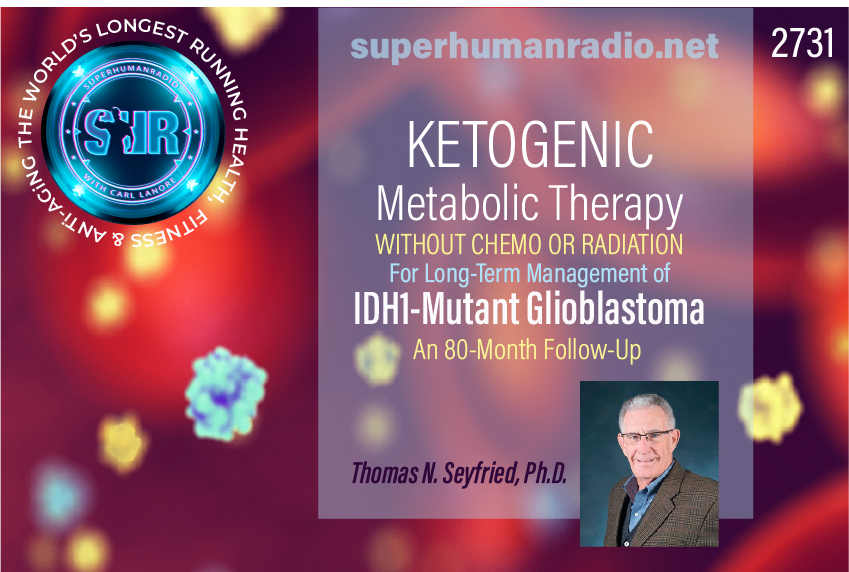
with Guest: Prof. Thomas Seyfried, Ph.D.
Successful treatment of glioblastoma (GBM) remains futile despite decades of intense research. GBM is similar to most other malignant cancers in requiring glucose and glutamine for growth, regardless of histological or genetic heterogeneity. Ketogenic metabolic therapy (KMT) is a non-toxic nutritional intervention for cancer management. We report the case of a 32-year-old man who presented in 2014 with seizures and a right frontal lobe tumor on MRI. The long-term survival of this patient, now at 80 months, could be due in part to a therapeutic metabolic synergy between KMT and the IDH1 mutation that simultaneously target the glycolysis and glutaminolysis pathways that are essential for GBM growth. Get the book Cancer As A Metabolic Disease today at http://shrnetwork.biz/cancer-metabolic
Play
Sponsorship Inquiries: email This email address is being protected from spambots. You need JavaScript enabled to view it.
Show Notes:
New Study: Ketogenic Diet Without Chemo or Radiation for Control of Mutant Glioblastoma
[5:20] What does the ketogenic diet provide that mitigates cancer growth?
- It lowers glucose, the main fuel of most cancers.
- Ketones in themselves aren’t fermentable fuels like glucose or glutamic acid are.
- Lowers inflammation in the micro environment of the tumor.
[12:00] The oncogenes switch on after the mitochondria become dysfunctional.
[17:00] Purging the body of dysfunctional mitochondria
- Glucose is restricted via diet
- Glutamine is restricted via drugs.
[18:30] The destructive nature of cancer treatment.
[24:43] What is done about glutamine? Protein is an essential building block in the body.
- Carbohydrate restriction is the press, meaning it is kept constant
- Glutamine restriction via 6-dioxy- nor leucine is pulsed in presence of the carb restriction press.
[37:32] Does keto have to be maintained permanently to keep the tumors mitigated?
[40:00] Higher ketone levels tend to push down the use of gluconeogenerated glucose by the tumor cells.
- Exogenous ketones do not seem to provide the same pressure to allow for extra carbohydrates to be consumed, however.
[48:05] A correlation between type II diabetes and cancer?
[59:40] Mtor and cellular senescence and their correlation to tumors.
[1:02:30] Is there a role for exogenous ketones?
- There is, especially for lowering blood sugar.
[1:05:00] What would Dr. Seyfried do if he had cancer?
- Get a complete blood readout.
- Immediately go on a zero carb diet.
- After in therapeutic ketosis, water fast for as long as possible.
- Then he would use albendazole 3 days on and 4 off.
- Bite the bullet until the cancer was gone and fight the disease on his own terms.
[1:10:00] What about metformin?

