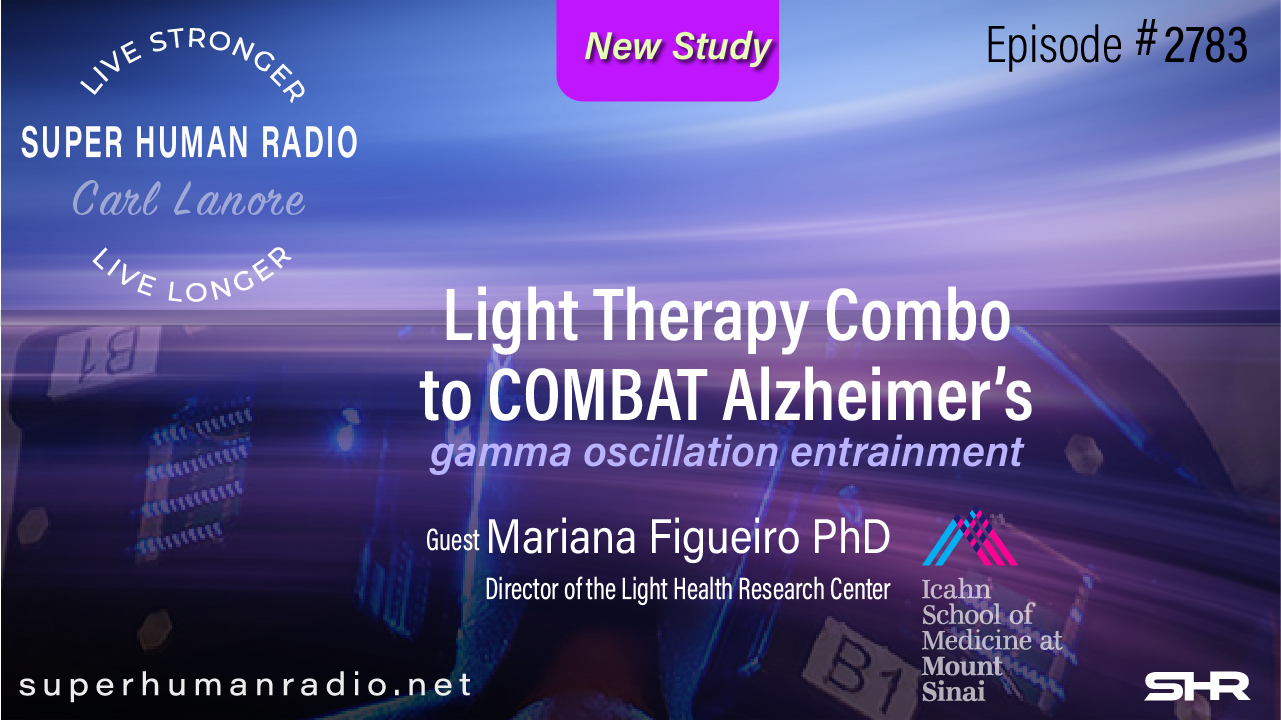
Guest: Dr. Mariana Figueiro, PhD
Alzheimer’s disease is a mind-robbing brain disorder that affects nearly 6.2 million older Americans. Despite decades of research on high-tech drugs, diets, and crossword puzzles, scientists have yet to discover a highly effective treatment for patients. Recently, the National Institutes of Health (NIH) awarded researchers at the Icahn School of Medicine at Mount Sinai a five-year grant to try something new: light. With this award, the researchers will test out whether exposing patients to a combination of light therapies will slow Alzheimer’s debilitating effects. One therapy will use pulses of light designed to enhance cognition-boosting electrical brain waves, while the other one aims to help patients sleep better.
Play
Sponsorship Inquiries: email This email address is being protected from spambots. You need JavaScript enabled to view it.
Show Notes:
New Study: Novel Light Therapy Helps People With Alzheimer's
[5:37] Inspiration behind this study.
- The researchers wanted to understand how light affects circadian rhythms.
- The dots were eventually connected between Alzheimer’s patients and sleep problems.
[10:00] Blue light.
- Exposure before bedtime can delay the onset of melatonin release.
[13:00] How lifestyle affects the likelihood of Alzheimer’s disease.
[17:00] The key is early light exposure.
- Blue light doesn’t have to be as intense, but the same effect can be achieved by early sun exposure.
[20:00] Does PEMF offer any value to this particular discussion?
[22:20] In a way, 40Hz light is being used to stimulate autophagy.
[26:00] Is dementia a result of the insulin resistance from the lack of sleep?
[35:54] Delivering light to mimic a sunset.
- Perhaps the circadian confusion comes from a constantly dim environment.
[40:00 Is there any value to having extra long sleep sessions?
[43:45] Blu-blockers.
[52:00] Deep sleep inducing peptide/ What is caffeine doing to us?