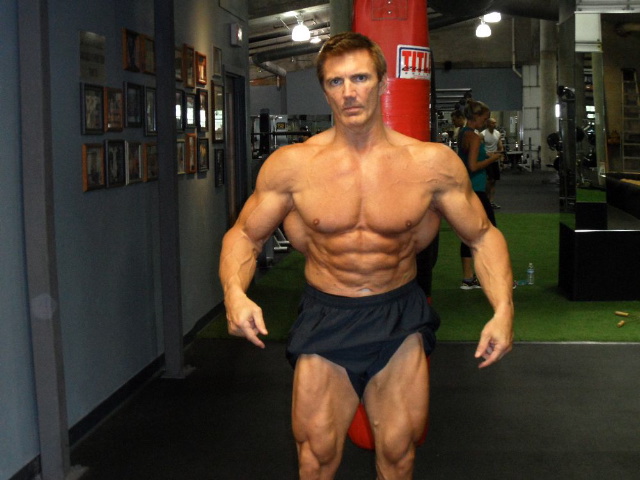
John Hansen - Coach Wade Johnson
Some call him the greatest natural bodybuilder of all times. Come join Coach Wade Johnson and Carl for this episode of Old Man Strong as they interview John Hansen. Discover his secrets for staying strong and fit into his 50's and beyond.
{mp3}https://superhumanradio.net/components/com_podcast/media/mp3s/SHR_Show_2259.mp3{title}SHR_Show_2259{end-mp3}
{spoiler spoilerID,Click to read Show Transcript,Click me to close}
[00:00:00] Hey, welcome back to another episode of superhuman radio. Today is our OMS show old man strong with my co-host coach Wade Johnson and just a moment. We're going to be talking to John Hanson who's got a lot of great information for us here. He's been called quite possibly the greatest natural bodybuilder of all times and when you [00:01:00] hear his story and when you see pictures of him, you'll understand why and he's in his 50 guys.
[00:01:05] So it's it's achievable it you can do these things that you want to do. You don't have to say because of age you have to give up. However. We want to talk honestly about the challenges that we face as we age that when our younger days we didn't even consider and that exposing that reality is important because we want guys to understand that there are challenges, but you can overcome them and that's the important message.
[00:01:32] Of course. We have to thank our title sponsor. Well American Pharmaceuticals in the FX sports right now, you get six of their top-selling products absolutely free by going to superhuman radio dotnet and clicking the EFX Sports Banner ad put your name and address in you will pay five dollars and change free shipping, but that's actually the shipping charge.
[00:01:50] I've been told by some of the Lissa's listens that they got about thirty dollars worth of free product. So check it out show them some love and that's because dr. Jeff golini believes [00:02:00] that no one should buy anything until they've tried it first and he puts his money where his mouth is. How you doing?
[00:02:06] Coach wait. I'm well and it's good to be with you. It's been a very very busy summer for me hasn't it it for both of us? I can't even believe this summer is over, but I got to tell you. I'm so happy. I'm not having to take care of a pool anymore. There's a lot of challenges with that and we're joined by John Hanson.
[00:02:25] How you doing, John? I'm good Kyle. Thank you for having me on the show. It's a pleasure to pleasure. And and and you know, I want to I don't want to do too much but kissing but I've looked at your background. I see what you're doing and it's nothing short of impressive. It really is especially as we age now you started in bodybuilding pretty young didn't.
[00:02:47] Yeah, I started lifting about 13 14 years old. Okay now real quick to give people some pedigree information. You have a lot of titles under your belt, correct? Yes. Probably [00:03:00] the most famous one is the natural. Mr. Olympia, which I want in 1998. That was the very first time they had it and I also won the natural mr.
[00:03:07] Universe three times as well as a lot of other state and Regional level titles. And but you didn't stop there mean there's a lot of guys who and this is even for Coach Wade, you know in the powerlifting community in the bodybuilding community and physical culture in general that when they're young they have amazing.
[00:03:27] Success, but then somewhere along the line. They think to themselves. Oh, I'm old. I don't have to do that anymore. And I see a lot of these guys. I see a lot of athletes and you mean there was a guy that I actually message for this show who was a world-class powerlifter. I'm not going to say his name because he asked me not to but he's literally fighting for his life and I asked him I said, you know, when did you stop lifting?
[00:03:49] He goes all the way back then I was like, why didn't you keep I didn't say this trouble. Why didn't you keep going? Yeah, see I'm actually amazed that when I see people that used to [00:04:00] compete and they were really really into it. And these were guys were sometimes national-level Champions and they don't do any lifting at all anymore.
[00:04:07] They just it's just not a part of their life and I just really can't understand that because this is really a lifestyle for me and. I know when I started bodybuilding I wanted to be a bodybuilder for the rest of my life. I mean, I remember thinking that way even when I was 14 years old. So I just I really can't understand that especially the fed them physical and mental health benefits you get from it.
[00:04:27] You know, you feel so well you feel so good after a workout. I just can't believe people would stop training. You know, it's funny you say that you know, I don't feel good in the morning when I wake up. I've got some challenges but I always feel fantastic right rain, right? Right. Exactly and Coach.
[00:04:46] Wait coach Wade coach Wade, you literally come down the stairs because your gym and it's a gym where you train other people is below your house, right? Yeah, that's correct. It's one of those things where it's under [00:05:00] the same mindset. I was asked this recently by former client, you know, do you ever think what it would be like if you decided you know that you didn't want to do this anymore as it pertains to training and competing and I'm like, well, that's not something.
[00:05:14] You know, that's just not in my. Way of thinking I mean as long as I'm physically able we've had this conversation before I want to be as strong as I can for as long as I can he know I I certainly. Don't lift, you know the same amount of weight that I did but I continue to compete and continue to push myself to be for me.
[00:05:35] It's about being the best version of myself, you know, regardless of what I used to be able to do or not do and so it's one of those things for me. I have to because of our schedule we get up at 4:00 in the morning Monday through Friday, and that's not you know, I will attest to the fact that that's while I've always trained early in the.
[00:05:55] Getting up at four presents, you know a different level of Challenge and [00:06:00] so it's just I I have known people that have been you know, you know, just like he is said you know that. They're really good their National level and then once they reach a certain point where you they get a certain age, they and it's because they can't maintain that level perhaps then they just quit altogether now John I've seen side by side chest shots of you and you really haven't changed much from when you were young as far as size and muscularity have.
[00:06:29] Yeah, thank you. It is a challenge, but I tried to I don't really, you know, it's funny when I go to the gym and when I'm getting ready for a photoshoot or even if I compete I never really think about my age. I always just think I want to be the best I can be and every year that goes by I just try to be better than I was before and I never you know, a lot of other people will say wow.
[00:06:50] You look really good for your age or. You know you're doing good for is it as old as you are, but I never think of it that way. I just you know, when I go to the gym and lift, I don't think well, I'm going to [00:07:00] try and leg press 900 pounds, which is pretty good for my age. I just think I have to like breast 900 pounds or I want to do a thousand pounds, you know, I just don't put any limitations on it.
[00:07:09] Oh, I just don't think of it in that way. And I think that helps me mentally, you know, when I go to the gym and what I'm trying to achieve a certain shape, I always try to just push myself to be as good as I can get. So let's so what time do you train how to give us a snapshot of your day and how you train?
[00:07:29] Okay. I have a full-time job. So like wait I get up early. Also I get up at four o'clock in the morning and get ready for work and I go to work all day and then I usually go to the gym after work. So sometimes it's as late as six o'clock at night or sometimes five o'clock at night. I prefer training that time anyways, because I feel like I'm more woke up.
[00:07:48] I've got a few meals in the and you know, the joints don't hurt as much so I just feel better going in a little bit later at night. Okay. And and do you do a traditional split [00:08:00] you change it up you just train instinctively now because you've been training so long. Yeah. I do a split routine. I train chest triceps and calves on Mondays.
[00:08:09] I'll do legs and abs on Tuesday, I usually take Wednesday off. I'll do two shoulders light tricep workout and some calves again on Thursday and then I'll do back and biceps on Friday. Sometimes I'll come in and do a second second leg workout on Saturday, which is a lighter workout. And also when I go to the gym I start off with a warm-up so I really have to warm up for probably about 35 40 minutes.
[00:08:36] I've got compressed discs in my lower back. So my lower back is always a challenge for me. So while usually start off doing the inversion table, and I'll do that for like six minutes and that sort of pulls apart my vertebrae little bit and gives me some relief and after that I'll do a series of stretching exercises mostly for the hamstrings and the lower back and the hips that usually takes about [00:09:00] 10-15 minutes and then I'll spend another 10 or 15 minutes doing core exercises using the ball mostly for my lower back.
[00:09:07] And after that then I'm ready to go. So I have to spend at least a half hour before I start my weight training just warming up and getting ready. Yeah, I love the inversion table. Wait, I can't imagine you've tried it yet. Right you you have you ever got inverted on one of those? I have an inversion table in the gym.
[00:09:26] I you know, I I'm one of those guys that is extremely lucky. I mean I have to do a little bit of warm up. But like for me I'll give you an example because most of my Liquors get pretty exasperated when I walk down the stairs the hardest part for me like. Squad day, we squad on Tuesdays is you know walking down my I have really steep steps the houses probably about 40 years old in the hardest part for me is getting down those steps without spilling the morning coffee and but [00:10:00] I'm you know, 53, you know, and I'm still a fairly large guy and that 53 I can get under my squat bar.
[00:10:10] And do full you know full squats, you know warm up with a 55-pound squat bar. I can I can go ask the ankles right out of the gate, you know, so, you know some mornings it's a little tougher than others like I'll feel it but I don't have any mobility issues and you know. I understand that I'm that.
[00:10:30] I'm very very, you know blessed in that in that manner, but I do spend a little bit of time each morning, you know, especially getting up that early where I will do some things for my shoulders and you know, the little things side raises pull the parts with a band and that sort of thing. Mostly it's sipping coffee to be quite honest though.
[00:10:49] That's kind of the extent of my warm. So I'm you have an inversion table, but I don't use it. Okay II have to use it. I'm like you John from years of [00:11:00] heavy deadlifting and squatting. I do have a L4 L5 S1 compression and while it's not fused yet. I try to keep it from fusing and I get completely upside down hanging from my ankles, but I do it at night before bed and first thing in the morning.
[00:11:19] And and that really keeps me from developing the kind of problems that we see a lot of weight lifters. Ronnie Coleman. Most notably poor guy. He's had like what eight surgeries now, right? Yeah. Yeah. I I often wonder. I have a foot surgery scheduled for next month that hopefully in three months.
[00:11:39] I'll be able to start. Doing ground-based work again, like deadlifts and like squats. I often wonder if my back hasn't gotten worse since I haven't been squatting and deadlifting. Does that make any sense? I mean, I know that people attribute that as the cause of the problem, but I feel like it makes the muscles around the joint stronger.
[00:11:56] Yeah, I agree. I don't deadlift anymore either but I still do [00:12:00] squats and I still do as much as I can. I still do bent over rows. I still do t-bar rows. So I am still doing a lot of those basic movements that involve the lower back. But yeah, I try to just I'm like you I agree. I try to strengthen that area and I try to stretch it and I try to do as much as I can to keep it.
[00:12:19] I don't want to get infused an operation where I get a fused but I think I have a very similar back like yours and I just try to keep it as mobile as possible and as strong as possible and do what I can you know for as long as I can now, I got to ask you a question. Do you shit all day at your job John?
[00:12:37] Sometimes I'm a security guard at a hospital. So sometimes I'm sitting sometimes I'm moving around. Yeah, cuz I got a feeling that the sitting is the curse for us older guys. I just did. Yeah, it's not a connect some dots. Okay. So so your challenge is like so do you have those aches and pains now?
[00:12:57] Do you have things that you think to [00:13:00] yourself man might my body is thought to betray me. Mostly the back everything else is pretty good. I've got some elbow pain, which I just try to work around with my training. I try to do other exercises like more compound movements to kind of warm up the elbows before I do any kind of isolation extension type movements for the triceps, but it's mostly the back and I also do yoga to I start off the morning I get up at four o'clock.
[00:13:27] And after I take a shower, I'll do yoga for like 20 minutes. And that really helps also because that really stretches a lot of those key areas, you know the lower back and the hamstrings and the hips and the so yes, it's mostly just working around the back. Everything else is pretty good. Even you know, physically my body looks good, you know, the skin is still pretty tight dieting right now for some photo shoots and I was worried a little bit about the lower abs because I'm 55 now.
[00:13:55] So every year your body changes, you know, so every time I get in shape, it's interesting. I look at it. [00:14:00] Like wow, I want to remember to look like this year. I wonder what the difference is going to be, you know, because the taste changes coming inevitably for sure, but I try to just hold it back but it's coming together, you know, and I think the skin is going to be tight again on the lower abs.
[00:14:13] So I'm pretty excited about how I'm going to look. And you sent you a pretty close to I looked at some of your earlier work and you you only get about 10 pounds outside of competition stages of weight loss. Right? I mean you don't go very far. No it changes like sometimes I go way up like this last year.
[00:14:34] I went up to 230 pounds which was pretty heavy. So now I'm down to 200 pounds. So I've lost 30 pounds over the last six months have done a real slow. So sometimes I bulk up which I really shouldn't and I don't think I'm going to do that again this year after this photo shoots over. I think I'm going to stay much leaner, and I'm just going to really be disciplined about it.
[00:14:54] And I'm going to I write everything down. I always weigh everything and I write everything down and I've done that for [00:15:00] years for like probably 20-30 years now, but when I get finished with this photo shoot I'm going to do what they call that reverse dieting and I'm just going to gradually add back the calories.
[00:15:10] I'm going to really keep track of my work out some to keep track of how I'm looking and I'm just going to try and slowly gain the size back and have enough calories in where I can train heavy, but I'm going to really try and control it this time, and that's a super lean because I think that can affect your training but not go too heavy, you know, well bulked up like I was this year Wade you you're very consistent in what you eat.
[00:15:33] I know you always make jokes about what you eat. But you're you're very consistent. You eat pretty much the same things every day, don't you? I have to if I don't I mean I know you know, let's not let's not get our food. No, no, no. No, but I'm but I'm gonna let me get but but I'm very much. I mean you'll see like we you know, I'll post on Instagram and Facebook when I'm prepping right?
[00:15:56] You see basically the you know, the same [00:16:00] things we don't we don't do a lot of variance and for what we have found and I think this speaks to what John is talking about. I'm part of a political. And we can get into that another time and it's an app based coaching service and that sort of thing and I think there's there's some great tools and great information to be learned from that but I still believe that if you have a notebook with you and not just to track your workouts, but the reason why I have people write things down is you learn by writing them down.
[00:16:32] You'll earn your food and your eating patterns and you can always take notes and not. Always tell people, you know, regardless of gender or age you'll learn what foods really kind of supercharged you, you know, and it can be a little different for everybody and having that information is vital. And so what it's taught Melissa and I is we know certain foods.
[00:16:56] You know really kind of help us in our ability to [00:17:00] recover and not quite honestly, the biggest priority is the ability to perform. So, you know, I probably eat pizza more often than John does and I bet I drink more beer than he does but you know, but by and large I'll give you an example last night Melissa and I.
[00:17:17] I had very lean sirloin steak. I probably had she probably had four ounces. I probably had eight and then we had grilled mushrooms. I grilled. Brussels sprouts and some red potatoes and and that's what that was dinner for both of us, you know, so and that's very commonplace more times than not will have chicken but we do eat red meat two to three times a week and but it's very we have found that when we're really consistent.
[00:17:47] That's when we perform at our best John. Are you married? No, I'm not see so Wade mentioned Melissa. Melissa is a competitor as well. So it's easy. [00:18:00] You know, it's a lot easier for someone to stick with this type of plan that most people would consider rigid, but it's actually very freeing. But but it's a lot of times if you're married, it'll cause problems in your marriage.
[00:18:15] If your spouse isn't on board with this kind of thing. That's why I was just curious about that. Like I'm lucky at Lisa's into a to she trains and she likes we like to eat the same foods, but in my first marriage that wasn't the case and when I got in shape, it actually caused all of the problems in my marriage to come to the surface.
[00:18:35] Yeah. So I was just curious if you were married. I want to take a quick commercial break and when we come back going to get into this a little bit more John. Do you have a website that people can go to? Yeah, I do have websites called bodybuilding Legend show and also my other website is natural Olympia.com.
[00:18:52] Okay, and we're going to talk more about the natural side of this when we come back stay tuned you listening to old man strong here on the Superhuman Radio Network. [00:19:00] Welcome back to old man strong. I'll guest today is John Hanson. Natural, mr. Olympia winner and mr. Universe winner. and continues to be a force to be reckoned with in the bodybuilding community.
[00:19:14] So I want to ask you because you because you are proud proudly a natural body builder, which means that you have not used any type of performance-enhancing drugs throughout your career. Where do you land with? HRT for us older guys, I mean I'm on testosterone now and I am happy that I am but it's not for everyone would you do you see yourself in the future someday?
[00:19:38] Maybe looking at a chart a actually I am I'm taking it right now. I've started thinking about a year ago when I was 54 and you have been taking an injection every week. So good for ya. Yeah, I like it. I really made a big difference. It does it say, you know, I've told the story on the show over the past 13 years probably 50 times, but [00:20:00] when I when I went on HRT and 2007 so prior to that I was using Peds and I couldn't get my testosterone levels to ever come back up.
[00:20:10] I was already in my 40s. And so I had to make a decision to either go on HRT or to suffer the potential Perils of not having. Brain protection and other things that hormones like that do for me and so I went on in 2007 just 200 milligrams a week and the analogy I gave was imagine you live in a warehouse with 100 light bulbs and every year just one light bulb went out and then when you were 45 years into it, somebody came and changed.
[00:20:41] Those 45 light bulbs. That one went out every single year. You would go. Oh my God. Is this how bright it used to be in here? It was the year the year to year degradation. Isn't that big of a deal but at the end of forty years, it's like holy crap. I don't feel good. I didn't realize I didn't feel good until I felt better.
[00:20:57] Right? Exactly. Yeah, and I felt the same [00:21:00] way when I really didn't notice it but you know when it was going down but a couple of years ago, I did try. HCG and that helped at first because that brought up my natural testosterone level and then it stopped working at work for about maybe four or five months.
[00:21:19] And then in I was it can seem like I was going back to normal and my testosterone level wasn't going up. My natural testosterone level wasn't going up. So then last year I decided to try it and I'm just taking a hundred milligrams a week and it really made a huge difference some you know, I don't know that that's kind of the reason why I gained some weight last year because.
[00:21:37] I kind of went with it. I started eating more calories because to take advantage of it and my strength went up and my body weight went up and it's really made a difference with my training because I still love training heavy even though I'm older and I should say I still love the challenge of going to the gym and pushing it as hard as I can and you can't really do that that much when your natural testosterone level starts to drop no matter how long [00:22:00] you've been doing it, you know, right so I felt like when I started this I was.
[00:22:04] I don't know like what like how many years it took off but I just feel like probably ten years ago. Like I feel like the strong as I was 10 years ago. So Wade is is a lifelong natural power lifter. And he really is we've had opened discussions about this in private as well as on the show. So wait, do you think you would ever consider HRT?
[00:22:25] Well, the problem is is doing the stuff that I'm doing with the USA powerlifting and then because I won bench Nationals and I will be going to the ipf bench worlds May of next year in Tokyo. They don't allow a therapeutic, you know kind of thing with HRT. I mean you can you know, they're not against you doing it for your health, but but you can't go there indefinitely.
[00:22:54] Then that would mean then that would mean that I couldn't compete and and [00:23:00] again I you know, it's one of those things where I have been I'm. I am certain, you know that my levels have dropped from you know from 20 years ago and those types of things but it's one of those things where you know, probably my biggest obstacle with my training is just simply schedule.
[00:23:18] You know that I didn't have at the height of my of my strength career. I'm not alluding to the fact that I would be equally as strong as I was 10 and 15 years ago, but it certainly, you know inhibit some of the things that I was able to do then but for. It's not one of those things that you know, I'm not like oh my God, you know, it's you know testosterone is the devil and all those kind of things just in the arena that I'm competing with in in powerlifting not so much in.
[00:23:49] In strong, man, you know, you're they're not real they're not testing but it's just one of those things where for me it's just not worth, you know the risk right now now once I have [00:24:00] achieved my goals, is it something that I will consider, you know that remains to be seen but right now, you know, and again I'll go I'll drive I'll drive to Tennessee and give you the shot.
[00:24:14] This is a quick little story. I remember. Training at a gym. And these guys were Elite power lifters and there was no question as to where they stood on performance-enhancing drugs and I had one of them come up to me. He goes, you know, I really respect and all of us collectively respect what you do, but if you ever change your mind, would you please let us know?
[00:24:39] Yeah, right because we want to come they always, you know, there's always a speculation especially at the height of my career. You know, what could he have done, you know and. I mean, I have no qualms telling you more than once throughout my career. You know, I've wondered, you know, I wonder what I could do, but I just it was just just [00:25:00] not the thing for me, you know in the direction that I've gone not only in my athletic career, but in my in my coaching career, it was just one of those things that you know, it was just not for me.
[00:25:11] I know you know probably also told me in private and I think you said it on the show Once that it because of your son. And he looked up to you. He was powerlifting to that you felt like, you know II I can't do that. It would be too selfish. What message am I sending to him? Right well and he asked me the very first full meet that I did he went with me I was able to pick him up his mother let him stay out of school and we were on our way up to the meat we're driving and you know, this is like my first full meet which was a number of years ago.
[00:25:45] And he asked me point-blank, you know, if I use steroids and I said no and he was really proud of that and he asked me to never do that and you know as parents. We always, you know, [00:26:00] we tend to you know, we look back and where we've made mistakes or we've let our children down or people down in general.
[00:26:06] You know, that was just one of those things that I made him a promise and you know, and I've continued to stick with it and you know. Feels, you know, he is drug-free as well. And now he's 30 years old approaching 31, but it would be interesting to have a conversation with him now how he feels about Peds and those those types of things John.
[00:26:28] How is your sleep as I've aged? I went from a guy. Literally back in the day when I lived in New York and I was riding my motorcycle everywhere. I fell asleep on a park bench one night woke up covered in snow, but I slept all night long now, it's like I got to do all these things to prepare for sleep.
[00:26:46] And then I'm anxious to my going to get a good night's sleep. And then I wait. How's your sleep? My family still pretty good. If I'm tired, you know, I go to sleep pretty you know, pretty well and it's just getting enough sleep with this new job that [00:27:00] I have. Usually I'll take a nap in the middle of the day when I get home from work just to make sure I get that 7 hours of sleep that I try to get 7 hours a day.
[00:27:07] But yeah, I really don't have any problems falling asleep at all. That's that's a blessing right there Wade. You see a pretty good too, don't you? Yeah, I don't always sleep really long but like at the my day is really full right from you know, right from the start and I generally never have any trouble going to sleep.
[00:27:27] I don't always stay asleep, but I would say 80% of the time I sleep till to our alarm now. We also have four dogs and you know, and that's a long story in and of itself. So there are times where they are ready to get up. And I am not this is why I don't want a dog Lisa goes, you know more about 70 to 80 pounds and our shepherd German Shepherd.
[00:27:56] She has she has learned that if I'm all [00:28:00] bundled up that she has learned how to fish her nose in there and poke me and we keep it. We keep it pretty cool in the bedroom. So when she pokes me with her nose, it is exceedingly cold and that tends to wake me right on up. So there are times where they'll wake me up a little earlier, you know, but by and large like this morning Melissa's alarm on Monday is the earliest one in about 10 till for and I we went to bed at about nine o'clock last night and I was pretty fast asleep.
[00:28:32] And slept through the alarm. I woke up once to use the bathroom and which is not uncommon as much as we drink a lot of water at our house and now I gotta go. So by you do you do sleep you have good quality sleep. That's a blessing. Yep. I'm actually starting to think about training it in the evenings like John does, you know, I've been training in the mornings for decades now, um, I'm actually thinking about changing up my routine in [00:29:00] fact doing the show from to.
[00:29:02] To for instead of 12 to 2. So I have more time in the morning to get a lot of work done and then maybe going to the gym later in the evening and it's interesting John you say you feel stronger in the evening than you do in the morning, huh? Yeah, I just feel like I'm more woke up. You know, I'm more than a few meals in me and stuff.
[00:29:21] And I don't I haven't really tried early morning training. I just don't think I would have the strength. I don't know. I really haven't tried it. So I haven't really given a good shot. You know. What do you genetics like your mom? And your dad did they up with a long-lived was your father interested in physical culture?
[00:29:36] Where do you think you kind of get all this from? Well, I'm blessed. My parents are still with me. So my dad is really 81. He is 81 and my mom is four years younger. So she's like 77. and so. What what either them what either them athletic and Did You observe athleticism in your house? [00:30:00] No, not when I was younger, but they are now they're very active physically.
[00:30:03] They they walk everyday or they ride their bikes every day. My mom does her exercise tapes and my dad lifts weights in the basement of the house. So they're still very active. I think genetically wise I take after my dad because he still looks great. I mean, he really doesn't follow like a real.
[00:30:21] Weight training program and he still got good muscle tone, even though he's in his 80s, you know just walk around the shirt off all the time and everything so he looks great but I think structure wise and muscle shape-wise. I look a lot like him I take after him interesting interesting, you know, the thing that I find and it's something you alluded to before those of us who really love.
[00:30:46] The feeling of training as opposed to those who you know, I want to get in shape for my 50th High School reunions. Yeah, we it's not about how we look as much as how we feel training it would you [00:31:00] say that's true for you as well. Oh, absolutely. I love the challenge of going in and training heavy and pushing myself.
[00:31:08] I think it's more than that than just how I look. And I get excited every time still when I go to the gym and work out I try to set up my workouts on sort of a cycle program. I have this new book out called the MP6 work out. And basically what I do is I'll do a six-week power cycle training where I'm trying to increase my strength on all my list for six week period then I'll do one week deload week or I'm going very light and then I'll come back and I'll do the same workout that I did for the power cycle, but I'll do a math cycle.
[00:31:39] And this is where the wraps are a little bit higher but I should be a little bit stronger because of the power cycle that I went through. So I I have the weights that I want to use every time I go to the gym I know exactly what I'm trying to do and I get excited about it. You know, it's a challenge to me and that's why I set it up the workouts like that.
[00:31:58] So it is a. And [00:32:00] you know, sometimes I'll see people in the gym and they're on their phones or just relaxed and you know, I just can't relate to that. I I go to the gym and it's like that's my one period of the day where I can really push myself and have a good time and that's why I think why I love it so much and that's why I can't imagine me ever stopping this, you know, even when I get much older I can't imagine stopping it.
[00:32:20] Do you have friends? Who well, meaningly try to kind of derailed all come on John. Let's go. Let's do this. Come on John. You're so rigid. Come on. Do you have people that data like that in your life? No, not really. Most of the friends that I have are into the fitness community. So nobody I think I think everybody who knows me knows that I'm not going to stop doing that.
[00:32:42] Anyways, maybe with the diet. They would you know, if I'm dieting for a photo shoot or something. They're like, ah, come on eat this meal. It's not going to hurt you, you know, I might get that but not with the training. I think what the training everybody's pretty much on board. They know what I'm all about.
[00:32:55] You know Wade, I don't know about you, but when I turned 50, I [00:33:00] was really probably the strongest I've ever been and I was taking a nap right after training and this is something you just can't do today for so many reasons because of. Social constructs and cultural construct. So you're lazy, you know, you should be doing this but have either of you ever experimented with the train eat and nap Approach at all.
[00:33:22] I did it I did it when I was you know, many many years ago, you know this about me I traveled as a musician and so one of the things that I would do I would still you know, I would be training while we were on the road so I would plan. Whatever whatever our attendant itinerary was I would find out you know where we were going.
[00:33:45] What was the local gym and basically I would get up in the morning. I would eat and then I would you know take about an hour or so just to kind of get myself together and then I would go to the gym and train as soon as I was done training I [00:34:00] would eat and as soon as I was done eating on go back to the hotel room and take about a two hour nap and because a lot of times we didn't start playing.
[00:34:09] Till nine a lot of times ten o'clock at night. And so, you know having that meal time together myself train and train hard and then that really good meal and then a two hours worth of a nap. I felt amazing, you know when I would when we would go out on stage. So I I don't have I don't have the schedule clearly that would allow that now but but yeah, I mean if I could do it now, I would definitely.
[00:34:39] Take a nap. Midday, even if it were just an hour. What about you John? Have you experimented with that? Yeah, I do too. I totally believe in naps. I believe in getting enough sleep and I think when I don't get enough sleep, that's when I end up getting sick. That's when I end up not being a performed very well in the gym.
[00:34:57] So, you know with this new job now and I'm getting up earlier. [00:35:00] I always try to take a nap. Sometimes I'll take a nap almost every day before I go to the gym. For an hour, even an hour and a half, you know, I don't put any limitations on it. I really believe that rest is so important and if I don't have that rest then I think everything is going to Suffer Well from an evolutionary standpoint if we could think of ourselves as the humans we were before civilization and structured time and all that sort of stuff.
[00:35:24] We probably were more like, you know creatures in the forest, right? So, you know, if a lion. Spends the afternoon hunting running down a gazelle catching it at eating it. He doesn't go. Let me go run across the the forest. Now, you know, he lays down under a tree. He lays down he falls asleep and I think to myself, you know, When we were when we were creatures ourselves, you know wandering the woods hunting and Gathering and living in primitive structures.
[00:35:54] I'm sure that nobody kicked us in the foot and said hey, what are you doing taking a nap get up this things to be done. [00:36:00] But now it's like we have this impending sense of obligation like oh no, I can't take a nap that that's would be lazy of me and it quite frankly could be the missing link to the key to Health and Longevity for us.
[00:36:13] Oh, yeah, I think sleep is so important and I always try to get enough sleep. I don't I never fall into those social constructs where they say, you know, you can't do that because you're not lazy and you hear people bragging about that all the time about how little sleep they get or how early they get up.
[00:36:27] But I think sleep is very very important, especially for those of us who exercise. Yeah. I want to take a quick commercial break. We'll pick it up on the other side. Stay tuned. You're listening to old man strong our guest today is John Hanson. We'll be right back so good friend of mine from the gym Mark David John Evans.
[00:36:43] He's in his mid to late 50s. I believe now he competed this weekend at the United States powerlifting. Sanctioned event here in Louisville, Kentucky at a hundred thirty two pound weight class. He pulled for 24 in the deadlift. Yeah. I know right Ray. [00:37:00] I mean I see the guy at the gym all the time people watch him walk around and nobody realizes that that pound for pound.
[00:37:06] He's probably one of the strongest power lifters out there today and his 50s. So he said he said. I broke the record for my age. In fact, he goes I bested everybody from the 35 and up group. But I only get to break my age group officially because it would be unfair for the younger less experienced lifters.
[00:37:25] Otherwise pretty handy meat so, you know the big bull. Yeah. I mean that's that's better than three times. Its body weight right? Let me see three four there. Yeah, it's better than three times the body weight and he does that every weekend in the gym. It's like people they watch him and so you probably have.
[00:37:41] In him Wade, he's a little guy. He has this little thing he does before he lifts where he walks from side to side on the platform and when he gets to the end, he jumps up in the air and turns around and then walks back and then jumps up in the air and turn he doesn't like five or six times then he walks over to the bar.
[00:37:59] He gets down he [00:38:00] grabs it and he pulls it and he you know, he's like you wait because I know that you have these rituals that you do before you lift before I squat. He's the same way. He has his little ritual and everybody goes they watch him to go. What the hell is this kind of guy going to do and then.
[00:38:14] So he pulls a massive weight in there like oh I get it. So yeah, we got this. There's something there. That's something that we teach it's like whatever your thing is, you know to get make sure that however you approach it. You do it the same. One hundred percent of the time whether it's you know warming up with the bar or it's 500 pounds of do everything your approach everything how you grab the bar how you get set, you know, I teach people, you know learn to walk to the back of the platform and Center yourself up take it in and then, you know go to the platform and you know that will because there's always the back of the platform and just always do the same thing.
[00:38:56] But yeah, I mean, that's a hundred. 32-pound [00:39:00] lifter pulling over 400 pounds in his 50s is pretty extraordinary could be wrong. He could be in his 60s. I hope I just messaged him even more badass than yeah, but but yeah, he's a great guy too. And he's even walks around the gym and no one knows, you know, any they you don't look at him and go that dude is really strong.
[00:39:18] But he really is Right amazing. So I had a guy on the show a few years ago. And his name was Stuart McGill. And he is the guy who wrote a book called fix your own back and I just thought of this for you John because I need to start doing it more too. He said the best thing the best thing for us guys who have lumbar issues.
[00:39:45] Is planking the longer you plank the better your spine will become did you ever plank you ever do that? I don't do it because I feel like what the hell you doing? You know Haley just holding that position, but apparently it's good for the lumbar spine. Yeah, I do do [00:40:00] that after I do my I do the stretching and then I'll do the core exercises with the ball and lower back exercises with the ball.
[00:40:06] And then the very last thing I do is I plank for I do two sets of it. The first one I usually last about 90 seconds in the second wire last about 60 seconds, and I really feel in the lower back more than the ABS because I've done the all the back exercises previously. So my back is kind of Pumped up and then I really feel it in the lower back.
[00:40:26] I'm going to start adding planking to my back day. I've do you train your neck at all? Yes. Yeah, we have a net machine at the gym. So I'll do that after I do traps after my shoulder workout. I just started doing Network coach because of Rob reddish discussion I had with him. So when I was 330 pounds I put on a lot of fat in my face and when I lost all my body fat I ended up with this turkey neck, which I freaking hate.
[00:40:52] I hear you know what since I've been making my neck thicker and wider my turkey necks going away. So I'm giving myself a facelift now [00:41:00] doing neck exercises. I think that machine is one of the more underutilized machines that I use it as part of my upper body on about four times a week. I have a neck machine in my gym.
[00:41:15] And I use it. I don't you know, I don't use a ton of weight, but I'll do like three sets of 20, you know, just where I'm lean forward and push my head back and that is something I do warming up extensively each day before I train and I think it's one of those things that people take for granted not everybody has an egg machine but you you can get a harness and neck harness fairly cheap and it doesn't take a lot of weight.
[00:41:39] It doesn't take a lot of exertion or a lot of time. I think there's a lot of. For people and I'll give you an example of another machine is the the tibia machine. Yes, you know that that's that's an antagonist of doing toe raises. I have one in the gym and that's one of those things that if you don't have there's a ton of videos on how to use a [00:42:00] resistance band resistance band to do tibia work and I think it is crucial for just even Baseline Fitness folks, you know that just, you know want to be fit and want to look good.
[00:42:12] I think that's one of those things that you. You know, it's a good investment of time of 5 to 10 minutes, you know, three to four times a week to do those movements, especially as we age so from doing shows about anti-aging one of the things that I've started to notice is that the people who seem to age the best they have.
[00:42:31] A very regimented life they get up the same time. They do the same things. They eat the same Foods. They eat the same Foods at the same time. If they do do things that seem to be counterproductive to help like having a martini. They have one martini at the same time every day and they seem to live very long lives and I'm starting to realize that.
[00:42:50] A regimented life makes the body less stressed predictability makes the body less stressed and we living with such stress today. Do you have a regimented [00:43:00] life? Would you say John? Oh, yeah very much. So and it's funny you mention that because I just started reading a book this weekend. It's called Atomic habits from an author named James clear and he talks about how our habits are really help us predict success much more than our goals, you know, like a goal is a big thing you want to achieve.
[00:43:20] But the thing that gets you there is the habits that you're doing every day and what he mentions in the book is if you can improve some aspect of your life even like one percent just by doing it every day that 1% is going to make a big difference over the course of a year. So it's a really interesting book, but I agree that you have to have a regimented life and you have to follow the same kind of.
[00:43:41] Program every day and I think that's what gets you results no matter what you're trying to do. Yeah, what do you think about that way? There's a lot to be said for consistency. I think that's you know, I've had this conversation with in a lot of instances and I think it's one of those things where everybody loves to win, you know, our everyone loves [00:44:00] to achieve, you know those goals, but you have to love to prepare to win, you know, everybody wants to win not everybody wants to prepare to win.
[00:44:10] And it there's no question. There's no denying the fact and that in order to do so there has to be consistency there has to be functional structure. I mean you can structure yourself out of your mind, but there I think there's something very valuable about functional structure and why it allows me to do some of the things that I continue to do even as I get older and to maintain the type of schedule that I do, you know, I get told all the time.
[00:44:40] You know, I just don't know how you do it. You know, I'm like, well, you know, I didn't know I had a choice, you know, it's one of those things that with my structure. I mean are there times that I'm exceedingly tired and in the answer is yes, and I ultimately have to take that time to unplug and get some extra rest and to kind of Be Still, you know, [00:45:00] but I think the thing that when people see Pete that people are successful, it's not about motivation.
[00:45:08] It's about being consistent. And I think that structure that we're talking about, you know lens to that success. That's something I firmly believe in. I met I met and I didn't think about this one. I met him when I was in my twenties living in Las Vegas. I Met George Burns to a girlfriend that I was dating, right and the guy smoke cigars.
[00:45:25] He drank martinis and. What I learned from his manager Tony. Zoppi. Was that George Burns did the same things the same time everyday woke up at the same time every day had the same breakfast every day. He smoked two cigars every single day. He had a couple martinis for lunch every day. He did it every day.
[00:45:45] Now. I didn't think anything about that. But then now fast forward the past 13 years. I'm doing the show and we're doing doing topics about anti aging and Longevity and stuff like that and I started to pay attention to people who seem to be living a [00:46:00] long healthy lives into their 90's sometimes into their hundreds and I would hear from them or their relatives.
[00:46:07] You know, yeah, my grandmother does it say she gets up every morning goes out in the garden pick some vegetables brings them in she doesn't eat lunch. She doesn't have a first meal to new did they do these things every day. They even like the guys that they sometimes on Sunday morning. They'll interview somebody who's hundred thirty years.
[00:46:25] And when you listen to the stories about this person you find out they've been doing exactly the same thing at exactly the same times exactly every single day for the past 70 years and that's when the bulb went off in my head because we know that stress shortens life and body perceives stress in different ways.
[00:46:45] One of the ways the body perceives stress is when there's no predictability. You know, oh the food the you when you eat the same Foods everyday your body becomes more efficient at digesting. Then we see this we see [00:47:00] this when you change your diet and the first couple days in eating of food, you don't feel good or you your bowel movement changes then all of a sudden it straightens back out again.
[00:47:07] So when you give the body what it what you want to give it and as long as the majority of what you're giving it as healthy and you do it every day with consistently consistently year in and year out you age better and you stay healthier for longer. Yeah, I agree. I agree amazing. Phenomena is very very overlooked.
[00:47:26] Everybody's looking for the you know, you know why the Okinawan diet works so well because the okinawans have been doing it for 60 generation. Okay, there's there's I'm just telling you there's the athlete the person whatever the Endeavor is. The one that has a plan is in consistently works that plan and makes the adjustments of course when they need to you know, that's that's why I always use the analogy of The Tortoise and the Hare never no matter what?
[00:47:56] Application you read that in whether it's in the Fable for more [00:48:00] cartoon never does the rabbit win it is that methodical, you know, taking each step with purpose. You know, that that that's what creates winners, you know, and that's why I've always preached, you know, we always want to win, you know.
[00:48:15] It's the process of getting there that were the winning is actually done and you have to love to prepare and that's done with with me and consistent. I we only have a few more minutes in this interview. So John if I caught you in an elevator we were going up. We had a couple dozen floors and I said to you what's your secret?
[00:48:32] What would you say it is? What's my secret? I would say love what you do and you know be consistent with the training and be consistent with the diet and love it as a lifestyle. I think that's something that everybody in this audience can agree with listen, man. I think you're amazing a people who haven't seen pictures of him.
[00:48:54] Go. Look for John Hanson on the internet look at the before. Yeah. Look at the pictures of him when he [00:49:00] was a young man. And now he looks exactly the same. Isn't that what we all want? Is it that what do you want to know? Come on? That's it. That's it John. Thanks for being on the show today, brother.
[00:49:10] All right. Thank you very much and coaching him and said, hi girl. Yes, what's. Aaron singer and said hi. Is he there? No, no, but I just old enough to be unjust killing errands errands my errands my he's my my blood. He's my blood Aaron's right, right. Yeah. Thank you and wait, I'm going to let you go to I'm going to I got to come back.
[00:49:32] I gotta I gotta clear the air. I had a guy on the show. The other day said a lot of things that my audience knows I don't agree with and I'm getting called on the carpet. So I got to talk about that right on I saw I'll talk to you later, brother. All right. Bye. I stay tuned. I gotta make a Copa to do stay tuned.
[00:49:52] That's I'm going to fix strips commercial just reminded me. I'm starting to get emails and messages on Facebook from people who are using [00:50:00] the Somme to fix strips and after just a few nights, they're noticing that they sleep better. None of the people that have responded yet are tracking their sleep with any type of apps or devices or anything like that, but.
[00:50:13] They are saying that they're waking up in the morning and feeling more refreshed and you can get a free trial pack of saamana fix trips. Absolutely free. All right pay nothing. You just go to super and radio that net and click the Sama to fix. The banner ad and I believe you have to use the coupon code shr and they'll send you a free trial kit so you can try them.
[00:50:39] It's an amazing thing. It sounds hokey. And I know it does because it sounded hokey to me what I'm Ron Penna first told me have you ever tried to tape your mouth when you sleep I was like no, is that a thing now and he said just try it and it took me months to actually try it because the idea of taping my mouthwash sleep that dip.
[00:50:58] That sounds dangerous. What if [00:51:00] I suffocate you won't suffocate if you can't breed you wake up. But what will happen unless you have a deviated septum or you have a stuffed nose because you have a cold what will happen is that you will find that you'll wake up in the morning and you'll feel more refreshed and you'll think to yourself.
[00:51:15] How can that be and breathing through your mouth is not a good thing while you're sleeping and everybody does it even if you don't snore so check out some to fix grips. Okay, so last week, I think it was on Wednesday. Wednesday yeah, it was on Wednesday. I did a show called food Insanity. It was really supposed to be food sanity because that's the name of the doctors book.
[00:51:41] I looked at the book. So his PR guy Jimmy Dwyer who's a really nice guy and communicated with me on the on the on the about about the show looking for an interview. That was show number two two five seven and. I had a fear that this guy was a vegan [00:52:00] in Disguise and he Jimmy assured me that he wasn't and I looked at the book.
[00:52:03] He sent me a sample of the book so I could read through it and I could see that the guy wasn't saying don't eat meat. but he was. A plant-based diet guy and so dr. David Friedman really nice guy really really nice guy. And so when I read through his book, I realized there was some things that I agreed with and there were also some things maybe a lot of things that I disagreed with but you know, I'm all about exposing the audience to everything and anything that may contribute to their success and Health and Longevity.
[00:52:37] So I agreed to do the show and I spoke to dr. Friedman right before the show, and I said to him quite. I said, you know, there's a lot of things that you assert in your book that I don't agree with but I'm going to focus on the things that I do agree with. Well naturally some of the things that slipped out in the interview with things that I don't agree with and of course many of you who have been you know for the life of the [00:53:00] show long listeners.
[00:53:02] Called me on it Carl. He said beef is bad. And also a Jason lelou texted me and said. Nicotine doesn't cause cancer it's the other things in tobacco that cause cancer and he's saying nicotine causes cancer WTF and I you know, I am not I am not Ambush radio. I'm not going to have a guy come on the show and think that I'm going to talk good about his stuff and then confront them and I actually almost did confront him for those of you who listen to the show.
[00:53:34] He uses Australia Pittacus as an example to prove to us that we're supposed to be plant-based vegans and what he misses is the one iteration of Australopithecus, which is called Australopithecus grass seal. Well Africanus, it's used either term to identify this particular generation of species. But that's the one that we are actually direct [00:54:00] descendants of and that's the one whose brain got bigger and gut got smaller because they started eating meat.
[00:54:07] And this is undeniable. I mean this is this is anthropology. This isn't subject to interpretation. It's not like the Bible where you have to interpret what God meant. Oh, well, I think he meant to know Australopithecus robustus was the last of our vegan ancestors. It died off it couldn't compete.
[00:54:25] With Australia Pacific is grass seal which was eating meat getting stronger getting smarter. It's gut was getting smaller. Its jaw was getting smaller because it didn't have to chew would all day long to get nutrition out of it. And as a result, it had a longer life span than Australia Pittacus robustus, which was exclusively vegan and if you listen to the show, I started to take issue with it.
[00:54:51] But then I thought to myself I told the guy I wasn't going to focus on the things I didn't agree with and I shifted gears and I let him have his say. [00:55:00] And that's what happens sometimes when you're forced to do a show with somebody who you disagree with and you disagree with a lot of the things that they have to say.
[00:55:11] It's like how can you even do the interview if I'm going to be alter Kate of I'm going to be stopping this guy every fifth sentence and saying that's just not true This research that says the opposite and then. The interview would have been my science is better than your science and I didn't want to turn it into that.
[00:55:27] I want the guy to have a good experience on the show because that's how I am. Okay. So for those of you who listen to the show, you're right. There are a lot of things that dr. David Friedman said that I do not agree with and that also are being exposed by science to not be exactly accurate.
[00:55:46] Beef actually is a good thing to eat. We're finding that more and more from from researchers chose. The beef is the only food that extends telomeres. If you think telomeres matter the whole tmao discussion is bogus because [00:56:00] they say don't eat meat because of tmao but fish produces more tmao than beef does but fish is heart healthy, so, you know look, Those of you who've been listening to the show for long enough know that I expect you to apply critical thinking to anything you hear whether it's on my show or anybody show.
[00:56:20] I don't expect you to take anything. I say for gospel truth because I've been wrong before and the truth of the matter is I'm not an expert. I'm just trying to learn like you. So if you apply critical thinking you listen to the interview you realize the guy is not in the same place. You are as far as how you look at nutrition.
[00:56:38] That's good. You figured it out. You couldn't be fooled. So that's what that's about and it's going to happen again. I'm going to have a guest on again that I don't want to fight with on the air. Because that's no fun. So those of you will be able to think to yourself. Oh I get it calls not say anything, but he doesn't buy this either.
[00:56:56] That's what happened. I listen. That's all for today. [00:57:00] Thanks to John. Coach Wade Johnson today's only Monday at the beginning of a great week. We got lots of great shows plan though all week. Hope you can listen live, and if you can't there's always the podcast and feel free to share a show help us grow the community.
[00:57:12] I thanks for listening. Talk to you
[00:57:24] tomorrow.
{/spoiler}
Comments
RSS feed for comments to this post