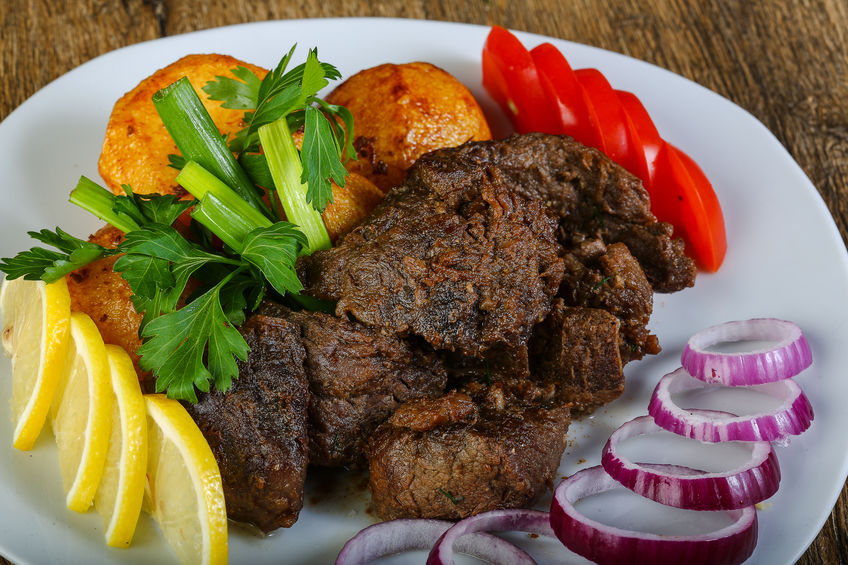
Real Vitamin A is critical for some very important biological functions. But like so ,many other things in life, people take stuff too far. Liver for instance is a super food. But eating too much may impair your heath and not make you better. We discuss the real perils of too much real vitamin A. Join us live and post your questions here.
{mp3}https://dts.podtrac.com/redirect.mp3/superhumanradio.net/components/com_podcast/media/mp3s/SHR_Show_2316.mp3{title}SHR_Show_2316{end-mp3}
Show Notes:
[7:00]- The significance of getting Vitamin A from carotenoids or retinol (active vitamin A). There is a % of the population that have a poly-morphism preventing them from converting carotenoids to retinol efficiently.
-There also exists a poly-morphism that hyperconverts carotenoids to retinol.
- Fortified foods are a problem for several reasons. Synthetic vitamin A is correlated with disorders in newborns when the mother consumed fortified milk. Fortified foods have been suggested by Dr. Fred Provenza to lead to over consumption of calorically dense foods (such as cereal) due to the body wanting to satisfy a vitamin or mineral deficiency (aside from the sweet taste of the cereal).
[12:15] Finding a common factor in all of the foods correlated with eczema “trigger foods”.
- Vitamin A is in all of them, but most of them are carotenoids. Could the real issue be with carotenoids alone?
- Most of these foods are nightshades as well.
[19:15] Overabundance of Vitamin A can lead to ruptures in the liver and result in a release of Retinoic acid, which is inflammatory.
- The liver can regulate how much vitamin A that it stores.
[25:25] Inuit people have died from vitamin A toxicity due to consuming polar bear liver.
-The human body can cope with a vitamin A deficiency for a while, but an overload can kill you.
- Diseases of modernity result from over-accessibility of foods. Nothing is seasonal anymore. You can get nearly any food you want with ease.
- Human nature is to hear the term “super food” and think that we should eat it three meals per day every day.
- A super food is one that is super concentrated in nutrients that were hard to come by in scavenging humans.
- The devil is in the dose. There is a harmful dose of ANYTHING. Just as a deficiency is harmful, an abundance can be harmful.
-Vitamin A can pose a problem because it is easy to overdo.
- The scientific research shows that retinol essential for stem cell differentiation.
[37:15] Documented cases of children with zero vitamin A storage in the liver that are doing fine.
- However, these people are malnourished.
- These people seem to lack diseases of modernity such as Alzheimer’s.
{spoiler spoilerID,Click to read Show Transcript,Click me to close}
[00:00:00] Hey, hey, welcome back to another episode of supremum radio. This is a really important show and it really came to my attention recently. Thanks to John Mason who is a fan of the show over in the UK and we're going to be talking about vitamin A and so there's a couple things I want to say before I start the interview.
[00:00:54] First of all, I got a couple emails the other day saying that I'm not looking at the. Camera [00:01:00] enough and I looked extracted when I'm producing a show and that's because I am producing the show. I'm working the board and I'm working the camera interface and everything. So I can't just look at the camera all the time.
[00:01:15] Unless I get a producer who sits here with me and watch his me do the show. So I'm sorry about that ahead of time. If it seems annoying to some people also, you know Lars Thorn home from Sweden recently messaged me and said, you know, I've done shows about B6 being bad. And then recently I was doing a show when we talk about the importance of vitamin B6 and he said Carl like, you know pick it pick your side and this is this is really important discussion now and in light of today's show and you know, we have to be careful as a population because we read.
[00:01:55] And we're like Lemmings like all of a sudden this is good. So what do we do? We used to eat at [00:02:00] once a month and now we're going to eat it every day because someone said this is good and then we find out that too much of this is bad and then we go. Oh my God, I have to stop eating it entirely. and the reality is if you look at.
[00:02:14] Human beings from an evolutionary perspective we had access to everything seasonally we had access to some things never at all and some things we really had to work hard to get and that kind of level the playing field for our ability to consume. And so I recently I've talked positively about vitamin A.
[00:02:38] The role it plays in stem cell differentiation the role it plays in activating the retinoid X receptor and protein synthesis and lean body mass. It does have some antioxidant values and it does have a host of other benefits that. Scientists could better well describe than I can [00:03:00] and then a lot of people just assume that I Pound Down vitamin A.
[00:03:05] I don't pound it down. In fact, I consume most of it through my diet and I would say there's long period of time where I don't consume any at all because that's just my nature. That's just the way I am. But we were talking about vitamin A and John Mason posted something and led me to my guest today.
[00:03:26] And that is Grant General. How you doing? I'm very good. Thanks. Girl. Did I pronounce it? Right? I pray I practice it at during the break and perfectly. Okay. Perfect. And I thank you for coming on the show. So first of all, let's talk about you and kind of set the stage here. You you are an engineer and a geologist and a science writer and Engineers geologists and physicists seem all too.
[00:03:55] Be such lovers of science that they apply their [00:04:00] skills to what ends up being hobbies for them. And in your case. It's obviously writing about this type of science that affects health. I see you have lots of really good things on your blog plug your blog before we get started. Okay, so my blog is g generate DOT log and so it's really just a place where I was originally going to post some ideas about just general things that were.
[00:04:26] Oh, we worried about this with wireless. Hey Carl, can you hear me? Yeah, I can now and during the break we may want to plug into the hard wire if you can but okay, that's the one but anyway, so you so you started writing on your blog about some of the you have articles up there about statin drugs, right?
[00:04:45] I did a recent post an article about statin drugs and how it ties in with vitamin A. So everything I've got there is is related to vitamin A in the potential toxicity of vitamin E. So what when did vitamin A move into your [00:05:00] front and center? Okay. So this all started back in 2013-2014 when I became very very sick, and I tried looking for a reason why I had kind of.
[00:05:13] All of a sudden out of the blue gotten extremely ill and very quickly. I went down kind of a process of isolation and kind of process of elimination kind understand what the heck happened to me, right? And so from there, I got onto the path of vitamin A and of never kind of deviant. So give me some examples of the vitamin A that you were consuming at that point in your life.
[00:05:39] And for how long were they supplements whether foods rich in vitamin A. Okay. Yeah, so I was not really supplementing with vitamin A now back in about 2006 my wife got on the fish oil not praise and it just so happened that the official she bought was. Pink house with [00:06:00] beta-carotene. So it's official.
[00:06:01] We wait we're back up to do say beta carotene. Yes. Okay, so it's official help colored with beta-carotene. And so I did that for about two years. So two thousand six seven and eight and then I stop just because I didn't think was really doing anything for me is trying to make my wife happy. So that was completely off the radar.
[00:06:19] And then what happened is I want to see my dad to see my dentist said it kind of age 50. Hey, you got a whole lotta recession going on in your gums and you should increase your calcium intake so I started drinking a lot more milk. And then from there progressively you just got sicker and sicker and sicker until I had this kind of catastrophic collapse that in my health in 2013.
[00:06:42] So it other than the official I wasn't supplementing with vitamin A is just kind of regular diet. But then at the end of that phase I was super healthy with my diet and ended up getting super sick. Okay, so so tell me the food you were consuming that that had vitamin A in them and and now I got to [00:07:00] differentiate something first.
[00:07:01] Yeah, so you lead off with carotenoids and I become suspicious and I here's why there's a large people group of and I'm sure you know, this is a large group of people in our population that had a polymorphism that doesn't convert. Carotenoids to retinol and I get I'm sitting I'm assuming when we talk about vitamin A you're talking about real vitamin A active vitamin A you're talking about retinol.
[00:07:27] Yes, yes, but I'm still not thrilled about the carotenoids either. You know, I think I think I have a lot of people contacting me who have been eating. Sweet potato which is purely across at night and they're in big trouble. But are they? Okay, so I met one of the people that you've worked with.
[00:07:47] and I had a nice exchange with her. Okay, and what I found out about her was that when she went to get blood tests that she had stopped eating anything like yams and stuff like that. [00:08:00] Okay, five days before having blood work done. And she said that her vitamin A Levels her retinol leveled were not high and she said that's probably because I stopped eating all vitamin A five days earlier vitamin A clear the system that quickly because it is fat soluble in a stored in the liver.
[00:08:19] No. No, I highly doubt that would clear, right? Okay. I like it extremely dumped that. Yeah and just clarify. Okay. So my diet was pretty regular die just kind of standard, you know North American diet, but I was eating healthy. I was kind of like health-conscious. So where was it vitamin A coming from was it all vegetable-based vitamin A like carotenoids or was it retinol?
[00:08:45] No, no wasn't retinol. It was mostly from milk. So it went really kind of crazy. I'm not trying to be fortified so that and that's part of the problem here. I want to point that out right now. So so. There was a movement in the early 20s to start fortifying [00:09:00] foods with vitamin A because people were not getting enough vitamin A and vitamin A with mega role in a lot of problems including you know, babies that are born with deformities always have very very low vitamin A status in the mother has vitamin low a status during the pregnancy and so they the powers that be decided but we need to get people.
[00:09:22] To get more vitamin A kind of like like the way the iodized salt which happened to be a good thing. They started everybody's just started willy-nilly going now fortified with vitamin A. So all your grain products and cereal products. Yeah, they started infusing it in milk and everything else and wasn't and wasn't that in fact a synthetic form of vitamin A it is well, it's there's there's kind of two factors there.
[00:09:45] If you talking about low-fat milk a skim milk and it's the synthetic vitamin A vitamin A palmitate. To make it sustainable in basically a water with regular whole milk. I'm assuming it's still regular vitamin A [00:10:00] retinol but the vitamin A palmitate is a very scary thing guess it my opinion. Yes, and so all synthetic forms of vitamin A have some sort of damage to the body when we think about Retin-A, which is given to people for.
[00:10:16] Acne when we look at Accutane, which is a horrible horrible drug. These are actually synthetic forms of vitamin A that. That the pharmaceutical industry had to create because they couldn't charge stupid prices for real viable a they couldn't say. Oh he is right, you know his retinol did take that.
[00:10:34] What do we six dollars a month? No. No, this is a $300 prescription for for acne. You want to get rid of your acne. You're desperate you want to look good. So you're going to take Accutane which by the way, one of the things on the Accutane bottle says that if your of the age of your the pregnancy age that you shouldn't take it because it causes severe.
[00:10:53] Deformities in your Offspring because there's that vitamin A and and stem cell [00:11:00] differentiation thing playing out the synthetic one doesn't work. Well, but yeah, I mean, it's those things are nasty nasty horrible for your. They are very very very bad. So what so what so the majority of your vitamin A was coming was coming from where you eating a lot of beef liver and calves liver and stuff like that.
[00:11:20] No, I didn't eat liver at all. Not at all having liver. You eat a lot of egg yolks. I was eating a lot of bags. I did a little bit of spinach and you know tomatoes so kind. You know what? I thought were healthy foods, so that was about it. And then so when you tested your blood levels when you when you got sick and you started to correlate you go man, a lot of these things sound like vitamin A toxicity and you're triangulating this data because you're highly intelligent person.
[00:11:50] You're an engineer, you're a geologist and you can connect dots that's part of everything that you've been trained at doing. See when you started to see these these [00:12:00] similarities in the symptoms. You were seeing. What did you do? Well, what I did was maybe I should come back up and explain up drop thought process a little bit more because I didn't actually take it from that angle.
[00:12:12] Okay? So what I did I was getting very very sick and had a previous diagnosis of kidney disease. So I kind of assumed okay. This is just kind of late stage of this kidney disease thing going on, but then what happened and it was happened almost like overnight I exploded with, you know head to toe XML.
[00:12:30] It was really rude. And just happened to be the night before that experience. I eat a whole plate of tomatoes for whatever reason and so the next line have this massive almost an allergic reaction. I went to my doctor and I said, well, I have no idea what the hell it is. And I said well look at it just kind of feels like a poisoning said nah, that doesn't look like a poison don't like this.
[00:12:53] And then what I did was I had no idea what x might never experienced this before no and [00:13:00] sort of searching. Okay. What are other people reporting about X comma in the interesting thing that caught my eye was is a whole collection of trigger foods. So people get X mop waxes and wanes that if you eat a certain collection of foods that they called trigger foods, it makes her condition worse.
[00:13:16] So they go into a flare up and I just thought what's common about these trigger foods is kind of an Eclectic the list. It was orange juice milk. Dairy cheese fish. Yeah, tomatoes and so what's common about this less than kind of narrowed it down from there. So holy smokes. The common factor is vitamin A but wait a minute is a vitamin A was a carotenoids.
[00:13:41] Well, I think it's. But I was at that time I was really focused because you you only only a couple of the ones that you've mentioned actually have vitamin A in it that the rest of them have carotenoids, right? Yeah, and then the other problem with tomato. That is overlooked is can you eat? Can you [00:14:00] eat eggplant?
[00:14:01] Do you eat eggplant in is it okay for you? I have never tried it. Actually, I don't so so, you know, one of the things that's overlooked about tomato is it's a Nightshade and all night shades are some level of toxicity and there are poisonous nightshades. That is so concentrated that with these anti-nutrients that they kill you so that that you know, but but but but it sounds to me like you're real issue is with carotenoids.
[00:14:27] I don't know but I have a you know, I was kind of looking at it from a kind of an Evidence point of view. Right? And so what I did from there that I had no idea what might imagine the only thing I knew about it is the vitamin no prior knowledge. So I went to look at a list of the toxicity symptoms of vitamin A and A match those with my own symptoms and what other people were reporting with was actually mama and it was like a perfect match I got holy smokes.
[00:14:54] Isn't that? This is from there. Then I really started to investigate smart. But the very first thing I [00:15:00] did was just on a lark almost like ridiculous. I decided I'm not going to eat any foods with any vitamin A when I died of rice and beef and I stayed on that for three weeks, that's a good diet by itself.
[00:15:15] Anyway, even if you weren't trying to kill something. And for me, you know hearing that's an interesting word because there was no quick tear here no matter what but I didn't really expect much to happen. And I was very surprised that the first thing that happened is they happen at the same time, which is really interesting my mood my thinking Clarity improved kind of three week Mark and my chronic fatigue lifted.
[00:15:46] My joint pain lifted it was like a mirror like holy smokes huge Improvement in my health, but I still have the extra muscle made almost no difference to the extra Mama, but it had these other [00:16:00] conditions like dramatically. So leading up to that point in time. I had chronic fatigue and I was just floored it's hard.
[00:16:07] What you basically did was a very extreme form of Elimination Diet, which is what anyone who's having autoimmunity issues which eggs Emma isn't autoimmunity anyone who's a calving autoimmunity issues when they remove the insult. It stabilizes it goes away. But the problem is determining what the insult is.
[00:16:27] So you have to kind of do from a bottom-up type of an approach where you have to literally start eating one or two things a day only every meal for a few weeks and go man. I'm getting better and then you have to add something back into the equation and go yes, not a trigger food. Yes a trigger food.
[00:16:44] Yes now I think. So, you know cut from there. I went on the kind of Investigation just trying to gather more and more evidence Pro or con and what I noticed was there's a whole lot of people on that kind of the health sector that are blaming an [00:17:00] entire food groups and that to me is very strange because in the pharmaceutical industry don't focus on molecule.
[00:17:06] So every pharmaceutical drug will have a patent on it the patent or molecule. It's all about molecules. And so for me, my focus was on molecules. Let's. What's Fox think about molecules in D? Souza wasn't looking at food groups, and I never did re challenge myself with vitamin A not deliberately at least but there have been some beautiful.
[00:17:27] You have a show you never had Direct vitamin A tested in blood work to say, holy crap. I'm high in vitamin A. Not at that time. Okay. And and did you have you had 23andMe done to determine whether or not you are of that polymorphism or you maybe are a hyper producer of retinol from carotenoids? I have not so so you don't really know that it's vitamin A but you surmise it because you eliminated vitamin A but you eliminated like a lot of other stuff too.
[00:17:59] Yeah, [00:18:00] totally totally agree with that. But and now that point in time or this point in time, it's just kind of take myself out of the equation altogether. So that was just I just kind of view myself as an interesting little experiment that got me so n equals 1, right? Yeah good n equals on I just kind of so, I've never recharge myself, but there have been other people that have contacted me that have gone through a similar experience with a Kydex Mama.
[00:18:23] They want on a zero vitamin A the eye and then they re challenge themselves by taking vitamin A supplements and they have and they have done. Yes, and then when they get vitamin supplements that they got it back. It came flying back area trigger very interested. So that has been repeated and those people were test those people actually tested their blood levels.
[00:18:44] They determined that they were actually in an overload. State of vitamin A. I don't know not that I've seen so that was some early comments online on my blog. I've never talked to these people the right didn't they just told me that they did this but [00:19:00] the thing is looking at a blood test for vitamin A is is a really.
[00:19:06] My nebulous thing in my I know you're right, but you gotta start somewhere. Look vitamin A is highly stored in the liver. And the reality is that if you have too much vitamin A liver cells actually start to burst and what they let out as retinoic acid, which is somewhat inflammatory. But but you have to have so much vitamin A stored in your liver that that if those are starting of those.
[00:19:29] Hepatic cells of bursting you going to have other complications that are going to send you to the doctor because the the liver the liver has can regulate how much vitamin A it stores. Yeah. I think it mostly Kappa can go bigger and larger and it's gonna get everything it can pass safely. Yes.
[00:19:49] Absolutely. Yes, so, okay, so. Now I did in vertically challenged myself with additional vitamins took [00:20:00] a lutein zeaxanthin supplement, which I didn't know it's kind of a beta carotene said not to convert vitamin A and I had a massive reaction to see and that's why I'm so here's the interesting thing about you.
[00:20:11] I think that you have really brought a lot of attention to a very important discussion and I am not discounting what we're talking about here. Okay, because okay, I think what I and I think. You may not actually be allergic to vitamin D as much as you are carotenoids, but I weekend we'll never know that unless there's blood work to show one way or the other.
[00:20:33] Yeah. Well, I don't think it's an allergy. I'm really really really convinced. It's not an allergy at all. It's a toxicity and we can kind of you know, take my stuff. Yeah what I want here's what I want to do. I want to I want to I want to take a break and when we come back, I want to talk about how toxic vitamin A can be because early Inuit died literally died.
[00:21:00] [00:21:00] Yeah from from high levels of vitamin A and they died within a day. There's like vitamin A can kill you. There's no doubt about it. And I want to establish that when we come out on the other side of the break stay tuned. We're talking with Grant General and we will be right back with more. Welcome back were talking with Grant General.
[00:21:22] his blog. Is G General GE n ER e u-- x dot blog and he's got some really thought-provoking ideas that we're going to explore more of right now. So let's let's let's sidestep this whole issue about sensitivities and stuff. Let's talk about vitamin A. So in the in the early 1700s it was discovered.
[00:21:54] That if you ate polar bear liver, it would kill you [00:22:00] from liver toxicity of over overconsumption of vitamin A in a single sitting and so it's been very very well understood that vitamin A can kill you. And really I think that ways into this discussion because what the old saying the poison is in the dose.
[00:22:21] And that's what you're that's what you're getting at. Is that is that a correct? Not pretty much more than that. But yes pretty much. I'm not a position that he was have been consuming vitamin A for a very long time and we are quite capable of dealing with it in moderation and we've just forgotten who just overdone it over too many years.
[00:22:44] It's accumulating and it's at a certain point you tip over into the toxicity. And that is very difficult to get on so I'm not trying to sound the alarm on vitamin A kind of too much. We are capable of dealing with [00:23:00] it. You know, I love the title of your show superhumans. I think that's that's perfectly true and we were super and we can deal with a whole boatload of stuff in nature centroid.
[00:23:14] Talking sense for a long time in vitamin A just has to deal with is vitamin is just happens to be one of them. We've been dealing with for a very long time. So we're fine. If we don't overdo it. It's kind of my position. Yeah, and so when you look at when you look at so the real problem we keep coming back to and someone said Carl you should write a book and I think if I ever wrote a book it would be about specifically about this.
[00:23:38] We always talk about diseases of modernity. But we forget that a lot of those diseases while we know they find their their foundation and diet which is basically consumption. What we fail to realize is something I said at the beginning of the show, you know accessibility seasonality seasonality doesn't [00:24:00] mean anything anymore.
[00:24:00] You can get grapefruits in December and January and February right now organic ones. We can but we can I mean, I remember when I actually talked on the show about eating a pound of liver everyday a pound of liverwurst every day, which is part liver and part heart every day for a week and the amount of muscle I put on quickly and it was true.
[00:24:26] It really did but I had to stop because all of a sudden I didn't feel good. I felt like. I couldn't figure it out and then I stopped eating liver for a while and I was like, oh man, I feel so much better. Now that I stopped eating liver and the problem with us today is this. We read something as a superfood.
[00:24:44] We think we should eat three meals a day for every day forever because if it's if it's a superfood then more of it has to be better for you. And what what really is meant by a superfood it is super concentrated with nutrients that seem to be. [00:25:00] Hard to come by in the normal diet of a foraging human.
[00:25:06] Yes, you know not a human that gets up and goes up to the fridge and goes to o'clock in the morning. I'm going to make a liverwurst sandwich now, you know what I mean? And so really and I'm a huge proponent of blood work. If look vitamin D, you need blood work. There is too much vitamin D vitamin A.
[00:25:25] You need blood work. There's too much vitamin A hell if you drink too much water in a single sitting you'll die. Its called hyponatremia your heart stops, but this idea that more is better is really. A dangerous thing when it comes to some of these nutrients and other one is iron. I've been doing shows about iron overload lately why because it really is a chronic problem in our population today.
[00:25:52] And I'm sure vitamin A is as well. I'm sure it is because people because because people just overdo everything don't they Grant [00:26:00] they do know? I think vitamin A is extra skin of devious year they'll because of as Vitamin the label people believe it is the vitamin kind of standard medical Sciences.
[00:26:15] This is essential vitamins some of it so we could say okay people are just bent over consuming it and read into this toxicity state but in the research and investigation I've done is the bulk of the chronic diseases are actually vitamin A toxicity. So what can control so give me give me some examples what kind of research have you read that that implicates vitamin A or correlates vitamin A to what diseases?
[00:26:43] Okay. So diabetes kidney disease all of the autoimmune diseases most certainly at Sonoma not crashing inside. I know are the iso so you're something so what you're saying is that vitamin A is bad in any in any. Well, no, here's what I'm saying. [00:27:00] We are capable of dealing with vitamin A in moderation.
[00:27:03] So if we're if we go low on vitamin A in the maintain a low vitamin A consumption you're going to do just fine. So so what you would you say that it's okay to be in so let's say the standard assay for vitamin A and a blood test that you should be shooting for the lowest possible Point Sonia in that range.
[00:27:27] The lowest possible point, you know get down to a blood level level of a small child would be ideal in my opinion. What we're seeing in adults in the North American population is about 3 X over what children have so I think it's just across the board. Everybody is probably way too high in vitamin A.
[00:27:46] So let me ask you a question the liver stores vitamin A. Is it your belief that the liver stores? For sequester's it to keep people from getting sick from it. My current belief is that it's being sequestered [00:28:00] and slowly disposed of so, you know delivers a detoxification organ and I don't my current position.
[00:28:06] I do not believe that vitamin E is the vitamin at all in any way. I think humans can do. Perfect without it. This is my position is not a bad. No, I would I would I would disagree with that and I'll tell you why if we just look at this from an evolutionary perspective. So the liver breaks down quickly and disposes of rapidly things that it doesn't want in the body and this even goes from normal and everything.
[00:28:29] It disposes this testosterone and disposes of estrogen sir, and it only stores things that are required for life. That may that we may run out of yeah, I I'm gonna have to disagree. I think the difference of a vitamin A is so incredibly toxic not pure retinol in Unbound form in Serum is toxic in will inflame cells is documented as being a cytotoxic.
[00:29:00] [00:29:00] So why so why does so, why does the liver store at a not just break it down and get rid of it. The liver doesn't store DHEA. It doesn't store testosterone. It doesn't store estrogen. It doesn't store these things that it wants to rid of why does deliver store it and not just break it down and get rid of it.
[00:29:17] Well, I think it would be great if it would but I think it's so toxic. It has to be very careful about how so you also think vitamin D is toxic then because it does the same thing with vitamin D, right? Hi. Yeah, I do I do about vitamin D is documented to be a toxin. I think like anything else the only thing about vitamin D.
[00:29:34] That kind of I'm kind of okay with is the body actually produces vitamin D. So that's really strong evidence. There's good. Yeah these forward in the body where vitamin A is not produced by anything in the body. And so I believe that the liver sequestering vitamin A and very slowly trying to dispose of it safely.
[00:29:52] If you cannot build proper file to dispose of vitamin A you're going to be in big [00:30:00] trouble so but that's okay, you know, I'm still so what about so what about the roles that have been shown in science that vitamin A is required for stem cell differentiation. And without without adding and we're not talking about we're not talking about I when I talk about vitamin a coma retinol not talk about carotenoids because that's it.
[00:30:16] That's we don't even know who's converting those to vitamin A and who isn't but vitamin A is required for stem cell differentiation. And and so if you have stem cells in your body that are designed to repair your. And yes, your kidney requires the stem cells within the kidney that a mesenchymal at the time progenitor cells to differentiate into kidney cells.
[00:30:41] It needs retinol. It needs that and without it. It doesn't happen. Okay, great. This is perfect. Okay, so. Let's reiterate that aside the carotenoids now, we'll just kind of take them off the discussion. Yeah, I'm good with that. So retinol so retinol the active [00:31:00] form of retinol what they call the active form of the vitamin is when it converts into retinoic acid.
[00:31:05] So what happens in that wreck and retinoic acid actually has a gene expression associate turns out there is a lot of different Gene Expressions associated in medical science believe. Just as you stated that those Gene Expressions. There is Gene expressions are used for stem cell differentiation.
[00:31:27] And without that stem cells not going to mature properly. It doesn't it doesn't even differentiate. In fact over the past 13 years. I've had scientist who work in stem cells. Okay, and every one of them will tell you that without retinol. Stem cells stay in their in their quiescent state. They don't they don't differentiate.
[00:31:47] They just stay like that once you add retinol. So and unless you believe that stem cells don't play a role in healing then that then I would have then I tell you about vitamin A is not important, but if you think that retinol plays a role in healing. [00:32:00] Then then then stem cell differentiation is critical and as I pointed out earlier one of the some of the earliest Works ever done by Weston a price was to show that mothers who had higher retinol status is going into pregnancy at throughout pregnancy gave birth to children that will weld develops.
[00:32:17] Its symmetrical had more balanced phenotypical you so so because the baby is just a stem cell party. That's all that's okay. Great. Yeah. Yeah, so. You're exactly right in what the science is stating not retinoic acid vitamin A is essential for stem cell differentiation and kind of a maturing of the body into its form and feeling and everything else.
[00:32:44] I believe that is exactly a hundred percent wrong what their role was? So what proof do you have you do you have any proof that stem cell differentiation occurs in a in a scientific setting without retinol its present. I don't have [00:33:00] any scientific proof. I don't have a lob. I'm not a scientist, but I'll give you some evidence that I think is somewhat.
[00:33:06] Okay, you know compelling sure one is so back 1992 is documented that I'm gonna just was so we'll talk about right now, but I'll go through retinoic acid. So retinoic acid is the active form of vitamin, you know self. So now retinoic acid 1992 is documented to induce 300 different Gene Expressions.
[00:33:26] So right away, I see what. Why 300 different Gene expressions? Like how can I be but the more modern literature is not 500. So there's 500 different Gene Expressions that can be involved with me. So it seems like a lot but. Then you look at populations in central Africa. These people have incredibly low vitamin a set of season actually doing very very well.
[00:33:54] There's been documented cases of small children. That have had zero vitamin A in serum [00:34:00] zero vitamin A stored in your liver and they were doing just fine. So there's some evidence that vitamin A is not essential for stem cell differentiation. So I want to make sure I understand spec because I'm okay.
[00:34:14] So youyou've your pinpointing an area of the world that is associated with malnutrition. Yes, and you're saying these malnutrition of. Have no vitamin A and they're doing fine, but they're not really doing fine. Because these people these are the people that were gathering money to feed because they can't feed themselves in their sick in their daughter sure.
[00:34:35] We're feeding them and they have lots of infections, but they do not have. Dementia, Alzheimer's autoimmune decision said, okay. Wait a minute. Wait a minute. That's that's a term. That's those are diseases of our journey that we Eve have here because of the once again what I said before the overconsumption the hyper availability the lack of seasonality to Foods people can eat all the time and they do they each three o'clock in the morning.
[00:34:56] That's where that comes from. Yeah and and granted if you took [00:35:00] one of those people because we know this if you take people from Africa. That come from areas that have no diseases heart disease and they come to United States. They lived here for 10 years. They have heart disease. So inside it's what we do to people, you know with the diet here.
[00:35:13] But but with that being said you're pointing at those people as evidence that vitamin A deficiency defense its deficient state is not a problem. Well, it's kind of collectively as a group, but there have been studies on small children. Was ER vitamin A in serum zero vitamin A stored in the liver and they are doing just fine.
[00:35:35] And this is an and this is an African you're talking about or here in the United States in North America. Yeah. These are studies done in North America and these unfortunately remembering this correctly. These are autopsies on children have died in an accident. And they've checked in the cyclists months.
[00:35:51] This child had no vitamin C serum. No vitamin A stored in the liver. She's ten years old and doing just fine before she got whatever happened, right? So there's some [00:36:00] evidence that the body can manage its stem cells perfectly fine without vitamin A. Left side of it is as you mentioned about a PT. So Accutane is retinoic acid.
[00:36:12] It's an incredibly highly highly competitive, but it's metal its methylated so that it resists the hepatic breakdown and it causes such severe hepatic stress because it gets hyper stored and it actually displaces real vitamin A it actually displaces retinol. And retinoic acid in the liver and it's and it's nasty nasty stuff.
[00:36:35] Not nasty stuff. So, okay. So now the distinction between something like Accutane and retinoic acid is very very small but never less. So now we have a retinoic acid incredibly toxic substance just all over the medical literature. This is one of the most toxic substances you can have in the human body, which is the active form of vitamin.
[00:36:57] So what it's not it's really not that the [00:37:00] same discussion applies to to hormone replacement therapy. So we know that if women take based estrogen. That have not been manipulated to withstand hepatic breakdown in the first pass liver degradation process that these cause no hepatic stress and they actually end up in the body as bioidentical.
[00:37:25] But we also know that if women take something like Premarin a Prem Pro, which is a methylated form of estrogen and this is even true in birth control and it's also could true and corticosteroids when you take metal prednisone any anything that's methylated. Change changes the game because it changes the landscape of the liver changes and and vitamin A is stored in the liver.
[00:37:47] So it's a double whammy. Yeah, okay. I kind of miss miss the connection there with stem cells. But uh. No. No, I'm just pointing out that I [00:38:00] Accutane. No. No there there is no there's no doubt in scientific literature available today that anyone can go on PubMed and say just put in the word stem cell and retinol or stem cell retinoic acid and you'll find out it's used in every single situation to make a stem cell differentiate.
[00:38:20] Okay? Yes, and I accept that ain't that was but we're past that now we're talking about Accutane, which is horrible horrible stuff. Yeah. Okay, so my point about the retinoic acid and stem cells and Gene Expressions is we're supposed to believe that we have a critical life dependency on a toxic molecule to regulate our stem cells.
[00:38:42] I'm going no way nature is not that foolish. Absolutely not and. you know, I'm not just you know. Talking about it. I'm actually doing it. So I've been on zero vitamin a diet for four and a half years now. I my stem cells are doing just fine. Thank you very much. [00:39:00] How you said that? How do you know you themselves?
[00:39:03] Wow, just because I my health is the best has been in ten years. Okay, my skin my skin is gone super nice and smooth right leading up to this. My skin was kind of thick and bumpy kind of creepy now super nice like so in costs if you scan is a huge organ with just massive muscles. Yes. Yes, and it's a great indicator of internal.
[00:39:26] Very very good indicator of until here. I'm personally doing great but that's ones months to get n equals one just kind of take myself out of the evidence. So, you know, there's a lot of people that are kind of experimenting with this time will tell the proof will be in it. So I want to I want to take a our next commercial break and when we come back I want to talk about what I think needs to happen next.
[00:39:51] And it's very easy what needs to happen next? I really think that you're onto something. I don't doubt that you shining a light on vitamin A. [00:40:00] Isn't critical I do think it's critical, but I think now from here we need to turn to a method that I think would really help validate a lot of this stuff.
[00:40:10] We're going to talk about that when we come back on the other side stay tuned. You're listening to superhuman radio comes back. You know, the website is g-general GE. It's g g and e re u x dot blog lots of great thought-provoking stuff there. I love this guy because he's he really is shining a light on a potential problem.
[00:40:35] And this goes hand-in-hand with iron overload and every other overload that we seeing today, you know, there's sugar overload. They call it diabetes, you know, we are literally. Eating our way into Extinction and and and this is a really important discussion and I so here's what I think needs to happen.
[00:40:54] Do you know who dr. Shaun Baker is no idea. So, dr. Shaun [00:41:00] Baker is an orthopedic surgeon who came on my show two and a half years ago. Maybe it's closer to three now. and he started talking about. The carnivore diet. Okay, he's behind the carnivore diet. He's the guy who started it, but let me tell you he but he started the carnivore diet movement much in the same way that you're going to end up starting a movement.
[00:41:27] Okay, so he started eating just beef and chicken and you know just meet no vegetables. He said, you know vegetable blah blah blah and. He started noticing a transformation in his body. He told other people about it. They started to so first. He started a website called n equals many. Okay, and what he said to people was because so many people were emailing them back and going I started eating this way.
[00:41:52] My autoimmune disorder went away. My my you know, my fibromyalgia is getting better. I'm putting on [00:42:00] more muscle. I'm sleeping better. I'm losing body fat and he said, you know. This is all corollary. We don't know if it's really why this is these things are happening and for who and so on. So he started asking people that followed him to get blood work done before starting the carnivore diet and send it in on their own nickel.
[00:42:21] Yeah, and then get blood work done periodically and send it in and let's compare our notes and let's start a let's start an impromptu study old n equals many. And sure enough. I mean, I mean the guy has been on Joe Rogan show now. I mean he in a few years. He's catapulted himself forward because in a time where everybody is saying meat is bad.
[00:42:45] It's killing the planet. It's causing cancer and all this other nonsense. He's going no look people actually getting better that the doctors told them. They'd never get better. Yeah. Yeah, you need to do that with the vitamin A Diet you need to go. Okay. I need your help. [00:43:00] And that's exactly what I have done.
[00:43:02] So I've asked people to take on this diet experiment and publish their show the results. So that's all I've done is I've collected a bunch of evidence. I've documented that try to make it compelling enough to entice people to try this diet and that's exactly what's going on. So, so are they also but are you do you have the structure set up that they have to have pre blood work done and then they have to blood work done throughout.
[00:43:28] I haven't but a lot of people are doing that. So at the beginning of this a lot of people now are going to get blood work and stuff, but I haven't made it or hard requirement and Carl. I'm not a I'm not an official researcher. This is very part time job. I've got a daytime job to no no, no. No, I gotta Shaun Baker.
[00:43:44] Shaun Baker was a surgeon. I mean, don't get me wrong. He got it does kind of by accident sideways, too. Yeah, but you can have when you could have such great impact on people's lives. If because the only the only thing I worry about is like the woman who and I can't think of a name Judy something [00:44:00] she loves you.
[00:44:00] She said you saved her life and so on and I asked her some of the standard investigative questions that I've been, you know learn to ask. All right, when doing research it's like well, yeah. So how did you know it was vitamin A toxicity. Did you have blood work done? And she said yeah I did but I had stopped eating vitamin A five days before and my blood my vitamin A Levels weren't high and she said but that's probably and I'm thinking no, you can't clear vitamin A that quickly.
[00:44:28] It's fat-soluble. It's gets stored it stays around for a while. So tell from her from her own answer. She probably didn't have toxic levels of vitamin A. I don't know about that. I'd very very convinced the vitamin E as a group cause of all this and so but you know, I could definitely be wrong, right?
[00:44:49] There's no question. No. No, I'm not asking I'm not asking to be right or wrong. I love this debate. This is great stuff. This is yeah. This is where the good stuff comes from. I just wish that people would you know. [00:45:00] If it can be validated, then you really onto something huge and all it takes is some of these people who are finding you now, I'm starting to suspect vitamin A go and have blood work done before.
[00:45:13] Engaging the the therapeutic diet and then throughout so we can say yeah because you may find something else you may find all these people are sensitive to carotenoids and that would just be wonderful to because then you'd be with Doctor Grundy. Have you read the bird the book plant paradox? I have it's no God you grant you got to read it.
[00:45:33] You're gonna love it. You're going to feel you're going to feel like wow. This guy gets it. Dr. Grundy's whole mission is to tell people this idea of plant base isn't all good. You have to be careful because there's a lot of plants out there with anti-nutrients that cause horrible horrible problems for people now lots of toxins.
[00:45:51] No. Well, let's forget about the toxins. We add in the commercial farming process. I mean just right look plants have evolved [00:46:00] to. Sustain life since they can't fight bite or run away run away. They have to develop anti-nutrients that stop the things that Prey Upon them from preying upon them. So it's a for instance the phytoestrogens in soy is not really good for humans people think it's gold.
[00:46:22] It's always soy soy, no, no that that was probably designed through. Natural selection to make the breeding of a specific species that eat the soil the time drop to none and they wipe themselves off the planet because the estrogen disrupts the libido and the male animals and it also can affect the female animals from their ability to even carry a baby to term and so so soy is a really really it intelligently evolved plant.
[00:46:51] I did not know that thank you. No, I mean it's just it's so so I'm with you on this. I think that people need to stop questioning these things more. So [00:47:00] we really can't just because look where we are. You know, we are now like third from the bottom in life expectancy in the United States. And every other commercial is a drug.
[00:47:11] It's off the charts and that's a really important point. You know the disease rates in North America are just off the charts compared to was normal when human population was normal around the planet. There is something drastically wrong. So we need different Mama. Yeah. Thank you for having the courage to talk about this because I'm sure that a lot of people want to just dismiss you immediately.
[00:47:35] And I think you're on to something. I'm not sure what it is yet. I really but I really think that you're no no I'm being sincere with you. I think you know, I think it that way to thank I would I would love for you to find that it's carotenoids. I would be like, oh my God, this is so frigging great because you know, we're all told all characterized lycopene, you know prostate and all maybe it's not so good.
[00:47:56] Maybe you got to be careful on that. I'm coming to the conclusion. [00:48:00] Well, I don't want to talk about it because that's going to be another show. But I want to thank you for coming on and I thank you for putting this information forth. Thank you. Carl's been a pleasure. Take care. Okay. All right. So that's it for this week.
[00:48:13] I don't have any other shows this week off Thursday, and I'm off Friday and but we will be back on Monday with lots of good stuff. Hope you're enjoying some of the shows. I've gotten some really nice emails from people saying the shows are off the chart. I don't know what I'm doing differently. I really don't but if you're happy, I'm happy and.
[00:48:33] That's all I've got for today. Thank you for watching superhuman radio and listening and jasonlew. You're always late. I'm just going to call you late from now on that's your new name brother late. Where is late? Oh here he comes I see her [00:49:00] body.
{/spoiler}
Comments
I am curious if since this podcast you have had any further thoughts or updates on this topic of vitamin a/carotenoid/re tinol toxicity?
Thanks
RSS feed for comments to this post