Kelly Baggett
This show originally aired in December of 2006. Strength has little to do with muscle size and all to do with central and peripheral nervous system development. The nervous systems ability to recruit more muscle fibers is the true source of strength.
This never rang truer till I was a judge at a Powerlifting event where I was fortunate enough to see a young man named Ron Palmer deadlift 700 pounds and bench over 500 pounds at 181 pounds. I remember seeing him at enrolment time. He didn't draw near the attention that the Heavyweights did but he outperformed many of them on the platform.
What I recall most of all was watching the wave of muscle being recruited in his back as he pulled the 700 pounds off the floor. It was like one of those aerial views of the shockwave radiating outward from a nuclear blast in the desert. It was the moment that the concept of nervous system development crystallized for me.
On this episode of Super Human Radio we'll explore proper techniques to increase nervous system development, adaptation and recovery as well as some common mistakes that athletes make that hampers their progress.
We will also give some specific training examples of routines that can help you make greater strength gains in less time.
{mp3}https://dts.podtrac.com/redirect.mp3/superhumanradio.net/components/com_podcast/media/mp3s/SHR_Show_2431.mp3{title}SHR_Show_2431{end-mp3}
SHR # 2431 :: BEST OF: Central and Peripheral Nervous System Adaptation and Recovery
[5:18] Central Nervous System overview.
- Signals muscle to move.
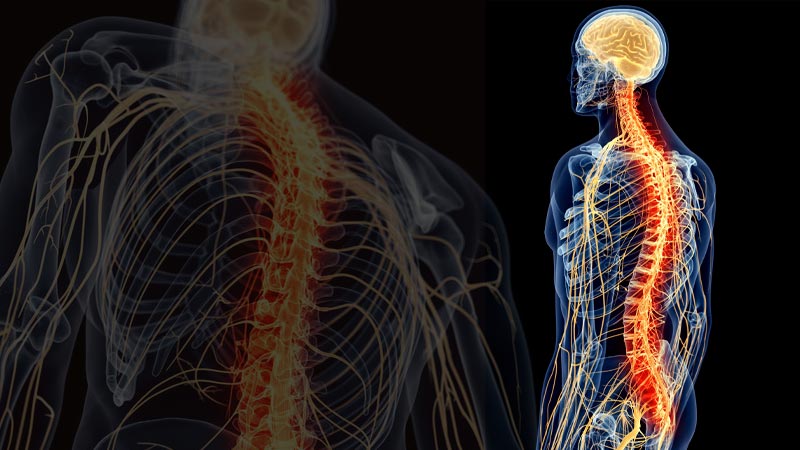
- Runs from brain down the spinal cord.
- Its development plays a huge role in strength output.
- The average person can only harness ~ ½ of their strength.
[13:32] neural fatigue.
- It is a whole-body fatigue that usually occurs from big movements that dig into strength inroads.
- Large body part movements can affect smaller groups’ (arms) output.
- Local neural fatigue occurs when the same muscle group is trained multiple days in a row.
[17:24] how often to train for strength?
- As often as possible while still sufficiently recovering.
- Off days with steady state cardio is good for recovery.
[19:00] Rest and sleep are the most important factors in recovery.
- Lack of sleep, even if you don’t train, will hinder recovery.
- We recently did a show on eating being the most important factor in under-recovery.
- Micro trauma can cause cytokines to hinder CNS output.