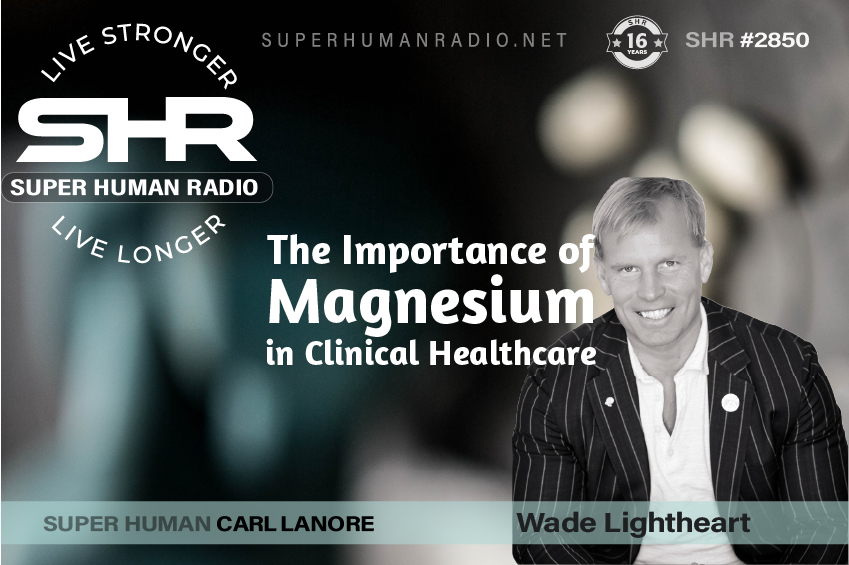
The Importance of Magnesium in Clinical Healthcare
with Wade Lightheart
The scientific literature provides extensive evidence of widespread magnesium deficiency and the potential need for magnesium repletion in diverse medical conditions. Magnesium is an essential element required as a cofactor for over 300 enzymatic reactions and is thus necessary for the biochemical functioning of numerous metabolic pathways. Inadequate magnesium status may impair biochemical processes dependent on sufficiency of this element. Emerging evidence confirms that nearly two-thirds of the population in the western world is not achieving the recommended daily allowance for magnesium, a deficiency problem contributing to various health conditions. This review assesses available medical and scientific literature on health issues related to magnesium. A traditional integrated review format was utilized for this study. Level I evidence supports the use of magnesium in the prevention and treatment of many common health conditions including migraine headache, metabolic syndrome, diabetes, hyperlipidemia, asthma, premenstrual syndrome, preeclampsia, and various cardiac arrhythmias. Magnesium may also be considered for prevention of renal calculi and cataract formation, as an adjunct or treatment for depression, and as a therapeutic intervention for many other health-related disorders. In clinical practice, optimizing magnesium status through diet and supplementation appears to be a safe, useful, and well-documented therapy for several medical conditions. http://shrnetwork.biz/mag and use code SHR10 for 10% off.
Play
Show Notes:
The Importance of Magnesium in Clinical Healthcare
[00:06:20] Magnesium plays an amazing role in the body, and it is well understood that approximately 75% of the population is deficient.
[00:07:43] BiOptimizers is on an enthusiastic mission for 18 years, searching for the answers to the particular questions of what optimal intake in terms of supplements is. 13 PhDs and graduate students working for us in a lab in Bosnia, where we run tests every week.
[00:08:30] We do not feed our bodies, we feed the bacteria that feeds their bodies.
- Adding an element like Magnesium Breakthrough to the mediums that probiotics are grown on, had results in some categories of a 1000% improvement in function, elements started to make healthy biofilm and production of antioxidants changed.
[00:10:33] Part of the deficiency that is happening in the world today, is due to Chemicalization. It is chelating the vitamins and minerals that we are eating and making them unavailable to these bacteria cultures.
[00:16:56] Let us talk about Magnesium.
- It is responsible for recycling ATP.
- Within the frame of a 70kg individual there is an average of 25 grams of magnesium in reserve with 53% in bone, 27% in muscle, 19% in soft tissue and less than 1% in the available in the blood.
- If there’s not enough magnesium in the blood, the body starts robbing it from other avenues, like bone – causing osteoporosis.
- Serum tests are not an accurate measurement to check your Magnesium levels.
- Magnesium is being used every second of the day for over 300 different biological functions.
- Without Magnesium you run out of nucleic acid.
- Without Magnesium you have no DNA and RNA turnover.
[00:21:30] Wade delivers a very eloquent explanation on why and why not different diets work for different individuals and suggests what an individual should do if they are looking to become superhuman.
[00:32:04] Research shows the average person need 400 – 600 mg of Magnesium per day and that is just to top up reserves.
[00:35:58] Dark chocolate, avocados, nuts, seeds, bananas, leafy greens, tofu, and mushrooms are all reliable sources of magnesium. Try to get it in a non-chemicalized state so that it can be sufficiently absorbed and utilized.
[00:35:51] 7 Forms of Magnesium in Magnesium Breakthrough:
- Magnesium Bisglycinate
- Magnesium Malate
- Magnesium Taurate
- Magnesium Orotate
- Magnesium Citrate
- Magnesium Sucrosomial
- Magnesium Chelate
[00:42:38] BiOptimizers offer a full moneyback guarantee if you decide Magnesium Breakthrough is not the best magnesium product you have ever taken.
[00:51:35] Wayde tells a funny story about a conference in India and meeting a Ayurvedic Practitioner.
[00:54:55] Magnesium deficiency has been implicated in migraine headaches, metabolic syndrome, diabetes, hypertension, dyslipidemia, asthma, premenstrual syndrome, preeclampsia in women and various cardiac arrythmias. Magnesium may also be considered for prevention of calcification of the pathways in the kidneys and cataract formation.
[00:56:03] Dr Steven Sinatra determined the following and called it the Sinatra Protocol:
- If you give a person who has congestive heart failure,
- 400 to 800 milligrams of magnesium,
- 5 to 20 grams of D-ribose, a form of sugar exclusively used by the heart,
- Ubiquinol, the active form of CoQ10
- and Acytel L-Carnitine,
- in three months, they were cured from congestive heart failure.
[00:57:50] Minerals are the sparks of life. You need enzymes to get your amino acids to get your minerals and minerals to get your vitamins. That is the metabolic process inside the body. If you disrupt an element like magnesium, which is integrated in over 300 enzymatic functions, there are a vast array of processes in your body that you have to go to secondary- or tertiary- or non-functionality. As we age, those are going to become increasingly disruptive to the quality of our lives.
[01:02:37] Magnesium is responsible for:
- protein synthesis,
- muscle contraction,
- nerve function,
- blood glucose control,
- hormone receptor binding,
- blood pressure regulation,
- tachycardia,
- involved in energy production,
- oxidative phosphorylation,
- glycolysis,
- nucleic acid synthesis,
- and many more.
It is a no brainer, get Magnesium Breakthrough today!!
Magnesium Breakthrough
use code SHR10 to get 10% off
Stay in touch with us! Get show highlights, tips, new research & offers in your inbox.
Latest Episodes

SHR #3033: The Truth about Glyphosate and Disease
May 02, 2026

SHR #3032: Coming off of GLP one agonist and not putting on a bunch of fat
Apr 14, 2026

SHR #3025: Should You Fear the Fairway?
Feb 21, 2026

SHR #3031: The Sepsis Show
Feb 16, 2026

SHR #3030: Cheating Death
Feb 11, 2026

SHR #3029: The Ultimate Anabolic Steroid Research Guide
Oct 31, 2025

SHR #3028: Slow Aging. Prevent Disease.
Oct 23, 2025


SHR #3026: The Magic of Proper Stress Management
Dec 24, 2023

SHR #3023: The Prime Act - Getting the USDA Out From Your Farmers Way
Sep 19, 2023

SHR #3022: NAD, NMN and NR; Is There Something Safer?
Sep 18, 2023

SHR #3021: The Legend Of Christian Boeving
Sep 17, 2023

SHR #3020: The Sleep Talk
Sep 14, 2023

