Dr. Robin White Ph.D. - Prof. Rita Cássia Menegati Dornelles MSc, PhD
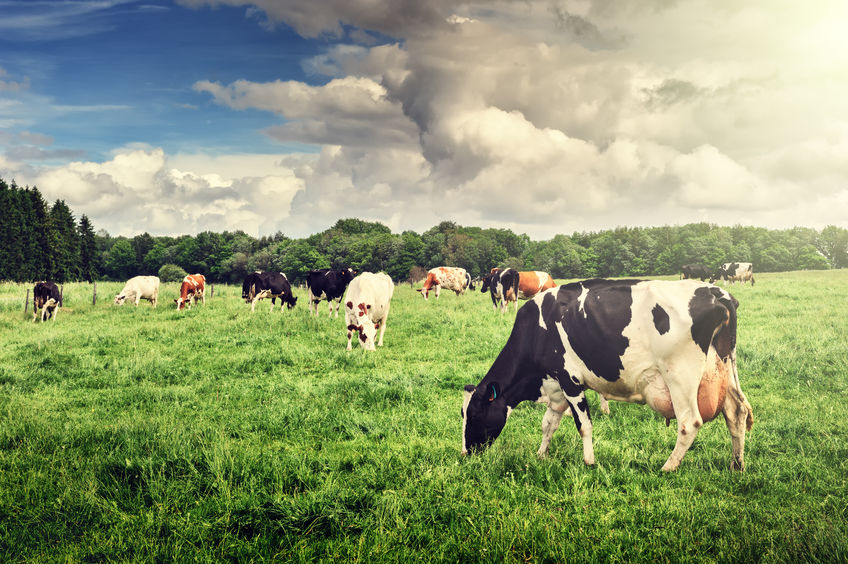
Research in the Journal of Dairy Science® examines the potential impact of various animal removal assumptions on the environment and nutritional supplies. The US dairy industry contributes roughly 1.58% of the total US greenhouse gas emissions; however, it also supplies the protein requirements of 169 million people, calcium requirements of 254 million people, and energy requirements of 71.2 million people. A suggested solution to increasing food production worldwide while reducing greenhouse gas emissions has been to eliminate or reduce animal production in favor of plant production. In an article appearing in the Journal of Dairy Science, scientists from Virginia Tech and the US Dairy Forage Research Center studied the effects of dairy product removal on greenhouse gas emissions and nutrient availability in US diets under various removal scenarios.
PLUS As part of an ongoing series of interviews about this wonderful peptide Oxytocin we explore its role in the development and reversal of osteoporosis. Oxytocin, produced by the hypothalamus and sometimes known as the "love hormone" for its involvement in pair-bonding and orgasm, can be a strong ally in the control and prevention of osteoporosis, according to a study by scientists at São Paulo State University (UNESP) in Brazil. The study showed that when administered to female rats at the end of their fertile period, the hormone reversed precursors of osteoporosis, such as reduced bone density, decreased bone strength and a lack of substances that promote bone formation.
Show Notes:
[4:08] Why this study?
- They wanted to find the truth between the dichotomies that are being presented by both sides of the argument.
- Cos can’t be exclusively good or bad.
- Doing away with animal husbandry would have a net impact of ~3% of greenhouse gases in the U.S.
[8;58] why look at just dairy cows?
- A large portion of human edible nutrients come from dairy cows.
[11:25] Pasture-fed vs. grain-fed cow contribution to greenhouse gases.
- Pasture-fed actually produce a higher % of methane than grain-fed cows.
[13;45] 3 different methods of assessing the impact of getting rid of animal agriculture.
[19:40] the majority of cattle grazing occurs on land that is unsuitable for growing crops.
[22:54] what about the scenario that involves “retiring” the cows?
- Would result in a .5%-1% reduction in greenhouse gases in the US.
[25:00] the fallacy of applying global statistics to local situations.
- Carbon footprints can be a misleading value for people that do not think critically.
- Purpose of the footprint and quantity of the food produced must also be considered.
[32:48] What would we lose if we got rid of cows?
- A large amount of protein and EFA’s
- A lower energy source of essential amino acids.
[37:15] The role of milk.
- It has transporter proteins that remain intact in the milk.
[39;15] Cost: benefit ratio. Which one wins?
- This is a socio-economic issue.
- We need to produce large quantities of food in a sustainable manner.
[42:47] Are cows really the issue?
[47:57] Beef cows: Is the scenario different?
- Dairy cows have a much closer carbon footprint to plants.
- The nutrients listed on a food label are not the only nutrients in the food.
- Beef actually contains vitamin c.
[53:30] water requirements for beef.
- Soy beans require 4 times more water per serving.
[58:30] Oxytocin and osteoporosis- why this study?
[1:00:54] What was the indicator that oxytocin is anabolic?
[1:05:30] What was the dose of oxytocin given in this study?
[1:07:30] the relationship of estrogen and oxytocin in post-menopausal women.
- Estrogen aids in the receptor affinity of oxytocin.
- The association of oxytocin and exercise is being studied at the moment.
[1;11:50] L-reuteri and oxytocin.