Dr. Bruce Lee
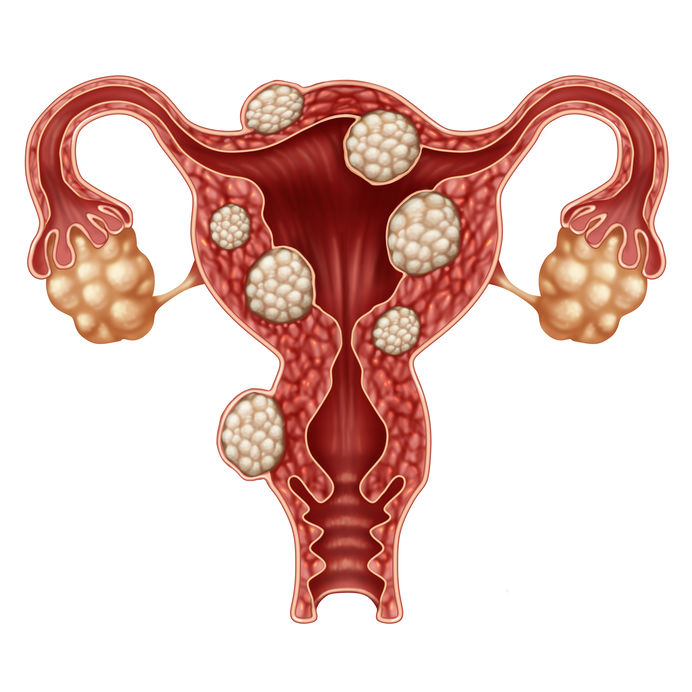
Women with uterine fibroids must endure heavy menstrual bleeding, painful menstruation, abdominal distension, pelvic pain, and urinary frequency. Symptoms often worsen over time, leading to deterioration in quality of life and loss of normal function. For many, major surgery (hysterectomy/myomectomy) becomes the only option offered by physicians. Now there's reason for hope. A new FDA approved procedure helps women avoid hysterectomy.
{mp3}https://dts.podtrac.com/redirect.mp3/superhumanradio.net/components/com_podcast/media/mp3s/SHR_Show_2365.mp3{title}SHR_Show_2365{end-mp3}
SHR # 2365 :: A New Way To Treat Uterine Fibroids
Show Notes:
[1:35] Around 80% of women will develop uterine fibroids.
- African American women have an even higher chance.
[4:15] Hormonal ebbs and flows are responsible for this.
- Progesterone is essential for fibroid growth.
- Estrogen is secondary.
[6:00] These fibroids are actually tumors.
- They can cause cause problems during a woman’s period.
- The fibroids can also grow extremely large.
- Each fibroid has its own set of genetics.
[8:10] Any correlating hallmarks for larger tumors?
- Not really. Fibroids affect nearly all women.
[9:07] Is there a metabolic correlation to these fibroids?
- There is a slight correlation to diabetes.
[11:45] There are more options than just a hysterectomy or myomectomy to treat uterine fibroids.
[13:52] Not many women actually opt for a treatment.
[16:45] Fibroids in breast tissue are a separate entity from uterine fibroids.
[17:25] Chinese medicine and increased iodine for the treatment of symptoms.
- They have not been found to reverse the tumor growth.
[28:28] When polyps are snipped, tissue can be left behind to “seed”.
- It has been found that benign fibroids can spread after being stripped into small pieces.
[30:50] Macroscopic ultrasound is a new procedure to find fibroids more efficiently.
[41:15] Do these tumors produce inflammatory factors?
- They excrete a lot of various biological factors, including cytokines.
- This can cause increased bleeding of the uterus.
[42:56] The needle used in the treatment has to be placed through the abdomen wall to touch the tumors.
- Electrodes are then used to treat tumors. The method, called ACCSSA, utilizes a frequency of 480 Khz to convert the resinous tumors into a gelatinous fibroid.
[48:20] ACCSSAhas received FDA approval to treat uterine fibroid.
[49:08] Bruceleemd.com
-ACCSSAhealth.com has a locator of providers on their homepage.
[50:50] This treatment is gaining popularity at a rapid rate.
[55:31] This procedure could also be used to treat breast tissue fibroids.
Show Transcript SHR # 2365 :: A New Way To Treat Uterine Fibroids