
• +1 502-690-2200
  • This email address is being protected from spambots. You need JavaScript enabled to view it.

Casual Friday

Every now and then you have an epiphany.. if you're lucky

Every now and then you have an epiphany.. if you're lucky

I've identified with being strong for a very long time now. With the tear of my left tricep and needing surgery I find myself with my first real training layoff. Even when I tore the two attachments of my left hamstring I continued to train push and pull movements. The last time I took off.. I mean really off.. where I didn't touch a weight for an extended period of time was 2005. So I find myself contemplating a layoff. I think I need one too (funny how that is). This won't be easy because training has filled an important part of my day for close to two decades now. I never realized how much bandwidth it occupied on a daily basis till right now. I've spent so much time thinking about the next training session, looking back on the training session that last occurred, building my day to leverage my...

Continue reading
  4847 Hits

Probiotic Protects Children Against Common Cold

Probiotic Protects Children Against Common Cold
thriv banner ThrivLife 300x250

Short and sweet. Two groups of children in daycare environments. One received a fermented milk product twice a day for 3 months. The other received a control drink. 300 children in the fermented milk group. A target probiotic of the Lactobacillus genus was observed for its possible actions in preventing respiratory and gastro-intestinal common infectious diseases. Of the two groups, controls and fermented milk drinkers, the only significant difference was the fermented dairy drinkers appeared to be resistant to the common cold - rhinopharyngitis. The authors concluded “Although no other significant differences were shown between the fermented milk and control product groups in this study, lower incidence of rhinopharyngitis may indicate a beneficial effect of this fermented milk product.” So probiotics and fermented dairy products may be living up to the task of preventing the common cold in children in a daycare setting so all the parents out there.   Source: ...

Continue reading
  3034 Hits

How Type I Diabetes Starts in Our Guts

How Type I Diabetes Starts in Our Guts

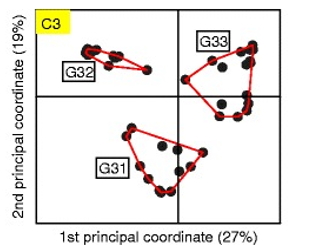
Figure 2: The scientists identified three distinct microbial communities of which the G33 com-munity with its extraordinarily high count of pro-inflammatory, LPS-producing gram-negative Bac-teroides was characteristic of children with early autoantibody development (Figure from Endes-felder. 2016).

A new study by an international team of scientists from Germany and the US (Endesfelder. 2016 | click here to read the study) appears to finally provide a mechanistic explanation for the previously postulated and epidemiologically observed link between a messed up gastrointestinal microbiome and the development of anti-islet cell autoimmunity (Brown. 2011; Giongo. 2011), i.e. the self-destruction of your pancreas. Here's what the scientists did Even though it is long-standing knowledge that "the development of anti-islet cell autoimmunity precedes clinical type 1 diabetes" and that the first signs of this rapidly accelerating process occur "very early in life," (Endesfelder. 2016) a mechanism to explain between the beginning self-destruction of the pancreas and the composition of the gut microbiome has yet been absent. To elucidate this mechanism, Endesfelder et al. developed a new approach to the analysis of the microbiome on an aggregation level between a single microbial taxon and classical...

Continue reading
  4094 Hits

The Missing Conversation With Your Physician

The Missing Conversation With Your Physician
thriv banner ThrivLife 300x250

All too often a visit to the doctors comes away with a new prescription to address some attained disorder. The conversation goes something like this: Physician: “Your blood sugar is higher than I’d like to see it. It’s continued to rise over the past several months and it’s now in a range that I think we need to get it under control using (insert drug of choice here).” Patient: “Wow that’s surprising! I’ve cut out a LOT of bad foods from my diet and I’m eating “healthier” like you told me to.” Physician: "Yes, well it doesn’t seem to be working. Here’s a prescription. Get it filled and start taking it.” Patient: “Ok…” This dialogue implies that the patient will be on this drug for the rest of his/her life. That’s where the part of the conversation that’s missing should pick up. Physicians should be explaining that drugs in general are...

Continue reading
  3625 Hits

Realistic fructose consumption is not detrimental

Realistic fructose consumption is not detrimental


As I was about one-third of my way through writing about this study, I realized that I was biased. My understanding of the literature surrounding fructose has led me to conclude that most studies showing detrimental effects are not applicable to the general population (let alone a healthy population) because of methodical limitations such as using fructose in isolation, using doses well above reasonable consumption levels, and using rodents that have known differences from humans in fructose metabolism (e.g., the fact that de novo lipogenesis under conditions of long-term, high-carbohydrate feeding accounts for 60% to 70% of fatty acids in rodents but less than 5% in humans). I therefore deleted everything I had and replaced it with what you are now reading. My goal this time around is to be more objective. As such, I apologize in advance to those of you who find my focus on the nitty-gritty annoying, but...

Continue reading
  3244 Hits

Exercise for health, not weight loss

Exercise for health, not weight loss


Among clinical trials investigating long-term weight loss, exercise as the only intervention is virtually useless. When total daily energy expenditure among industrialized societies is compared to contemporary hunter-gatherer tribesmen, they are similar despite the hunter-gatherers performing markedly more physical activity. The risk of dying is reduced dramatically as time spent being active each day increases towards 1 hour, after which it somewhat flat-lines (no additional benefit). Why? Shouldn’t being more active increase energy expenditure? According to the additive energy expenditure model, it certainly should (figure 1). However, as Pontzer et al show in their latest publication, the relationship between physical activity and energy expenditure is far more complex. They provide support for the constrained total energy expenditure model in which energy allocation among physiological tasks responds dynamically to long-term shifts in physical activity. As such, daily energy expenditure is maintained within a relatively narrow range. Five populations hold the answer In...

Continue reading
  7287 Hits

Severely malnourished? Whey beats soy yet again

Severely malnourished? Whey beats soy yet again


Three weeks ago I wrote about a study comparing a whey-based ready-to-use therapeutic food (RUTF) to a soy-based RUTF in the treatment of moderate malnutrition. The results showed a clear advantage to the whey-based RUTF, with a significantly greater 3.4% recovery rate, despite a markedly lower amount of calories (-8%) and protein (-33%). What’s more, this study showed that this superior product was similarly affordable, costing a mere $1.36 more per child who recovers from malnutrition. Not everyone agrees that this price is affordable. In a recent study by Bahwere et al, it was argued that “the high milk content of this formulation makes it very expensive for sustainable use in resource-poor settings and increases the proportion of ingredients that have to be imported into developing countries.” Accordingly, they conducted a study comparing the efficacy of a RUTF made from soy, maize, and sorghum (SMS-RUTF) to the efficacy of a peanut...

Continue reading
  3830 Hits

Salt your fat if you want to eat more

Salt your fat if you want to eat more


How would you define “junk food?” I have spent a bit of time pondering this question and my best definition is a highly palatable food high in salt, sugar, and/or fat. Clearly this doesn’t cover everything, but I would argue it encompasses most things people agree shouldn’t be dietary staples. Given my definition above, I was both surprised and joyful that Bolhuis et al from Deakin University recently published a study investigating what impact fat and salt, alone and in combination, have on appetite, food and energy intake, and food palatability. In a randomized crossover design, 48 healthy adults (16 men) completed 4 experimental trials in which they consumed a standardized breakfast followed by an all-you-can-eat lunch. The lunch consisted of elbow macaroni and tomato sauce made with 100% tomato passata (low-fat; LF) or 60% tomato passata, 30% canola oil, and 10% heavy cream (high-fat; HF). The sauce had no added...

Continue reading
  3733 Hits

A Critical-Thinker's Look At The Estrogenic Effects Of Soy

A Critical-Thinker's Look At The Estrogenic Effects Of Soy
phytoestrogens
ScreenHunter 01 Mar. 17 14.32

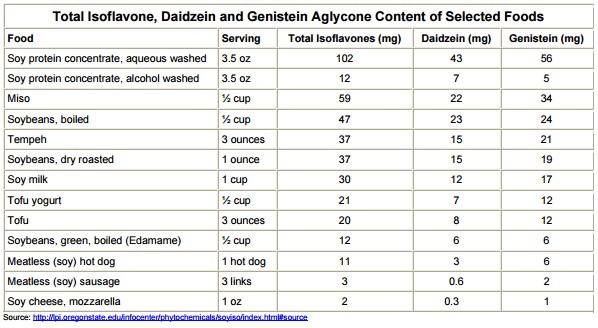
Since their recognition as part of some plant foods like soy and flax seeds phytoestrogens have been called into question for their potential to mimic the effects of real estrogens. Phytoestrogens in plants are known as isoflavones. In some cases this is a critical question. Take for instance a woman who is on estrogen blockade therapy for an estrogen dependent breast cancer. Estrogen can stimulate the progression of this and other forms of cancer and as such ridding the body of all estrogen is key to survival. Food manufacturers have said that phytoestrogens don’t convey the same biological effects as real estrogen citing a weaker affinity to the estrogen receptor and strength of estrogenicity. But then industry funded research shows that these isoflavones may protect against osteoporosis, menopausal symptoms, diabetes and obesity.. Hmmm just like real estrogen replacement therapy.  Let’s face it, they don’t want women to stop drinking soy milk!...

Continue reading
  3189 Hits

Effect of mindfulness on weight loss

Effect of mindfulness on weight loss


When an obese individual loses weight, there is a good chance that maintaining weight loss will be a lifelong battle. Nonetheless, certain behaviors can influence weight maintenance success. For instance, drinking diet soda has been shown to be more effective than drinking water at not only promoting weight loss, but at keeping the weight off over one year. By contrast, the speed at which one loses weight does not appear to influence weight loss maintenance. Another possible tool for dieters is mindfulness-based approaches to increase awareness in the moment and promote adaptive self-regulation. There is support for its use in improving maladaptive eating behaviors, such as binge eating and emotional eating, that can no doubt impede weight loss or cause weight gain. However, whether mindfulness can aid weight loss and weight loss maintenance was only recently investigated by Daubenmier et al from the University of California, San Francisco. Being Mindful… This...

Continue reading
  3484 Hits
SHR Logo

Super Human Radio is the world's longest running broadcast dedicated to health, fitness & anti-aging with an emphasis on exercise, nutrition, and hormone management. This one of the most progressive podcasts for preventative & regenerative techniques designed to increase longevity. More

2908 Brownsboro Rd Ste 103
Louisville, Kentucky 40206

(502)-690-2200

SHR Logo

Super Human Radio is the world's longest running broadcast dedicated to fitness, health, and anti-aging with emphasis on exercise, nutrition, and hormone management. The most progressive source of information for preventative & regenerative techniques... More

2908 Brownsboro Rd Ste 103
Louisville, Kentucky 40206
United States of America

+1 502-690-2200