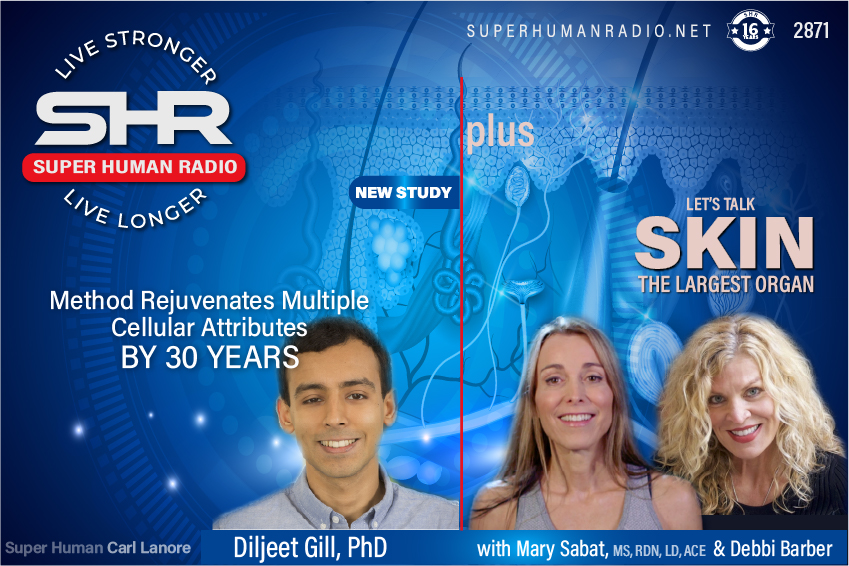
Method Rejuvenates Multiple Cellular Attributes by 30 Years-New Study
Dr. Dlijeet Gill, PhD
This study describes a novel "maturation phase transient reprogramming" (MPTR) method to restore the epigenome of cells to a more youthful state. The authors demonstrate the effectiveness of the method to reverse several age-related changes including remodeling of the transcriptome. The method performs favorably compared to other transient reprogramming protocols, and the study will be of interest to developmental biologists as well as researchers who study ageing.
PLUS
Let's Talk SKIN
Debbi Barber - Mary Sabat, MS, Nutrition
How nutrition effects the function and aging of your skin. And what you can do to keep youthful skin. Visit http://shrnetwork.biz/blue to learn more and use code SHR for 25% off.
Play
Show Notes:
Method Rejuvenates Multiple Cellular Attributes by 30 Years-New Study
[00:05:48] Why this study?
- The method is based on stem cell reprogramming.
- This is a phenomenal technique where almost any cell in our body can be converted back into a stem cell.
- It requires four genes (Oct3/4, Sox2, Klf4, c-Myc) to be expressed known as the Yamanaka factors.
- By activating them in a body cell, it triggers a series of events that eventually leads to the activation of the pluripotency program.
- This rejuvenates the cells to an almost embryonic like state effective, but you lose your starting cell types, so you do not have the functions you had.
- We were very curious if we could harness the rejuvenation from this reprogramming approach, but still keep our starting cell type and therefore keep the functions in a more useful form.
[00:11:56] Could the cells you were working with become cancer cells?
- By effectively avoiding going into full pluripotent state, we should be able to avoid the risks of cancer
[00:12:42] Dr Diljeet eloquently explains how the study was conducted.
[00:17:00] Carl shares his view on telomeres, senescent cells and iron carrying cells.
[00:22:00] Carl elaborates on epigenetic testing and Dr Diljeet replies to Carl’s questions about epigenetics in relation to his research. A must listen!
[00:34:33] With age oxidative stress does increase, this is something that reprogramming has the ability to reverse.
[00:35:15] How much of the reduction in collagen production could be dietary?
- It definitely will cause signaling changes and with collagen being a protein, you do need the amino acids to construct it.
- By eating less protein, you are going to be producing less collagen.
[00:38:00] Dr Diljeet explains various hypotheses when rejuvenating cells in optimal and sub-optimal environments.
[00:43:14] What do you think about sun and aging skin?
- There is no clear consensus, the sun might be beneficial but have harmful effects and it depends on the individual and circumstances.
- There is literature comparing sun exposed skin cells to non-exposed cells and there were some differences, but the sun is important for Vit D production.
[00:44:09] Carl shares his view on Vit D production and the Melanocortin system and sites some interesting facts on Melanotan II.
[00:49:00] Do growth factors play a role in helping these cells become more youthful?
- The rejuvenated cells will be producing growth factors that influence each other.
- Still investigating the signaling of the cell molecules.
- In the reprogramming process the cells are exposed to fibroblast growth factor 2, experimenting to see if that in itself plays a role in the rejuvenation process.
[00:52:12] What do you hope clinicians and lay people take away from this study?
- Main message is that we have developed an exciting method which harnesses the rejuvenation from reprogramming, but still keeps the starting cell type.
- This could be exciting for treating skin conditions in particular, but in the future, even broader.
- The overarching future goal is to determine if we can replace the reprogramming genes with actual molecules that we might be able to give either in the form of a pill or nutrition.
Show Notes:
Let's Talk SKIN
[01:02:32] What role does nutrition play in the quality of skin as we age?
- Nutrition affects your organs and how you absorb food and nutrients.
[01:03:34] What do you think about polyunsaturated fatty acid?
- They are definitely inflammatory.
- People consume way too much omega 6 and not enough omega 3.
[01:04:39] Can you tell us anything about liver or age spots?
- Too much sugar and the wrong types of fats contribute to the forming of these spots.
[01:05:58] Restoracell moisturizer has been reformulated. Oils have been rebalanced to absorb better and added more GHK-Cu peptides.
[00:53:36] What are some of the worst things people do that hurts their skin as far as diet goes?
- People do not realize how much sugar they actually consume, which creates huge damage through inflammation and gut health.
[01:10:59] Mary shares her experience with Restoracell.
[01:15:09] Mary elaborates on what she sees in people’s skin most often after they have not been doing the healthiest things.
[01:19:05] Both guests and Carl go into detail on the advantages and significant changes Restoracell, and GHK-Cu brings about (see link below).
[00:21:09] Mary reiterates how important exercise, optimal nutrition and supplementary treatments like sauna are for the skin.
Restoracell
www.shrnetwork.biz/blue
Use code SHR25 to get 25% off
Stay in touch with us! Get show highlights, tips, new research & offers in your inbox.
Latest Episodes

SHR #3033: The Truth about Glyphosate and Disease
May 02, 2026
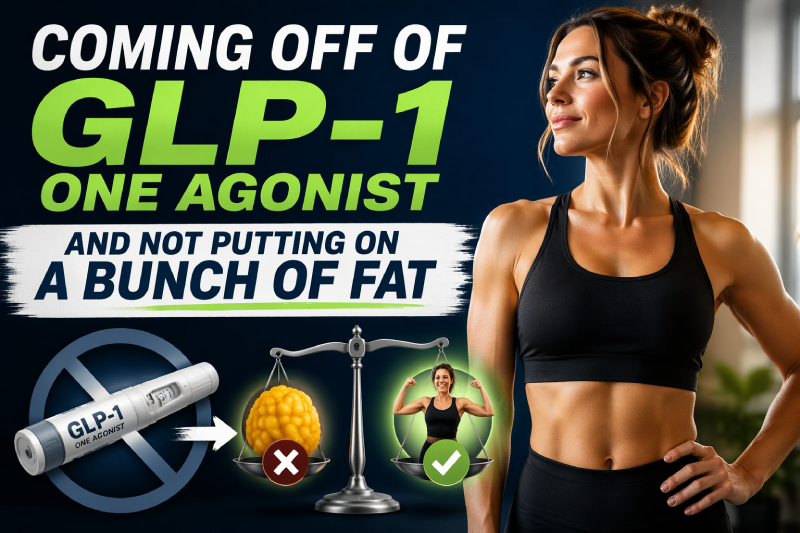
SHR #3032: Coming off of GLP one agonist and not putting on a bunch of fat
Apr 14, 2026

SHR #3025: Should You Fear the Fairway?
Feb 21, 2026
SHR #3031: The Sepsis Show
Feb 16, 2026
SHR #3030: Cheating Death
Feb 11, 2026
SHR #3029: The Ultimate Anabolic Steroid Research Guide
Oct 31, 2025
SHR #3028: Slow Aging. Prevent Disease.
Oct 23, 2025

SHR #3026: The Magic of Proper Stress Management
Dec 24, 2023
SHR #3023: The Prime Act - Getting the USDA Out From Your Farmers Way
Sep 19, 2023
SHR #3022: NAD, NMN and NR; Is There Something Safer?
Sep 18, 2023

SHR #3021: The Legend Of Christian Boeving
Sep 17, 2023
SHR #3020: The Sleep Talk
Sep 14, 2023