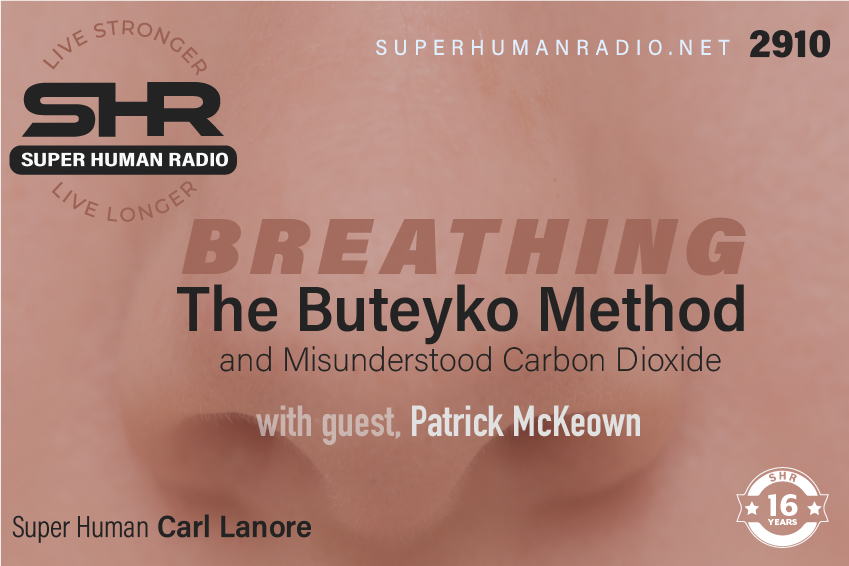
Breathing; The Buteyko Method
with Guest Patrick McKeown
So many myths and misunderstandings about breathing dispelled in this interview. Buteyko is to breathing what Intermittent Fasting is to nutrition. No matter who you are. No matter what level of health or fitness this interview will open your eyes to previously unavailable opportunities to be better.
Play
Show Notes:
Breathing; The Buteyko Method
[00:02:00] The breath is absolutely vitally important. There is a lot of misinformation out there and the breath has been very subject to change. And yet when we change the breath, it can do so much for our health. The ironic thing is that many people have it wrong.
- You can change your blood circulation,
- change the amount of oxygen delivered to the cells and
- open up your airways by changing your breathing.
[00:04:14] Patrick talks about Dr Buteyko and where The Buteyko Method came from.
[00:06:05] Patrick expounds on how carbon dioxide is misunderstood.
[00:09:07] The discussion turns to shallow breathing.
[00:10:21] When breathing through your nose:
- You actually have a deeper breath because nose breathing activates the diaphragm while mouth breathing, activates the chest.
- You naturally get a deep breath.
- It increases arterial oxygen uptake by between 10 and 20%.
- Nitric oxide is 50 to 200 parts per billion.
- Nitric oxide also reverses the build up a plaque in the arteries and it is a vasodilator.
[00:12:34] Patrick describes the apnea-hypopnea index (AHI) and an easy diy test to determine breathing pattern disorder.
[00:19:20] Follow the discussion on The Buteyko Method and it is similarity to the ancestral way of breathing.
[00:23:00] The conversation turns to blood oxygen levels vs tissue oxygen levels and mammalian breathing.
[00:27:50] Patrick replies to a listener’s question on people with low control pauses.
[00:29:31] Carl theorizes that working on your control pauses could lower stress, Patrick joins in on the dialogue.
[00:33:04] Breathing can be like medicine, because doctors are already using it with people who have asthma instead of rescue inhalers.
[00:38:00] We know now that there are complete nerve bundles that go from the nostrils to the brain.
[00:39:12] Patrick explains briefly how to get started with the Buteyko Method and Carl talks about his own minor case of obstructive sleep apnea.
- A simple exercise to open up the nose is –
- Taking a normal breath in through your nose, a normal breath out through your nose and pinch your nose and walk around 15, 20, 30 paces while holding your breath.
- When the air shortage gets pretty strong, let go of the breath through your nose and resume breathing.
- Wait a minute and do it again.
- If you hold your breath six times, your nose starts opening up.
- Listen to Patrick explaining further.
[00:44:30] Patrick tells an interesting story about the history of mouth breathers.
[00:48:15] Patrick answers a questions on:
- how low your SPO2 (pulse oximeter reading) reading should go while doing reduced breathing exercises.
- do sleep requirements go down as control pause goes up?
- changes in athletic performance when they start to use Buteyko and breath holding.
- any experience with cancer and Buteyko?
- do any type of dietary templates and or caloric intake have an acute or direct effect on controlled pauses?
[01:03:17] Patrick talks about the Wim Hof Method and autoimmune diseases – tune in!
[01:05:38] The discussion turns to CPAP (continuous positive airway pressure) and the effect it has (if any) on the Buteyko Method.
[01:10:19] Patrick replies to 3 more questions:
- Do you think that there is also a benefit achieved by this slower controlled breathing that actually triggers more efficient utilization of oxygen?
- Do you think that you become more efficient at managing your oxygen consumption?
- Would exercise to open up your nose (given earlier in the podcast) help before bedtime?
----------
Buteyko Clinic
www.buteyko.com – for health
www.oxygenadvantage.com – for sports.
Stay in touch with us! Get show highlights, tips, new research & offers in your inbox.
Latest Episodes

SHR #3033: The Truth about Glyphosate and Disease
May 02, 2026
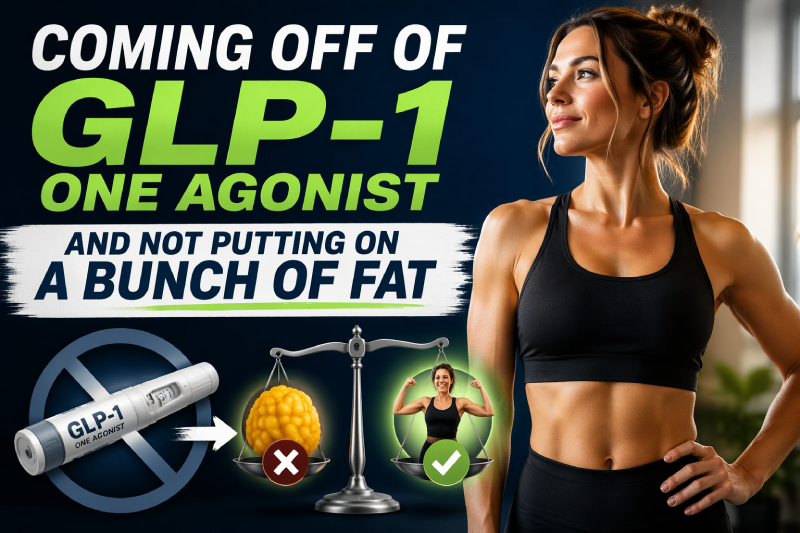
SHR #3032: Coming off of GLP one agonist and not putting on a bunch of fat
Apr 14, 2026
SHR #3025: Should You Fear the Fairway?
Feb 21, 2026
SHR #3031: The Sepsis Show
Feb 16, 2026
SHR #3030: Cheating Death
Feb 11, 2026
SHR #3029: The Ultimate Anabolic Steroid Research Guide
Oct 31, 2025
SHR #3028: Slow Aging. Prevent Disease.
Oct 23, 2025
SHR #3026: The Magic of Proper Stress Management
Dec 24, 2023
SHR #3023: The Prime Act - Getting the USDA Out From Your Farmers Way
Sep 19, 2023
SHR #3022: NAD, NMN and NR; Is There Something Safer?
Sep 18, 2023
SHR #3021: The Legend Of Christian Boeving
Sep 17, 2023
SHR #3020: The Sleep Talk
Sep 14, 2023
Latest Episodes
SHR #3033: The Truth about Glyphosate and Disease
May 02, 2026
SHR #3032: Coming off of GLP one agonist and not putting on a bunch of fat
Apr 14, 2026
SHR #3025: Should You Fear the Fairway?
Feb 21, 2026
SHR #3031: The Sepsis Show
Feb 16, 2026
SHR #3030: Cheating Death
Feb 11, 2026
SHR #3029: The Ultimate Anabolic Steroid Research Guide
Oct 31, 2025
SHR #3028: Slow Aging. Prevent Disease.
Oct 23, 2025
SHR #3026: The Magic of Proper Stress Management
Dec 24, 2023
SHR #3023: The Prime Act - Getting the USDA Out From Your Farmers Way
Sep 19, 2023
SHR #3022: NAD, NMN and NR; Is There Something Safer?
Sep 18, 2023
SHR #3021: The Legend Of Christian Boeving
Sep 17, 2023
SHR #3020: The Sleep Talk
Sep 14, 2023