Dr. Davide D' Amico
One of the theories of aging, the mitochondrial theory of aging, was first promoted by Dr. Aubrey De Grey. Well this new research not only shows that when it comes to muscle function the mitochondria appears to me the main culprit. Mitochondrial dysfunction is also identified as main player in several neuromuscular diseases like Parkinson's, ALS and others.
Thanks to Dr. D'Amico we may have now discovered the target of this mitochondrial decay and disfunction. A binding protein called PUM2, when knocked out in rat muscles corrects these mitochondrial problems.
{mp3}https://dts.podtrac.com/redirect.mp3/superhumanradio.net/components/com_podcast/media/mp3s/SHR_Show_2298.mp3{title}SHR_Show_2298{end-mp3}
{spoiler spoilerID,Click to read Show Transcript,Click me to close}
[00:00:00] Hey, welcome back to another episode of superhuman radio looking at some levels here. Make sure we have everything working properly. We have a Grilli really exciting show today. You know, we've been doing a lot of shows about the mechanisms of anti-aging. It's getting so much more precise from a scientific standpoint the more and more people are doing the heavy lifting the Deep diving to see What mechanisms in the body actually contribute to what we consider aging slowing.
[00:00:59] Out of the [00:01:00] body muscles starting to not function the way they're supposed to brain not function the way it's supposed to and you know, we had Aubree to Gray on the show many many years ago. Wonderful guy. He is the gentleman behind the the mitochondrial Theory of Aging that. It's the mitochondria that cause what we consider Beijing today, and on that line, we are going to invite my next guest.
[00:01:29] Who is dr. David a d Amico. How you doing? Dr. D Amico? Hi, Tom, welcome to the show all the way from all the way from Italy. We all want to be where you are. Dr. I'm actually in Switzerland. Oh we got in but I'm based in Switzerland. Oh, yes, it's so let's yeah, let's talk about your research before we get into the actual study itself.
[00:01:56] Why this study what work [00:02:00] had led up to the interest in what you and your team working on? Well, yeah as you as you said in the past years there has been a lot of studies trying to understand the molecular basis of aging and I mean no need to Satan is a very complex process. What is was missing? Our was an analysis that was taking into account a layer of Regulation which is called protein regulation.
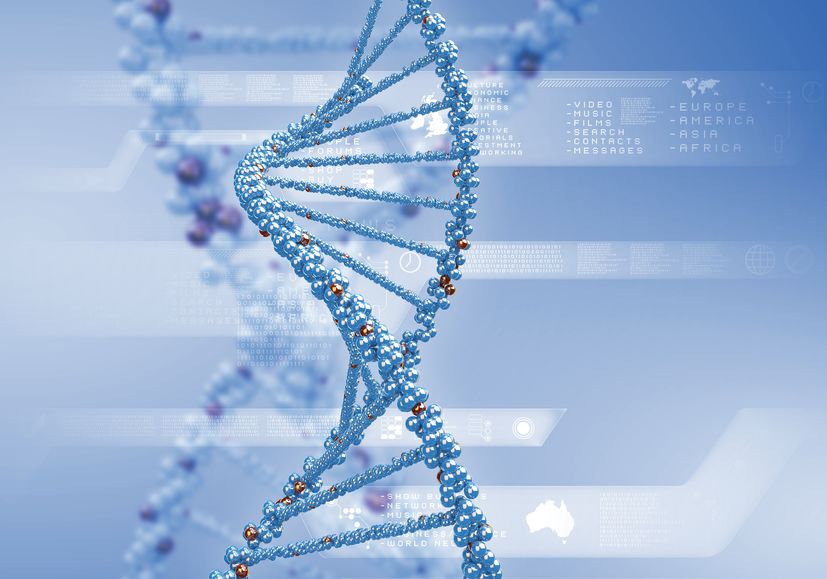
[00:02:39] You might be aware that all the information that we have in our bodies are containing to the DNA molecules. This goes into the RNA molecules. And then from RNA they are translated into proteins and most of the current studies in aging. Our focus on the mRNA molecules we call this the [00:03:00] transcriptomic and this is a very powerful technique and gives a lot of information but we don't know if there is something happening between mRNA and protein that is changed up on Aging.
[00:03:12] So the goal of this study was actually to verify if there were any Regulators of this mRNA to protein translation and for those. Those out there who aren't familiar with mRNA. So when we see the helical strands of DNA, it is actually made up of strands of mRNA. They make up the so-called ladder right that we look at where exactly okay?
[00:03:39] Okay, so we're still talking about genetics here when we talk about mRNA, but we're talking about even on a more micro level. Well actually talk about the components that make up the DNA strand itself. Yeah, usually imagined information in our body like different layers. So the lower layer is DNA than the [00:04:00] higher level is mRNA.
[00:04:02] And then we have another last level which is the protocol. So it's the pool of all the protein that are composing our cells our tissue and we can assume the protein composition from. The MRNA so it is intermediate level but maybe there are some mechanism between mRNA and protein that we don't know and so mRNA alone.
[00:04:26] It's not enough to have the whole picture. Okay and one important. Regulator of this process is indeed the this class of coat and it is mentioned in the title of the study and they're called RNA binding proteins. So as the name says they bind is mRNA molecules, and then they regulate their fate so they can change the location.
[00:04:56] They can make them more or less stable and then they can [00:05:00] translate them into. In other words if you well I was going to ask you so so binding protein has come a long way binding proteins of all types. It was once thought that binding proteins deactivated whatever they connect the two but more recently were starting to understand that biting binding proteins are important because they are Transporters they take this molecule from one place to another and so they're not designed to deactivate the actually.
[00:05:31] Going to facilitate correct. It depends on the proton. They can both activate and inactivate in the specific case of my paper. You will see that this binding protein will inactivate the MRNA. So it has a repressive function, but other proteins have the function that you are mentioning. In this case.
[00:05:57] This protein is a repressor [00:06:00] and these very high up on Aging so you. Upon aging and increase of this repressive function and this is the cause of the detrimental effects of this protein. So is there any evidence why it seems to increase as we age is there are their precursors to this binding protein that we can see are leading to its elevation.
[00:06:25] This is a very good question. But let's say the deal this in this story. The goal was to identify the targets and see the effects of this new anti-aging or age-related targets, but why they are induced the I don't have an answer for this could be this could be a nice follow-up study agree, right?
[00:06:47] Okay. So talk about your research. How was this study designed? So the beginning of this. He was a bioinformatics analysis, which means that I was digging into [00:07:00] the literature to select all the existing aging studies and then to select specifically these RNA binding proteins. So it's very important protein that was poorly studied in the context of Aging I did a screening and identified one protein of this class that was significantly induced.
[00:07:23] Upon aging and this is was named the new results. I mean no one linked ever linked this protein to aging. So the next question is okay. We age we have more of this protein. This protein is called familial to or the short version is poom true. But then what is the effect of this increase is good is bad.
[00:07:48] It has a function in effect on the aging process. This is quite hard to explain or to understand using a human or my slick [00:08:00] complex models. So I went back to a simple model which is a small transparent warm nematode and the saint if Acclaim is C elegans. The reason why I use this model is because the lifespan of this warm is very short.
[00:08:17] It's about 30 days. So it's very convenient to do longevity studies in this model and there is another Pro that we can feed this warmth with bacteria and selectively remove specific protein. So in this case, what I did is to have normal worms and warm slacking pull to the name of puncturing warmest spoof 8, but it's the same thing, right?
[00:08:53] Yeah. It's just a different name and interestingly the animals the warmth without come [00:09:00] true. We're living longer. How much longer. Well, this depends on the setting but I would say it's a 10 15 percent more which is quite High compared given them in the readout. So the take-home message is that.
[00:09:23] Upon Aging in mice and warms and humans is protein is induced. And when we remove it from simple animals, we extend lifespan. So most probably this upregulation this induction is detrimental for the aging process. Do you do other is there any evidence of individuals who age well that when we look at them, they don't have this bioaccumulation of poom to that's that's very it would be great to reply to this question [00:10:00] the problem.
[00:10:00] Is that the big genetic studies. It can tell you if you have a lot of commercial or less come true. They are not. I mean you cannot match this information with the health status site. So you can you can see the level of your proteins. You can see the sex the gender some diseased condition, but you cannot see for instance a muscle function the right or at least not yet.
[00:10:29] Not in the same way. Why is muscle function the target? Of this mitochondria study is it because it is so easy to identify better function words function. Let's say than brain function and mitochondria influence amazing is that this class of protein is linked to a number of neurological and muscular especially muscular diseases.
[00:10:57] So we know that muscle is a very [00:11:00] crucial organ in. I'm afraid relation. And the muscle aging is one of the most relevant like sarcopenia and muscle wasting is one of the most one of the Hallmark of aging and with all the consequences that we have. Right? So your study was done in in C elegans and worms and Beauty.
[00:11:26] Did you then move to rodents as well? Yes, I'm sorry. Because I thought that was the most interesting events. So in rodents and services across species study, so it goes from warms to cells to my so I think the nice part is that all what I'm going to tell you it's conserved in different species. So it's it's quite interesting and in rodents what they did is was trying to understand how this increase of control was [00:12:00] affecting aging and in.
[00:12:02] I was trying to understand who was the specific Target. So what is cooked through touching regulating and then affecting aging so I did a number of screening and then identify the protein that is regulated by consumer and this protein is called mff that stays for mitochondrial fission Factor. We're really excited about this because mitochondria is.
[00:12:32] Key element in the process of Aging we it's well established that when we age one of the things that happens all the time is that the mitochondrial function is reduced and we call mitochondria. The powerhouses of our self is our small organelles small structure in each of our cells, except the white blood cells the right blood cells.
[00:12:59] [00:13:00] Otherwise, we'll all ourself they have. Andreea, and are responsible to produce the energy for our cells in form of molecules called ATP, but they are also useful to detoxify the tax ourselves to control cell cycle. So it's really really important to have healthy mitochondria. And whenever you start having mitochondrial dysfunction, you will always see some health problem.
[00:13:27] A lot of diseases are related with mitochondrial dysfunction. And deficit and agent named some diseases. So people can understand what diseases are associated with with mitochondrial dysfunction. Well, I would say that almost all your muscular degenerative disorders like Parkinson's disease, Arkansas and Alzheimer's yes.
[00:13:52] Diabetes as well. They all have a mitochondrial dysfunction component in them. There is always the signature you were always his [00:14:00] mitochondria not working fine cancer in some ways also related to my ground area. But there is a very nice paper of some years ago, which is called a Hallmark of Aging which is listing the most important feature of the aging process and mitochondria is one of the most important one either.
[00:14:20] So JoJo with the rodents you were able to actually knock out the poom to transcription, correct? Exactly. Now what these wrote how old were these rodents that it not I know that it compared to humans. But we're these rodents born with The Knockout poom to or were they knocked out once they were mature.
[00:14:46] We were knocked down once they were mature excellent. Excellent. Excellent because we see very very different things when they are knockout at Birth versus so on. So what what did you see when [00:15:00] you knocked it out I'd how did they change as compared to their litter mates? That did not have the knockout.
[00:15:04] What did you see in the way of you could say wow, they're not aging is quickly. Yeah, well the the knockdown was done in. My in the muscle, so it was specifically in the muscle tissue few words might be of interest. I used a technique called crispr Coastline, which is a very famous technique in the same technique work nowadays, which is able to Target the DNA and edit our genome in a very specific way in the future.
[00:15:40] They will be in there are already some trial for application of this day. This was the first time that the crispr gene editing. This technique was used in the context of Aging so answering to your question what I seem but first of all, it's important to understand what happens in the [00:16:00] old muscle one feature of if you take an old mice but also hold the humanist that mitochondria are accumulating and this.
[00:16:14] Mitochondria, which become bigger and bigger they are less functional compared to the to the younger one and one reason because this happens is because the cells in the tissue upon aging they lose the ability to remove. The best way to control that is functional mitochondria. This process is called might offer G scope from the Greek.
[00:16:37] It's mitochondria lab topology literally mitochondrial digestion. So in normal condition our cells will notice which mitochondria is not healthy Target and remove it and then produce new functional one, but when we age this process is not functioning well, [00:17:00] So we will have mitochondria which are not recognized as bad and they keep staying in the cells and creating toxic product and not working fine.
[00:17:11] So an old muscle has this giant dysfunctional mitochondria what they see when they remove a poor tool is that this mitochondria are fragmented are chopped in smaller organelles, and these smaller organelles are removed. True my 12:30. So I'm able to facilitate the cleanup of the bad mitochondria.
[00:17:38] Okay. So quite a few things come to mind there is research out there, you know, the ketogenic diet is all the rage right now and one of the things that ketones appear to do is upregulate my toffee G. We see this both in. Mental Ketone [00:18:00] Esters and salts given to individuals. We see it up regulation in my top of G.
[00:18:04] But we also see this in the ever-growing intermittent fasting and even fasting mimicking diets. We see that when the body is forced to make its own energy and it and it shifts preferentially to the production of Ketone bodies as that form of energy. We see the body actually able to kind of Step Up the cleanup process.
[00:18:36] We in fact fasting has been shown in the brain to increase both otology in my top pudgy. We've seen fasting. Increase my top four G in the body as well. And so I want you to keep that in the back of your mind as you move through the new research you start to look to as what's causing some of these things.
[00:18:56] There may be some interest in looking at the [00:19:00] effects of things like dietary interventions. And even Ketone bodies to may have a direct effect on poom to because it clearly is stimulates my topology the. Thing I was thinking of was the study I mentioned to you off the air that we did a show about eight years ago where a scientist was giving old rodents oxytocin and their muscles were healing and recovering from injuries as fast if not faster than more youthful rodents.
[00:19:37] And so there may be a hormonal component. I know that hormones. Seem to influence. Other biological functions they play some rolls be interesting to see if oxytocin actually affects my top 5 G and if so, is it affecting poom to those are the two things that come to mind when you start talk about because we know that look we [00:20:00] also know that I am a I am a devotee.
[00:20:02] I'm 60 years old. I'm devoted to heavy resistance training. I trained very hard every single day. And we know that exercise keeps muscles young. We know that exercise increases mitochondrial number in in muscle fibers, right? You see instead of just having one but we also know that those mitochondria may be larger but not necessarily dysfunctional so all large mitochondria, not necessarily dysfunctional.
[00:20:35] So exercise may be having an effect on poom to. Indirectly, so, you know, these are interesting topics. I think that I'm sure that you've thought of as you go into the next phase is now that you've identified poom to you have something to look for now. Now how can we affect that you go determine this was started as a basic science project to identify new Regulators of age.
[00:20:59] [00:21:00] And yeah, the results is the identification of this pathway that goes from poo shoe to mff to mitochondria and you are right now A Next Step the next very interesting step would be to screen for known or new molecules and treatment that can affect this pathway and might offer G to improve muscle function in young and older individuals.
[00:21:24] I completely agree. We're going to take a quick commercial break and when we come back, we're going to be talking more about this very interesting study where you know, I don't believe that aging is is just that one thing. I believe that it's a all systems age differently and while the discovery of senescent cells versus quiescent cells is interesting.
[00:21:45] We also know that the mitochondria plays a large role in energy production and aging so we have to look at all of these different components in order to be doing some good. Going to take one quick commercial break. We'll be right back with more superhuman radio. [00:22:00] Stay tuned. Welcome back to supremum radio we're talking with dr.
[00:22:06] David a d Amico about Recent research that identifies a binding protein that may be the reason for Aging in the mitochondria Theory of Aging. So I'm thinking about so many things go through. Head as you're talking if I was a child, I would interrupt you every five seconds waiting. But what about this?
[00:22:30] So I have to see my God. So when you looked at the when you looked at the rodents, did you see any other? Well, first of all did what easiest male rodents or male and female rodents that you did the survey the research on its mailed meal for a reason of homogeneity of the results. I know and because of that pesky hormone estrogen.
[00:22:52] But anyway, it was yeah, but. Okay, so did you did you notice any changes [00:23:00] in the rodents as it relates to perhaps their desire to mate? I know that's always a benchmark for reversing the Aging of all the rodents increased lordosis increased mounting obviously didn't have female rodents with them.
[00:23:15] But was there any indication that they became more aggressive which is also sometimes a sign that they're feeling more youthful. Well, the experimental design was done in a way that the removal of this protein or was only in the muscle in specific. Yes. You did say you'd say that use this tool.
[00:23:40] It's I didn't see any change but it's simply because it was a very localized effect. So to answer your question and this study would be to believer and. Into have this effect systemically. So in the whole garlic right and see the effects, but [00:24:00] then yeah, of course this is this would be a great a great study.
[00:24:04] But you cannot then easily discriminate between muscle related effects. And yeah, that would also be system on Earth. And yeah, so what about what about the muscle? So was there any evidence that they were stronger or that they could handle greater load. Did you attempt to load the muscles to see how they reacted?
[00:24:25] So the readouts of my the in Vivo study was mitochondrial function which is which is associated with increased muscle function in in most of the studies and one was about the structure of this mitochondria and the structure of this mitochondria resemble the one of the young mitochondria so they are.
[00:24:54] More complex more interconnected and this interconnection is one feature [00:25:00] of the healthy mitochondria. You men should exercise as a way to boost mitochondria exercises increasing the total amount of mitochondria, but it's increasing the interconnectivity. So the number of connection of the mitochondria the more they are connected the more they are functioning well, And indeed I see a better morphology and they see more function in terms of respiration.
[00:25:27] So mitochondrial respiration is the process by which you produce your cells produce energy. So ATP molecules, which is what your muscle is using to contract to function. Do we do we know how long it takes for muscle mitochondria to turn over? Oh, that's that's very quick. I cannot think about quantify but it's happened.
[00:25:51] I mean this happens continuously, but I mean like it's also from the from the from so from from the from the date of a [00:26:00] mitochondrial biogenesis to the date that mitochondria is then broken up and removed as an old mitochondria it we talked about just days is just days or is it weeks or is it months or.
[00:26:12] the the. I would say that you cannot consider the mitochondria as a separate unit. You don't have one single mitochondria and you can track it from the birth to the death, right? You have mitochondrial biogenesis is in this new structure that merge in networks the reshuffled you get three organized in a process called Dynamics.
[00:26:39] Okay makes you understand the process and then. Part of this network is isolated and removed by my collagen. So the whole process is very quick and very I mean it's continuous but yet you cannot say the you [00:27:00] cannot talk about single mitochondria life. Okay. What when I guess what I then let me rephrase this question from the time that you knocked out poom to.
[00:27:09] Did it take for you to start to see the anti-aging effects on the muscle mitochondria? This is what weeks in for five weeks. Wow, fantastic very fast. So this is fast. Yeah, the it's the time to deliver the system to knock down the Prada the protein and then once the knockdown is happening in the cell.
[00:27:34] The effects on the mitochondria are quite fast. Yeah, Nathan Haley is wants to watch this live but he's a boxer he's doing amazing things. He's he's going to be very popular some day and he said that he has to go and train so he'll have to listen to it later. That's good. He wants to know more about aging mitochondria so he can stay vital and keep boxing for the rest of his life.
[00:27:58] Was there anything [00:28:00] that happened in the study that you didn't expect to see? That you went. Wow, you know we weren't looking for that, but that's very interesting. Well one thing that was interesting is that when I did this link might offer G A mitochondrial biology is quite I would say complex and there are a lot of players acting on my own mythology.
[00:28:32] But once I find I was able to. what was interesting is that it was not old might offer to process that was regulated by puncture and mff but mostly one specific might offer to regulator, which is called the. BNI Petri and this was quite surprising to me because I don't know the exact mechanism but this means that [00:29:00] is very specific and this is conserved also in warms.
[00:29:04] So this is probably another interesting thing that the same pathway come true and my faith and believe three was conserved in shul quite a different species like my mouth more mice. And so that mean that means that. It's a long-standing evolutionary gift if it's if it's evolutionary conserved with means.
[00:29:26] Yes biologically relevant. Otherwise nature would have wouldn't have keep it to for such long time. So are you a fan? I'm a huge fan of evolution. I want every time I see some scientific paper. I always ask myself. What would the evolutionary gift be? Why is this happening? What would be the benefit and how will we miss using it?
[00:29:47] And that's why it's happening. Now. When you look at this phenomenon of this binding protein from an evolutionary perspective. Do you see anything that tells you I can see why this is this was [00:30:00] happening and why it would happen now in modernity. You mean why might offer G is being stopped? It's being stopped.
[00:30:11] Yeah, you know because it seems like when when I when I think about this right now, I think right away. Well, we know that one of the things that we're learning about dietary function and humans. Is that our new way of eating over the past forty Thousand Years where we lost the ability to be hunter gatherers, and we started growing everything and storing everything and now we have refrigerators and grocery stores that the the the period of time that we did not eat each day.
[00:30:46] Stimulated otology in my table G the fact that we would you know our ancestors. They didn't have refrigerators. They couldn't eat and watch your television at 12 o'clock at night. So they stopped eating at some reasonable amount of time and they usually had a [00:31:00] period of 12 to 16 hours where they didn't eat if you look at dr.
[00:31:04] Melinda Watts, he's book of doves diplomats and diabetes. He details this evolutionary gift. The work of going out and finding food and risk and how it affects the brain and hormones that then take the food we eat and turn it into things to compensate super compensate so we can do a better job as the as opposed to becoming type 2 diabetic and fat because we're sitting in a chair and just reaching to the refrigerator.
[00:31:33] And so when I think about these things like you're talking about for me, I think you know, I got a feeling that. It is going to be the biggest driver of poom to and what I mean by diet. Is this overfeeding that we have today in our population in the world and and and so from an evolutionary perspective I think to myself, you know, maybe it's this is also linked to the [00:32:00] production of ketones because most people produce ketones if they fast for 12 to 16 hours, but no one fast for 12 to 16 hours anymore.
[00:32:07] They eat right up into the time they go to bed. I know people who wake up in the middle of the. Ekos they're Starving in the middle of the night. So there's never any autopsy on my top of G going on at all. So made from an evolutionary perspective. I think ah, I bet diet and activity are going to play a role in poom to I agree with you like the.
[00:32:28] Activities exercise and this Force the intermittent fasting that we were doing a long time ago, but they are stressful. Right right and. And from this point of view we are last much less stressed with so much easier life what we are doing now, but what evolution probably used is that? Yeah. It's really to use distress for [00:33:00] something good.
[00:33:00] So. Little amount of stress is actually beneficial for ourselves with we exercise. We stress our muscle when we do intermittent fasting we stress our metabolic pathways, but in this way, we basically trained our body. To cope with the stress and we make them stronger we make we stress our muscle and then we stimulate the Regeneration of the muscle for me hormesis.
[00:33:27] You talk about hormesis. Yeah hormesis exactly. You you got it and indeed it exists a mitel permissive. Which means that if you stress mildly or for a limited period of time your mitochondria you stimulate stress Pathways, which are beneficial is of course, I mean, it's hormesis. You cannot stress too much.
[00:33:51] Otherwise, you will have the opposite effect so bad effects, but I completely agree with you in evolution that play a role and we [00:34:00] change. Our habits and I mean, I cannot say that exercise and punctual exercise and nutrition effect on show but this could be actually a very cool thing to check and but for sure they modulate other age-related factors and you know, there's a lot of interesting work going on on identifying mitochondrial adaptation in the way of sports performance and then you know, there was a study done about two years ago where they show.
[00:34:30] That by taking high doses of Vitamin C before doing arduous resistance not resistance endurance training actually blunted mitochondrial adaptation and. This speaks to what you're saying. It's well the added vitamin C because it was quenching free radicals. It was compensating for the stress that the mitochondria was going.
[00:34:56] It was undergoing. So the mitochondria didn't feel any need to [00:35:00] get stronger and so it and it. Yeah, that's that's the thing. It's a paradox and it's still not clear. What is the degree that makes the stress good or bad? I mean other antioxidant have shown to be it's a beneficial. What is for sure important is the editor also other stress should not be too much one thing that could be for instance taking into account is also the.
[00:35:32] For recovery. So while on one side the stress could be useful for the Regeneration or to blunt all the rows production. You don't boost your muscle function on the other side you can. Facilitate the recovery later on. This is the literature tells a lot about antioxidant and Muscle Recovery, right what one last question before we go into the break and then I'm going to [00:36:00] let you give us the summary of what you want people to take away from your research.
[00:36:04] There is a supplement that that became very popular about four or five years ago called pqq. Pyro quinolone quit something and it's supposed to influence when taking with coenzyme Q10 exposed to influence better more functional stronger mitochondrial biogenesis. Are you familiar with this supplement?
[00:36:27] Oh, yes. So did Joe do you think a supplement like that would be worthy of looking? From the standpoint of understanding what poom to does now with pqq actually help these individuals. Probably it's not related to crucial because culture is like Upstream. So there might be drugs which are going to push through and then from punctual to mitochondria.
[00:36:54] If anything this peculiar you go. My possible to and go directly to mitochondria, [00:37:00] but the thing is that so far. There is no evidence in Vivo in humans that any of these mitochondria booster is really improving muscle function a lot of studies ongoing a lot of preclinical studies in mice. But they think there is still some work to do on this site.
[00:37:24] Okay, we're going to take our last commercial break when we come back. I want you to summarize what you want people to take away from your research. You're listening to superhuman radio stay tuned. We'll be right back. Welcome back talking with dr. David E is why can't I pronounce your name David?
[00:37:43] Oh David a David a nowadays, correct? Yes. If you lived in New York I call you David. There you go. I so I want to summarize what you want both clinicians and lay people to take away from your [00:38:00] research and and I kind of think it's got to be limited because all you've really done it. Discovered the marker and now the research must be done to find what effects this marker.
[00:38:11] Yeah, you got it. I mean this is the basic science research what they what they did which led to the identification of the new age related pathway, which is starts with this RNA binding protein composure which is induced upon aging and this induction is one of the cause of mitochondrial dysfunction.
[00:38:34] So one take-home message is that we should keep an eye on our mitochondria Health while we age because they are a key component of our cells and one of the driver of age. And the other thing is that this paper, I developed a genetic approach to [00:39:00] Target punctual and affect mitochondrial function and one interesting field would be to see any molecules drugs for.
[00:39:13] Other interventions that could modulate this pathway and I'm talking about mitochondrial dysfunction, but I think it's very important the concept of Mythology. So you mentioned other treatments boosting mythology and I think that might offer G mitochondrial clearance is something that needs to be studied more in in detail and especially compounds that can Target might offer G.
[00:39:42] Be promising in the future for aging muscle function. Yeah, great stuff. I love this kind of stuff and like you I hope and I hope for the day that we have clear-cut approaches to. These [00:40:00] things so we can age better. You know, I'm actually starting next week on rapamycin therapy the way it's described by.
[00:40:08] Dr. Miguel blackish glowny one milligram one day a week because this is supposed to affect it actually suppresses senescent cells from putting out those bad cytokines that seem to poison all the cells around them, and I'm very hopeful. That the sensible approach to this actually will allow me to function better.
[00:40:33] One of the things he talked about on his show was that the people there's about 300 patients that have been on it for two years now over in New York and Boston. And the results are amazing a couple of them are marathon runners and they say that they're times have gotten faster. They're able to run their if they feel like their muscles they felt like as they age it was harder than the muscles were producing a lot of [00:41:00] resistance to working and now it feels like they're young again.
[00:41:02] He said that their legs flow easier and I wouldn't be surprised if if this plays into mitochondria, dr. Laszlo voros came on my show about. The three years ago and talked about deuterium and how it fouls up mitochondrial function and there's deuterium in lots of different things double bonded hydrogen deuterium and it actually causes mitochondrial to break literally break and his research is really profound, you know, so we have so many things in our environment and in our lifestyle that seem to be working.
[00:41:42] Against healthy mitochondria, and and there are things that we know can influence healthy mitochondria, but most people don't do them. They don't get up and walk a mile a day or two miles a day. They don't go to the gym and work out. They don't they don't have zero sleep. You [00:42:00] know, I protect my sleep I go to sleep at nine o'clock every night.
[00:42:03] I get up at five o'clock in the morning. I have three different devices. I have an ordering. I have a go to sleep ring that actually measures my pulse ox and everything and then. An app that lets me know if I snore in the middle of the night, I protect my sleep because I want to age better and it's working so far for me.
[00:42:20] All these things are working so far. So I'm really excited about your research and I know you have some other research coming out soon, right? Yes. Well, it's it's not three. I mean I'm working now on the more pharmacological aspect of muscle aging so and it's again on my table G. I think this is one key molecular pathway that.
[00:42:47] It's more and more essential in this field all the other intervention you you mentioned they are yet. So I don't know the data about Resveratrol. But yeah, [00:43:00] I think it's a very exciting field what it's important. It's that we're talking about stress in many cases like and so it's important that we perform well done clinical studies because each of us can.
[00:43:15] I put his trust in a different way. And so the dosing of this synthetic compounds is something always quite tricky to understand very very interesting this attack speed on the show. Look that's almost an hour. You said you didn't think we could fill an hour. Yeah when fast right. I listen. Thank you so much for being with us today.
[00:43:39] Okay. Well, thank you for inviting me my pleasure. Take care, and we're going to sign off. I am not on the air tomorrow. So I will see you Monday. We have a great show planned for you Monday. Hope you can make it if you can't make it. There's always the podcast on iTunes or you can go to YouTube and watch the video.
[00:43:54] Have a good.
{/spoiler}