Dr. Henning J. Drews MD
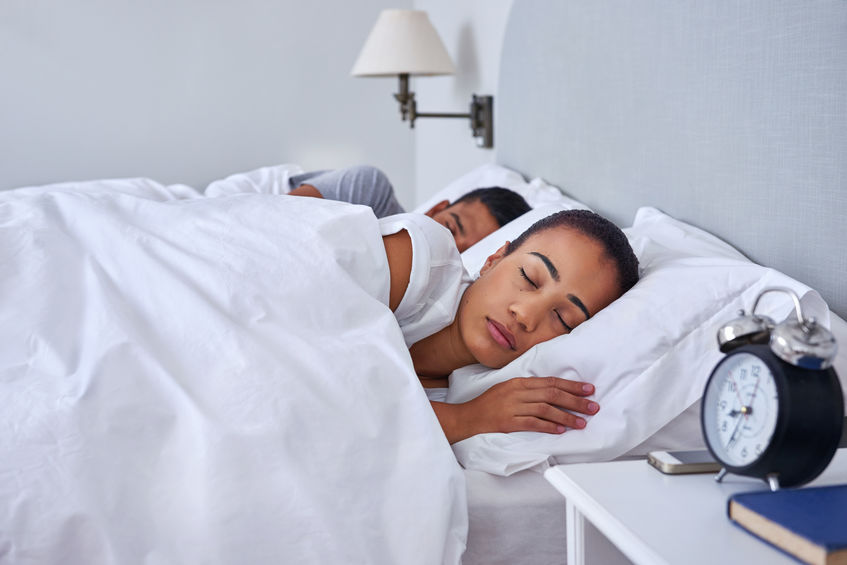
Sharing the bed with a partner is common among adults and impacts sleep quality with potential implications for mental health. However, hitherto findings are contradictory and particularly polysomnographic data on co-sleeping couples are extremely rare. The present study aimed to investigate the effects of a bed partner's presence on individual and dyadic sleep neurophysiology.PLUS The solution to all higher education needs started in 1855 in Kentucky. You won't believe it when you hear it.
{mp3}https://dts.podtrac.com/redirect.mp3/superhumanradio.net/components/com_podcast/media/mp3s/SHR_Show_2542.mp3{title}SHR_Show_2542{end-mp3}
Show Notes:
[5:10] what made Dr. Wennig want to do this study?
[7:00] Study design.
- 12 couples slept 4 nights (2 weekends). One weekend together and one apart.
- Only the 2nd night of each weekend was used for analysis.
- The first night of each weekend was used as an adaptation night.
- Healthy, young individuals.
- 2 separate mattresses.
[15:30] The use of Polysomnography.
[16:38] Findings.
- Rem increased ~10% for those that slept beside partners.
- There was also less fragmented sleep for partners.
- Synchronization of sleep cycles occurred for partners.
[21:03] Could synchronization be from partners’ brain frequency harmonizing?
[24:00] REM sleep.
- Phasic REM is very hard to awaken from.
- The REM state is a very vulnerable state. Having a partner could increase feelings of safety, increasing REM.
- Trouble maintaining body temperature is common during REM sleep. A partner could help to stabilize this.
- Increases in baseline oxytocin production could also play a role.
[29:56] Synchronicity increases correlated with the quality of the relationship.
[40:10] Conclusions of the research.
- Partners Don’t always disturb sleep.
[52:50] Berea college is discussed.
- Founded in 1855.
- No tuition.
- 1st coed college in the U.S.
- It has deep roots in the origins of Black History month.
Purple.com/shr code: SHR