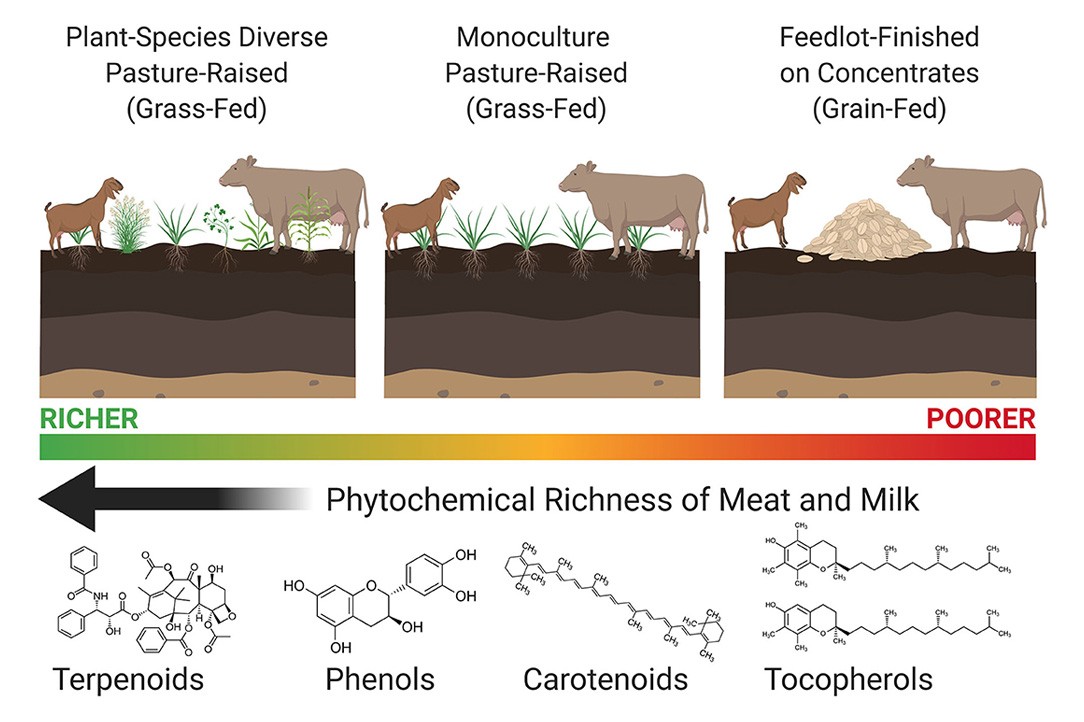
Stephan van Vliet, Frederick D. Provenza and Scott L. Kronberg While commission reports and nutritional guidelines raise concerns about the effects of consuming red meat on human health, the impacts of how livestock are raised and finished on consumer health are generally ignored. Meat and milk, irrespective of rearing practices, provide many essential nutrients including bioavailable protein, zinc, iron, selenium, calcium, and/or B12. Emerging data indicate that when livestock are eating a diverse array of plants on pasture, additional health-promoting phytonutrients—terpenoids, phenols, carotenoids, and anti-oxidants—become concentrated in their meat and milk. Several phytochemicals found in grass-fed meat and milk are in quantities comparable to those found in plant foods known to have anti-inflammatory, anti-carcinogenic, and cardioprotective effects. As meat and milk are often not considered as sources of phytochemicals, their presence has remained largely underappreciated in discussions of nutritional differences between feedlot-fed (grain-fed) and pasture-finished (grass-fed) meat and dairy, which have predominantly centered around...