• +1 502-690-2200
  • This email address is being protected from spambots. You need JavaScript enabled to view it.

Super Human Roundup: Very-long-chained saturated fatty acids protect against death and Americans aren’t eating fish that protect the mind

Super Human Roundup: Very-long-chained saturated fatty acids protect against death and Americans aren’t eating fish that protect the mind


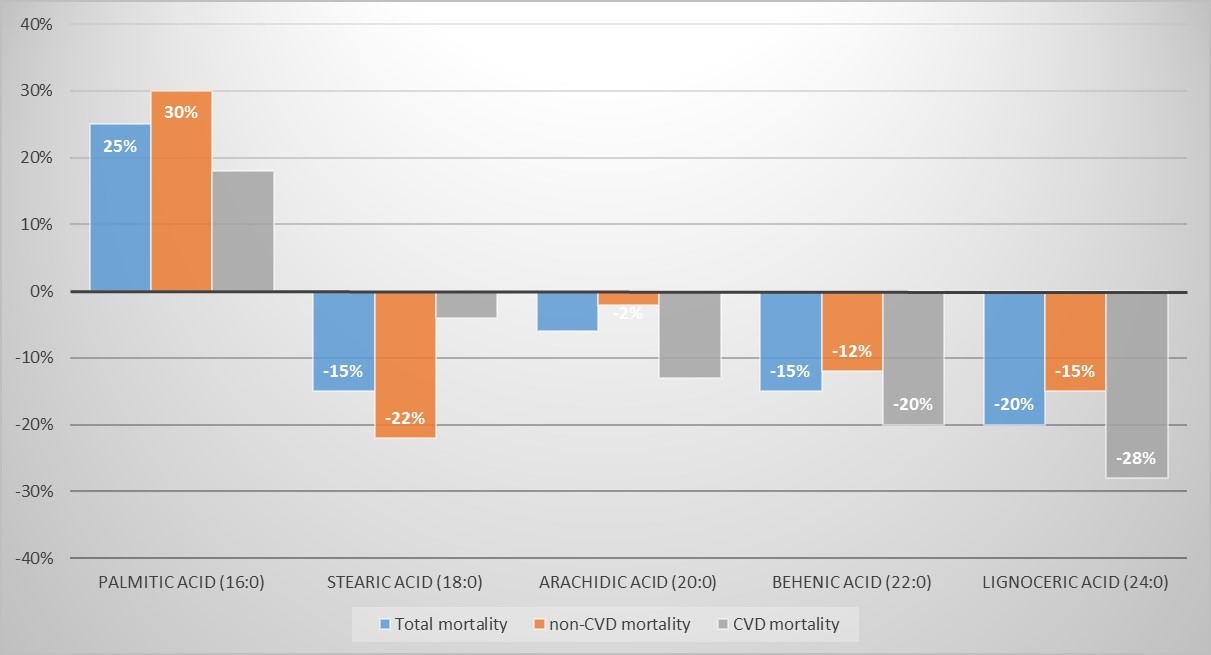
Very-long-chained saturated fat may protect against death It is well-known that saturated fatty acids (SFAs) of different chain lengths have different metabolic effects within the body. There is also increasing evidence that circulating SFAs may influence the risk of cardiovascular diseases (CVD) and mortality. Yet, the vast majority of this research focuses on the long-chained SFA palmitic acid (16:0) and stearic acid (18:0). This is not without reason, as these two SFAs are the most common SFAs in the human diet and palmitic acid is also produced within the liver during de novo lipogenesis (DNL). Far less is known about the very-long-chained SFAs arachidic (20:0), behenic (22:0), and lignoceric (24:0) acid that are obtained primarily from peanuts and canola oil. As such, Fretts et al took it upon themselves to determine the relationship between the amount of these SFAs within the red blood cell membrane and CVD mortality and non-CVD mortality...

Continue reading
  1418 Hits

Keto diet great for blood glucose but not the liver in diabetic mice

Keto diet great for blood glucose but not the liver in diabetic mice


Type-2 diabetes (T2D) is a disease in which prolonged and excessive insulin resistance and compensatory hyperinsulinemia lead to a marked reduction in pancreatic β-cell mass and function. It is well recognized that diet plays a central role in the management of T2D, and particular interest has been given to low-carbohydrate diets given that they may improve glycemic control and blood lipids to a greater extent than low-fat and low-GI diets despite similar effects on weight. A specific type of low-carbohydrate diet that is high in fat and moderate in protein is a ketogenic diet (KD). Although initially used for the treatment of epilepsy, KDs are increasingly being used for weight loss and general health. Indeed, it has been argued that a KD may facilitate weight loss through helping to control hunger and improve fat oxidative metabolism. However, it remains unknown what impact a KD may have in persons with T2D over...

Continue reading
  2416 Hits

Fat loss heals the heart

Fat loss heals the heart

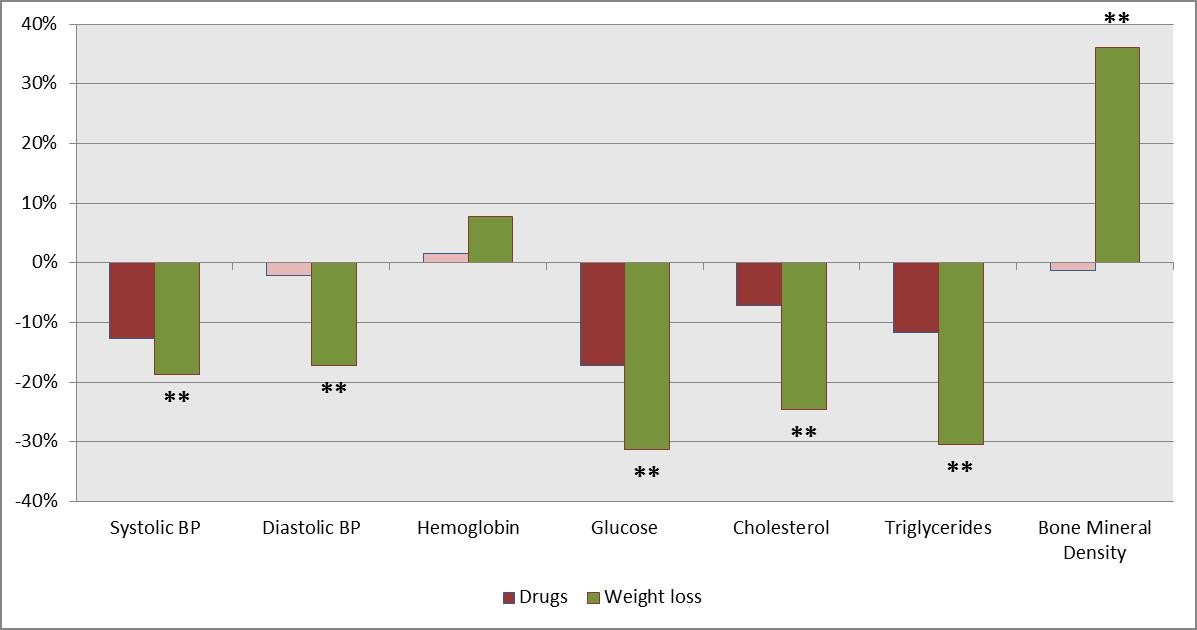
The health benefits of fat loss are incredible. For instance, individuals with obesity experience improvements in glucose metabolism and insulin sensitivity that far outweigh the benefits of exercise. Similar results are seen in adults with type-2 diabetes, and there is also evidence to suggest that fat loss can restore pancreatic beta-cell function and reverse pre-diabetes in mice. Most recently, Oshakbayev et al investigated how a weight loss program would affect the health of adults with diagnosed atherosclerotic (AS) diseases. This includes any condition in which plaque builds up inside the arteries. They recruited 71 middle-aged men and women with various clinical manifestations of AS and randomized them into two groups: weight loss or conventional drug therapy. The weight loss intervention was novel and lasted between 2-6 months depending on the participant. They underwent “analimentarnaya detoxification” that is akin to a prolonged fasting session. For bouts lasting 10-28 days, only 6-8.5 cups...

Continue reading
  2104 Hits

Super Human Roundup: Protein for elderly women, the Dutch, the bariatric patient, and a link between red meat and prostate cancer

Super Human Roundup: Protein for elderly women, the Dutch, the bariatric patient, and a link between red meat and prostate cancer


Protein for gains in elderly women The age-related loss of muscle mass is called sarcopenia. This condition can lead to an increased risk of fractures, frailty, and loss of independence. Although the etiology of sarcopenia is multifaceted, an accumulating number of studies document the muscle-preserving ability of increased dietary protein intake. Most recently, Isanejad et al examined the relationship between protein intake and lean body mass (LBM) in 554 elderly women (65-72 years old) who were followed for 3 years. At baseline, protein intake was estimated from a 3-day food log and body composition was assessed via DXA scanning. The body composition measurements were taken again after 3 years. The participants were divided into quartiles of protein intake: <54, 54-66, 66-80, and >80 grams per day, which corresponded to average intakes of 0.79, 0.9, 0.96, and 1.18 g/kg bodyweight, respectively. At baseline, a higher protein intake was significantly associated with greater...

Continue reading
  1711 Hits

Is the RDA for vitamin D sufficient? New analysis suggests you may need 5-fold more.

Is the RDA for vitamin D sufficient? New analysis suggests you may need 5-fold more.


The recommended daily allowances (RDAs) for vitamins and minerals were first established by the Institute of Medicine (IOM) in 1943. There have since been small changes to incorporate emerging scientific knowledge, but on the whole they have remained relatively constant. Perhaps the most notable change came in 2010, when the IOM tripled their recommendation for vitamin D from 200 to 600 IU daily for all people aged 1-70 years. By definition, an RDA for a nutrient is set at an intake level whereby it satisfies the requirement for 97.5% of the population. Statistically, this is done by finding the amount that is adequate for half the population (called the estimated average requirement, or EAR) and having the RDA be 2 standard deviations above it. According the IOM, a satisfactory requirement achieves serum vitamin D (25OHD) levels of at least 20 ng/mL. Both the target 25OHD levels and the RDA have come...

Continue reading
  2100 Hits

Vitamin D deficiency in obesity – the chicken or the egg?

Vitamin D deficiency in obesity – the chicken or the egg?


An estimated one billion people worldwide are vitamin D deficient or insufficient, and analysis of the NHANES 2005-2006 data suggests that 41.6% of Americans are deficient. There are many causes for low serum vitamin D (25OHD) levels, and one may be obesity. Research has documented an inverse association between measures of body fatness and serum vitamin D levels (25OHD) in adults and children. Being associations, we are precluded from drawing firm conclusions. Which comes first, obesity or vitamin D deficiency? Thanks to the work of Pannu et al, we may have an answer. These researchers conducted a meta-regression analysis of 23 randomized controlled trials in which overweight and obese participants underwent a weight loss intervention without vitamin D supplementation. As such, the 2085 participants were part of a vitamin D study but assigned to the control group where vitamin D supplements were not provided. For every 10 kg that the participants...

Continue reading
  2999 Hits

Super Human Roundup: Calories promote gestational weight gain, pregnant carbohydrates make fat babies, and exercise can rescue the offspring

Super Human Roundup: Calories promote gestational weight gain, pregnant carbohydrates make fat babies, and exercise can rescue the offspring


Pregnant ladies listen up; enjoy your cravings but don’t have seconds. Pregnancy demands weight gain; there is no logical reason that growing a fetus inside you should not result in weight gain. Indeed, too little weight gain increases the risk of having a preterm birth and low-birth-weight offspring. On the flip-side, there are individuals who use pregnancy as an excuse to get fat. Perhaps I’m being a tad vain, but it’s true. Yet, excessive gestational weight gain (GWG) is associated with gestational diabetes, cesarean delivery, giving birth to fat infants, and increased risk of chronic diseases later in life. Not surprisingly, a proper diet plays a central role in the pregnant mother-to-be’s health. Recently, Tielemans et al systematically reviewed the association between energy and macronutrient intakes and weight gain during pregnancy in both observational and intervention studies in low-, middle-, and high-income countries. In total, 56 studies with over 78,000 healthy...

Continue reading
  2215 Hits

Healthy but hungry? Try eating 3 meals per day rather than grazing.

Healthy but hungry? Try eating 3 meals per day rather than grazing.

If you were change the number of meals you ate tomorrow, but otherwise kept your food intake and diet the same, would you be more or less hungry? This question was recently investigated by Perrigue et al, who recruited 12 healthy young men and women to undergo two 21-day intervention periods in a crossover design. For seven days prior to beginning the study, the participants recorded everything they ate and drank. The researchers used these foods logs to create individually tailored meal plans for each participant that kept food items, calories, and macronutrients constant. The researchers provided the participants with all their food for the 21-day intervention periods, which was to be consumed under free-living conditions. The single difference between the two intervention periods was that for one of them the food was provided as 3 meals, and for the other the food was provided as 8 meals. The meals were...

Continue reading
  1875 Hits

Nuts show us why CICO is flawed but calories still matter

Nuts show us why CICO is flawed but calories still matter

At the dawn of the 20th century, a researcher by the name of Wilbur Olin Atwater developed a system for measuring and estimating the energy content of food. This was later expanded upon by Merrill and Watt, who proposed that different macronutrients contribute different amounts of energy to the caloric total and developed Atwater specific factors that are still in use today. These proposed heats of combustion average 4 kcal/g for protein, 4 kcal/g for carbohydrates, and 9 kcal/g for fat. There is little doubt that these values for food are very accurate estimates. Yet, our bodies are highly complex biological systems, not bomb-calorimeters that combust food until only ash is left. This is clearly evidenced by the work of Baer et al from the USDA Human Nutrition Research Center, who recently published a study examining the metabolizable energy of walnuts when consumed as part of a typical American diet by...

Continue reading
  3462 Hits

Super Human Roundup: Vegans don’t live longer, movement saves lives, artificial sweeteners and diabetes, and oatmeal anti-diabetic

Super Human Roundup: Vegans don’t live longer, movement saves lives, artificial sweeteners and diabetes, and oatmeal anti-diabetic


No, you will not live longer if you are a vegetarian If you were wondering how eating meat can impact your risk of 18 common causes of death, then you’re in luck. Appleby et al from the University of Oxford, UK just published an analysis of over 60,000 adults answering this very question. Based on data from food frequency questionnaires, the participants were classified as regular meat eaters (>5x/week), low meat eaters (<5x/week), fish eaters, vegetarians, or vegans. 5 times per week). Data labels indicate a statistically significant difference from regular meat eaters." data-popup="//superhumanradio.com/images/easyblog_images/1717/b2ap3_large_SHRoundup_vegandeath_fig1.jpg" data-style="clear" style="display: block; margin-left: auto; margin-right: auto;"> For all causes of death combined, there was no significant difference in risk between diet groups. However, compared to regular meat eaters, low meat eaters had a significantly reduced risk of dying from pancreatic cancer (-46%) and respiratory diseases (-30%); fish eaters had a significantly reduced risk of dying from...

Continue reading
  1480 Hits
SHR Logo

Super Human Radio is the world's longest running broadcast dedicated to health, fitness & anti-aging with an emphasis on exercise, nutrition, and hormone management. This one of the most progressive podcasts for preventative & regenerative techniques designed to increase longevity. More

2908 Brownsboro Rd Ste 103
Louisville, Kentucky 40206

(502)-690-2200

SHR Logo

Super Human Radio is the world's longest running broadcast dedicated to fitness, health, and anti-aging with emphasis on exercise, nutrition, and hormone management. The most progressive source of information for preventative & regenerative techniques... More

2908 Brownsboro Rd Ste 103
Louisville, Kentucky 40206
United States of America

+1 502-690-2200