
• +1 502-690-2200
  • This email address is being protected from spambots. You need JavaScript enabled to view it.

Diet or exercise – what makes you hungrier?

Diet or exercise – what makes you hungrier?


If your goal is to lose weight, then you need to create a caloric deficit. This can be done by reducing eating less calories or by increasing caloric expenditure via exercise (ignoring the complexities of the body and nutrition such as reducing caloric intake by replacing added fats with nuts). Of course, for weight loss to be successful, the intervention must be sustainable. This led Cameron et al to investigate how dieting alone or aerobic exercise alone differently affects appetite and appetite-related hormones, food hedonics and food reward, and olfaction. Ten young, healthy male volunteers were recruited to undergo three 3-day interventions (with a 2-week washout between each) in which each participant first completed a control condition, followed by a diet or exercise conditions (in random order, so some started with diet and others started with exercise). Thus, this was a crossover study with the sequence of testing being either CON-DIET-EX...

Continue reading
  2789 Hits

Can 4 days of paleo benefit health?

Can 4 days of paleo benefit health?

According to the abstract of Freese et al’s latest study, “returning to our Paleolithic roots may have positive effects on risk factors commonly associated with metabolic disorders.” This conclusion is based on the data obtained from sending 13 healthy men and women into a National Park for 4 days and 3 nights. The goal was to return them to a “metaphorical paleolithic hunter-gatherer condition of living.” Accordingly, they lived and slept outdoors with no shelter. And just like all other hunter-gatherer tribes before them, water was available every morning from a nearby holiday apartment. Food was also provided to the participants, including a morning ration of fruit, nuts, and tubers alongside instructions not to eat before noon, and “paleo meals” supplied at night. At the end of the 4-day intervention, the participants showed significant reductions in fasting glucose (-18%), fasting insulin (-50%), and HOMA-IR (-58%; proxy for insulin resistance), as well...

Continue reading
  2572 Hits

Evidence of non-celiac gluten sensitivity?

Evidence of non-celiac gluten sensitivity?


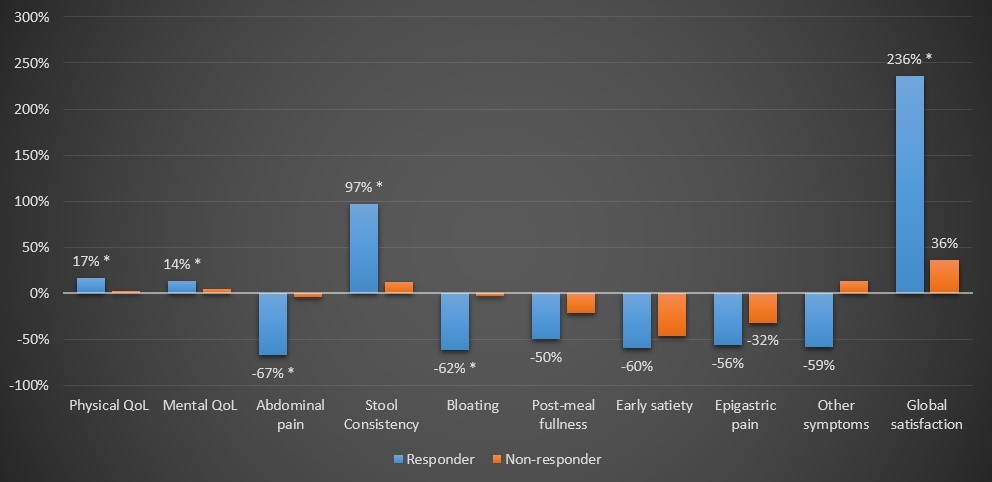
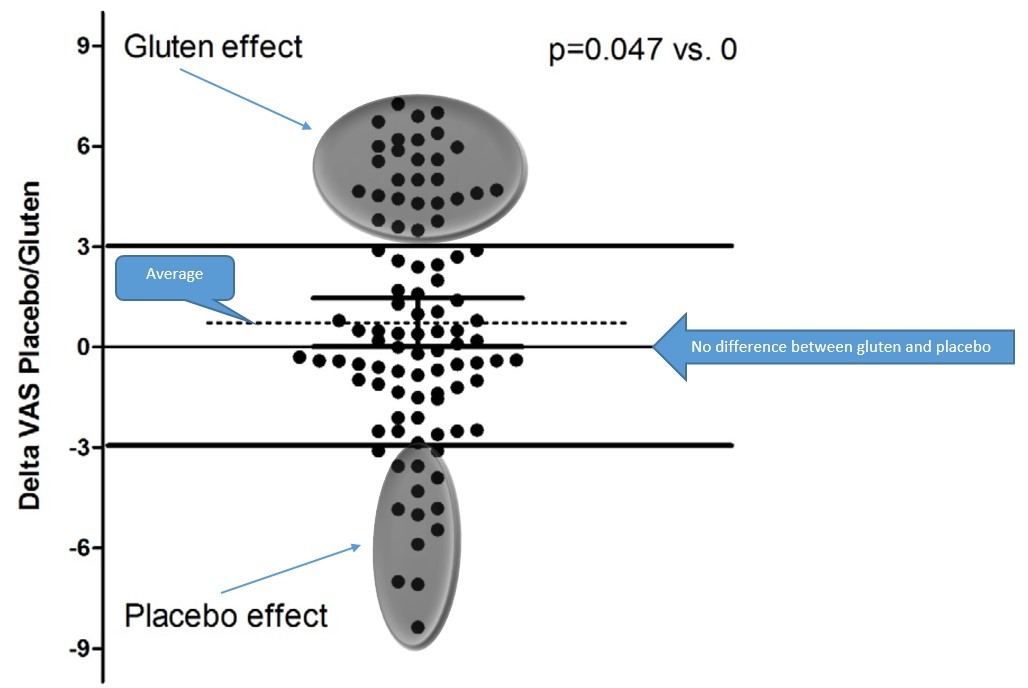
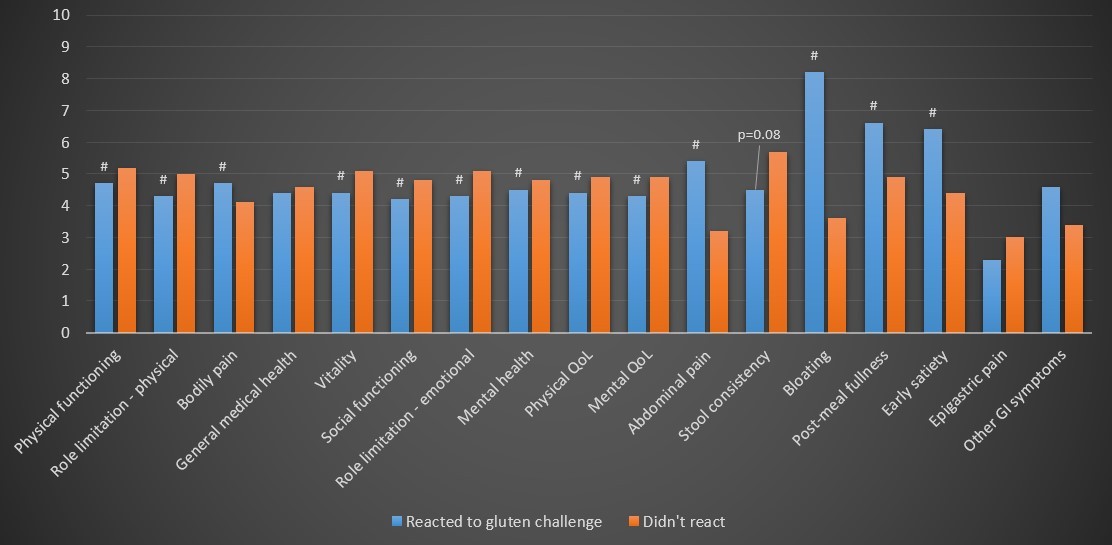
Gluten is the main structural protein of wheat and related cereal grains. The two best-known diseases related to gluten exposure are a wheat allergy and celiac disease. In both conditions the reaction to gluten is mediated by T-cell activation (adaptive immunity) in the gastrointestinal mucosa. However, a wheat allergy is defined by the IgE-gluten interaction that triggers a release of chemical mediators, such as histamine, whereas celiac disease is defined by an autoimmune response to gluten exposure. It is now recognized that non-celiac gluten sensitivity (NCGS) represents a third disease in which neither allergic nor autoimmune mechanisms are involved. The problem is that the NCGS clinical picture is heterogeneous and not specific, including intestinal (diarrhea, constipation, bloating, nausea, and epigastric pain) and extra-intestinal (lack of well-being, anxiety, tiredness, fibromyalgia, chronic fatigue, foggy mind, and headache) symptoms. Indeed, the exclusion of celiac disease or a wheat allergy and a favorable response to a...

Continue reading
  4431 Hits

Awhey with sarcopenia

Awhey with sarcopenia

I have written many articles covering research that investigates the effects of nutrition and exercise interventions on muscle growth, with some specifically addressing the elderly population. In these latter studies, it has been shown that low-intensity resistance training maintains anabolic signaling in skeletal muscle and leads to increases in muscle mass, and that adding even a meager 25 grams of whey protein to the diet can increase lean body mass without any other intervention. But these above referenced studies only manipulated one thing at a time, and neither of them were performed in an elderly population suffering from sarcopenia – which is a group that needs muscle-building interventions more than anything. Thankfully, we have the work of Rondanelli et al that puts these puzzle pieces together in a recent randomized, double-blind, placebo-controlled supplementation trial. Specifically, 130 DXA-confirmed sarcopenic elderly men and women admitted to the geriatric physical medicine and rehabilitation division...

Continue reading
  3129 Hits

The causal role of breakfast in obesity

The causal role of breakfast in obesity


Effective fat loss strategies are necessary for individuals with obesity and other conditions in which excessive fat tissue may pose a health risk. One commonly recommended strategy is to eat breakfast, and there has been a tremendous amount of research investigating the effects of eating various types of breakfasts on satiety, metabolism, and health. Yet, there has also been an increasing number of studies showing that breakfast is not king. For instance, in August of 2014, David Levitsky from Cornell University published an editorial where he rightly pointed out that breakfast is the most important meal of the day only if you are selling breakfast cereals. This editorial was spurred in part by research examining the effects of breakfast consumption or omission on all components of energy balance and health in lean men and women over the course of six weeks. The results of which showed that there are no metabolic...

Continue reading
  2106 Hits

Chewing gum, the next best dieting aid?

Chewing gum, the next best dieting aid?


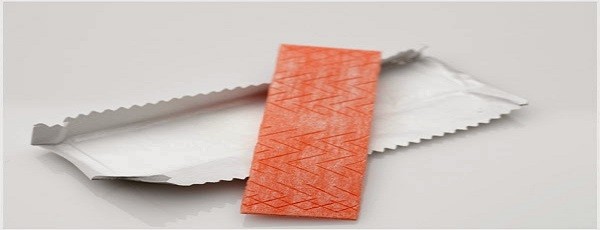
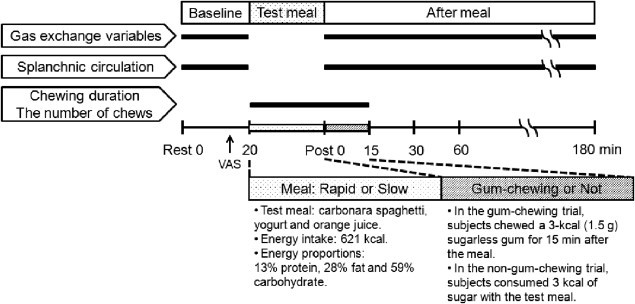
I would never have guessed that chewing a piece of sugar-free gum after eating could boost diet-induced thermogenesis (DIT) and fat oxidation. I’m of course talking about the 25-50% increase in DIT observed in a small group of healthy men from Hamada et al’s latest study in the journal Obesity. These researchers recruited 12 healthy, normal-weight young men and had them complete four experimental trials in a randomized crossover design (figure 1). Each trial involved 20 minutes of baseline measurements (gas-exchange variables, splanchnic circulation, and blood samples), followed by consuming a test meal as rapidly or slowly as possible, and completed with 180 minutes of post-meal measurements. Additionally, for 15 minutes after finishing the test meal, 3 kcal of sugar-free gum was chewed or 3 kcal of sugar was consumed. Accordingly, the four trials were rapid-eating with gum (RG), rapid-eating without gum (RN), slow-eating with gum (SG), and slow-eating without gum...

Continue reading
  4632 Hits

The satiety effect: protein > carbs > fats

The satiety effect: protein > carbs > fats


It’s common knowledge that protein is the most satiating macronutrient, and there is bountiful research to support this conclusion. Yet, most all of this research has one major caveat: the content of two macronutrients is varied while the third is held constant. After all, you can’t change the protein content of a meal without changing its fat or carbohydrate content, at least not if you want calories to remain equal. The problem with this approach is that is prevents definitive conclusions about what caused what. Was it the increase in protein that reduced appetite, or was it the simultaneous reduction in carbohydrates or fats? We can of course make sound conclusions based on the literature as a whole, which is how we arrived at our current belief that protein is the most satiating macronutrient. But the keystone study that shows without a doubt that protein is king when you want to...

Continue reading
  3427 Hits

Weight regain may not depend on the rate of weight loss

Weight regain may not depend on the rate of weight loss


There are many strongly held views on obesity, some of which persist in the absence of scientific evidence to support them (presumptions), and some that are believed despite evidence to contradict them (myths). One of these views is that rapid weight loss is not sustainable and increases the likelihood of regaining all the lost weight. Whether this presumption should be classified as a myth was recently investigated by Vink et al from Maastricht University Medical Centre, The Netherlands. These researchers recruited 57 weight-stable, overweight-obese (BMI of 28-35) but otherwise healthy, middle-aged Caucasian men and women to undergo a three-phase intervention (figure 1). The first phase was the weight loss (WL) phase, whereby participants were randomly assigned to either the low calorie diet (LCD; slow weight loss) or very-low calorie diet (VLCD; rapid weight loss) group, both of which aimed for a weight loss of about 10% starting bodyweight. Accordingly, the WL...

Continue reading
  3004 Hits

Splurge on fruit or nuts? For 2 months? Nothing happens

Splurge on fruit or nuts? For 2 months? Nothing happens


  Eat your fruits and vegetables. We have all heard this saying before, and fruit consumption has long been advocated as a nutrient source full of vitamins, fiber, and antioxidants. One the other hand, there are health circles that caution against consuming excessive fruit because of its high sugar content, especially fructose. Similarly, nuts are regarded as an excellent source of “healthy” fats, minerals, and fiber among some, and a harmful brew of anti-nutrients and “bad” fats (referring exclusively to linoleic acid) by others. The question remains, what actually happens when healthy individuals drastically increase their consumption of either. We can argue back and forth about the hypothetical outcomes all we want and never make progress, which is why Agebratt et al recruited 30 university students to supplement their diets with 7 kcal per kg of bodyweight of fruit or nuts every day for 2 months. Blood samples, nutritional intake, activity...

Continue reading
  5016 Hits

Eat first, share later: the foraging habits of Hadza hunter-gatherers

Eat first, share later: the foraging habits of Hadza hunter-gatherers


Consider all the paleontological research that gives us insight into the diets of our hunter-gatherer ancestors. When you combine this with research about the diets of contemporary hunter-gatherers, an ugly picture of inconsistencies begins to show that basically states each tribe had their own diet, both in terms of food selection and macronutrient distribution. Accordingly, it has become commonplace to state that there is no single paleo diet. Regardless, commonalities do exist. For instance, nearly three-fourths of the worldwide hunter-gatherer population derive over half of their subsistence from animal foods (hunted and fished), whereas only 13.5% of worldwide hunter-gatherers derived more than half of their subsistence from gathered plant foods. This led to estimated macronutrient intakes of 20-40 % protein, 20-40 % carbohydrates, and 25-50 % fat. Now what if I told you that these numbers and our current understanding of hunter-gatherer diets is bullshit. Because it is, and we now...

Continue reading
  10110 Hits
SHR Logo

Super Human Radio is the world's longest running broadcast dedicated to health, fitness & anti-aging with an emphasis on exercise, nutrition, and hormone management. This one of the most progressive podcasts for preventative & regenerative techniques designed to increase longevity. More

2908 Brownsboro Rd Ste 103
Louisville, Kentucky 40206

(502)-690-2200

SHR Logo

Super Human Radio is the world's longest running broadcast dedicated to fitness, health, and anti-aging with emphasis on exercise, nutrition, and hormone management. The most progressive source of information for preventative & regenerative techniques... More

2908 Brownsboro Rd Ste 103
Louisville, Kentucky 40206
United States of America

+1 502-690-2200