
• +1 502-690-2200
  • This email address is being protected from spambots. You need JavaScript enabled to view it.

Casual Friday

CDC Whistleblower Exposes Higher Vaccine-Related Autism Risks in African Americans Prompts Open Letter From Bobby Kennedy Jr.

CDC  Whistleblower Exposes Higher Vaccine-Related Autism Risks in African Americans Prompts Open Letter From Bobby Kennedy Jr.

Last August, CDC senior scientist, Dr. William Thompson, invoked federal whistleblower status and confessed that the CDC has known since 2001 that black boys exposed to the MMR vaccine have a disproportionate risk of autism. Thompson, a 17 year CDC veteran is the author of some of the leading studies cited by CDC to exculpate vaccines from the autism epidemic. Thompson, who still works at CDC, released the raw data sets that he says his bosses at CDC ordered him to conceal. Those data show that black boys who received the MMR vaccine prior to three years old, as the CDC recommends – were 3.36 times more likely to receive an autism diagnosis than those who received the vaccine after 3 years of age. This effect was not observed in other race categories. Nevertheless, when the CDC scientists published their results in Pediatrics in 2004, they omitted the damaging data, fraudulently...

Continue reading
  2634 Hits

Paleo in practice – a review of the research

Paleo in practice – a review of the research
Summary of dietary macronutrients
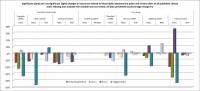
Summary of changes in weight and blood pressure.
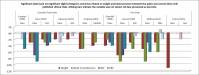
Summary of changes in blood glucose regulation
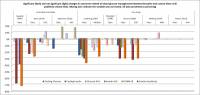
Summary of changes in blood lipids.

Let there be no ambiguity, I do not agree with every aspect of the paleo diet. But this does not mean that I am against it. I believe that the paleo diet lays out very simple guidelines that virtually any person can follow with ease, and this in turn serves as an excellent starting point – “blank slate” or “template” if you will – from which a person can experiment and find what works best for their individuality. There is certainly no shortage of anecdotal testimonials to support the notion that “switching to” a paleo diet benefits health and wellbeing, but many of the claims are incredibly hyperbolic and there is literally no way for anyone to know if this was owed to the paleo diet, per se. This is why research exists – to build and organize knowledge in the form of testable explanations and predictions. So what can we...

Continue reading
  3402 Hits

Thou shalt not propagate fallacious arguments

If there were ever a place Where fallacies abound The internet Is that playground A logical fallacy occurs when someone argues with flawed reasoning. On the surface the arguments appear sound and many fallacies are very subtle in their presentation. It is important to avoid them in our own arguments, and it is important to be able to spot them in others’ arguments so that we are not fooled by flawed logic. Fallacious reasoning keeps us from knowing the truth, and the inability to think critically makes us vulnerable to manipulation by those skilled in the art of rhetoric. Logical FallacyDefinitionExampleAd hominemAttacking the opponent directly rather than their premise. You are an idiot, therefore you are wrong. Note that a conclusion is being drawn from the statement “you are an idiot,” and simply saying “you are an idiot” without a conclusion is not an ad hominem, it is merely an insult....

Continue reading
  1581 Hits

Better to fast than to eat a crappy breakfast

Better to fast than to eat a crappy breakfast


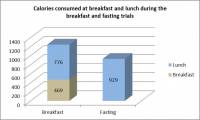
Breakfast has long been hailed the most important meal of the day, and a temendous amount of research has been conducted to compare breakfasts of varied quantity or composition. However, recent evidence does indeed suggest that this meal is overrated. As David Levitsky from Cornell University puts it, “Myths abound in nutrition. Many, like the consumption of breakfast, are driven by powerful commercial interests. In the current environment in which the major nutritional problem we face is the increasing prevalence of obesity, we, as nutrition scientists, must consider the possible harm we are doing by perpetuating myths such as the value of consuming breakfast. Surely, eating breakfast adds to the quality of nutrients consumed, but breakfast foods can be eaten at lunch or dinner as well.” This isn’t to say that breakfast is bad, although that argument could be made if you look at what most Americans are eating for breakfast, but...

Continue reading
  2402 Hits

Super Human Roundup: Heart disease special – a look the impact of eating more vegetables, less saturated fat, more vitamin C, and almonds

Eating more veggies doesn’t help those at risk for heart attacks. It is probably one of the most ubiquitous nutrition recommendations in existence – eat more vegetables. Only recently have researchers from Ireland actually put this to the test in overweight-obese men and women. All 89 of the participants were habitual low-veggie consumers with no outstanding medical history other than a blood lipid panel that put them at a high risk for heart disease. Over a 4-week run-in period, all participants consumed <2 servings of vegetables per day (1 serving = 80g), after which they were randomly allocated to consume 2, 4, or 7 portions per day for the following 12 weeks. There were literally no changes in any outcome, including body composition, blood lipids, blood pressure, or C-reactive protein. Reducing saturated fat consumption may reduce the risk of having a heart attack, but it won’t protect you from dying from...

Continue reading
  1978 Hits

More exercise is better when it comes to diabetes, but how do you make it a habit?

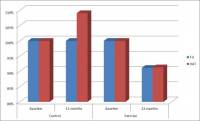
Changes in the Fatty Liver Index (FLI) and Visceral Adipose Tissue (VAT) over 12-months

The International Diabetes Federation estimated that over 8.3% of the adult population had type-2 diabetes (T2D) in 2013, with nearly half of them being undiagnosed. Moreover, they estimated that T2D was responsible for 5.1 million deaths, or 8.4% of the global all-cause mortality. In Europe the percentage of all deaths that were attributable to T2D was even higher at 10.2%, and in North America it rose further still to 13.5%. Clearly T2D is taking its toll on our Western population. One potential reason for the increased mortality is poor lifestyle management of the condition. Of the many complications related to T2D, excessive visceral fat (VAT) and nonalcoholic fatty liver disease (NAFLD) are two of the worst. Given the etiology of T2D is commonly related to excessive caloric intake coupled with inactivity, it should come as no surprise that the most effective treatment for T2D is weight loss through diet and exercise....

Continue reading
  1817 Hits

Super Human Roundup: Weight loss programs, frequent self-weighing, and cholesterol differences among men and women; we are not the same

Super Human Roundup: Weight loss programs, frequent self-weighing, and cholesterol differences among men and women; we are not the same

Should weight loss and maintenance programs be designed differently for men?

In the recently published systematic review from the journal Obesity Research & Clinical practice, Clare Robertson and colleagues sought to answer this very question. They included 22 randomized controlled trials of obese men and women where outcome data was presented separately by sex in each trial and had a duration and/or follow-up of at least one year. The majority of trials considered interventions for weight loss, rather than weight loss maintenance, but none were designed to directly address the research question: do men and women respond differently to weight loss interventions?

Continue reading
  1975 Hits

Eggs & diabetes – where do we stand?

Eggs & diabetes – where do we stand?
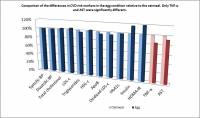
Comparison of the differences in CVD risk markers for the egg and oatmeal conditions. Only TNF-alpha and AST were significantly different.

The American Diabetes Association (ADA) recommends that individuals with type-2 diabetes (T2D) limit their cholesterol intake to less than 300 mg per day. A single large egg contains about 200 mg. Their rationale is that there is limited research regarding optimal dietary cholesterol intake, and go on to reference the Nurses' Health Study that found a 37% increase in cardiovascular disease (CVD) risk in women for every 200 mg of cholesterol per 1000 kcal consumed. Two meta-analyses appear to support this recommendation; one showed that individuals with T2D who ate eggs more than once per day were 69% more likely to develop CVD comorbidity than those who ate eggs less than once per week, while the other showed that, for each 4/week increment in egg intake, the risk of CVD increased by 40%. Pretty scary stuff, isn’t it? At the same time, oatmeal is recognized as a “heart-healthy” food and has...

Continue reading
  2449 Hits

Super Human Roundup: Protein and fish oil for the old, apples and oatmeal for the young, and 3 eggs or nothing because 1.5 doesn’t cut it

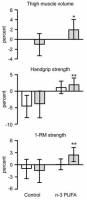
Changes in thigh muscle volume, handgrip strength, and 1-RM muscle strength in the n-3 PUFA and control groups.
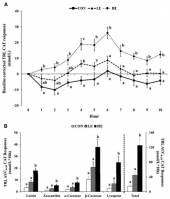
Total carotenoid content of the blood lipoproteins  for the ten hours after eating a salad (control) with 1.5 eggs (LE) or 3 eggs (HE).

Every day new research is published and the unfortunate truth is that it would be impossible for me to write an article on everything I come across. Plus, in all fairness, not every study deserves a full article. Therefore, I decided to write a weekly Super Human Roundup series that briefly touches on some of the research I can’t or don’t want to address in length. This way you don’t miss out on anything that may interest you. Sahni et al. from Harvard Medical School was interested in understanding the role of dietary protein on muscle mass and strength in older adults. They looked at data on over 2600 men and women from the Framingham Offspring Study who had valid dietary assessments and measurements of quadriceps strength and body composition (DXA). The subjects averaged 60 years of age and statistical adjustments were made for age, height, total energy intake, physical activity,...

Continue reading
  1893 Hits

Fish oil for fatty liver?

Fish oil for fatty liver?
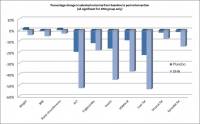
Percentage change from baseline to post-intervention in selected outcomes (all significant in the DHA group only)

Nonalcoholic fatty liver disease (NAFLD) is exactly what its name says – the abnormal accumulation of fat within the liver (steatosis for the nerds like me) from causes other than alcohol. The more severe form of NAFLD is called non-alcoholic steatohepatitis (NASH; literally “fatty inflammation”), which can eventually progress to cirrhosis, permanent liver damage, and cancer. Nonetheless, even simple NAFLD can cause widespread metabolic problems within the body, which should be no surprise considering the tremendous role the liver plays in detoxifying the body and managing nutrients. Anyway, NAFLD prevalence has been increasing over the past few decades and is currently estimated to be around 30% in the U.S. population, with causes ranging from excessive caloric intake and muscular insulin resistance to genetic abnormalities. We can’t really do anything about the genetics, but it is no coincidence that the only tried and true methods for reducing liver fat include weight loss...

Continue reading
  3238 Hits
SHR Logo

Super Human Radio is the world's longest running broadcast dedicated to health, fitness & anti-aging with an emphasis on exercise, nutrition, and hormone management. This one of the most progressive podcasts for preventative & regenerative techniques designed to increase longevity. More

2908 Brownsboro Rd Ste 103
Louisville, Kentucky 40206

(502)-690-2200

SHR Logo

Super Human Radio is the world's longest running broadcast dedicated to fitness, health, and anti-aging with emphasis on exercise, nutrition, and hormone management. The most progressive source of information for preventative & regenerative techniques... More

2908 Brownsboro Rd Ste 103
Louisville, Kentucky 40206
United States of America

+1 502-690-2200