• +1 502-690-2200
  • This email address is being protected from spambots. You need JavaScript enabled to view it.

Casual Friday

To peanut or not to peanut?

To peanut or not to peanut?

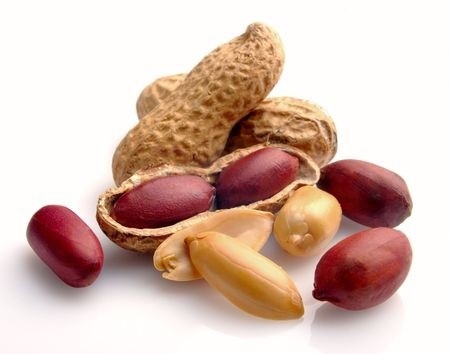
A question that I am frequently asked is whether peanuts are “okay” or “safe” to eat. The question usually stems from someone who enjoys peanut butter (and there is no replacement, let’s be honest) but has read a lot of conflicting information on the internet and doesn’t know what to think. The idea that peanuts are unhealthy for those without a peanut allergy stems from the canonical paleo diet concept that legumes should be avoided because (1) they aren’t part of our ancestral diet, and (2) they contain toxic anti-nutrients such as lectins and phytic acid.

I’m not going to spend time debating the legume issue because I personally don’t find it very relevant. To me it is a red herring that is brought up by individuals who don’t have an answer specific to peanuts. Moreover, it is a vast overgeneralization to say that one particular legume is unhealthy because some may be harmful. This idea is easily illustrated with simple reduction ad absurdum. If peanuts are unhealthy because they are a legume and some legumes may be harmful, then it would be equally as valid to claim that olive oil is unhealthy because it is a fat and some fats (e.g. trans-fats) may be harmful. Similarly, perhaps we should avoid eating mushrooms altogether because there are some toxic varieties.


Continue reading
  7531 Hits

Another reason your kid shouldn’t be fat – blood lipids

Another reason your kid shouldn’t be fat – blood lipids

The sad truth is that even our young – our children – can and do develop atherosclerosis. Cardiovascular disease (CVD) risk may be related to the degree of overweight-obesity, and cross-sectional research has provided preliminary insights into the links between blood lipid concentrations, physical activity (PA), cardiorespiratory fitness (CRF), and adiposity. However, cross-sectional data is also intrinsically limited by the fact that it is a snapshot of a single point in time comparing multiple groups on whatever the variable of interest is. Conversely, longitudinal data is collected over a period of time from the same cohort of subjects so as to detect changes in variables of interest.

Continue reading
  3569 Hits

Animals – a central piece to the food security and agricultural sustainability puzzle

Animals – a central piece to the food security and agricultural sustainability puzzle

Recently, Lawrence Reynolds of North Dakota State University published an editorial in The Journal of Nutrition in which attention was brought to the challenges associated with feeding the world’s rapidly expanding population. Reynolds writing was a response to a viewpoint put forth late last year by Donald Kennedy of Stanford University, who correctly pointed out that only through agricultural innovation and increased efficiency of food production can we hope to feed a population that is expected to reach nine billion by 2050.

Continue reading
  3277 Hits

Could the Therapy For Atherosclerosis and Heart Attack Come With a Tan?

Could the Therapy For Atherosclerosis and Heart Attack Come With a Tan?

Heart Disease is the leading cause of death in America. The sun-tanning peptide Melanotan II may be the next big drug therapy breakthrough to fight Atherosclerosis, Heart Attack and Chronic Inflammation  Activation of the Melanocortin system appears to help reduce inflammation in arteries and blood vessels that influences the buildup of plaques and stiffness one study showed. When mice prone to developing Atherosclerosis were give Melanotan II for 4 weeks the therapy showed a marked reduction in the buildup of new plaques and reduced systemic markers of inflammation as compared to controls which were given the vehicle only. While this study did not show a reduction in the size of existing plaque lesions it did also show enhanced endothelium-dependant relaxation and improved vascular sensitivity to nitric oxide's effects. Another study looked at the effects of Melanotan II on post-ischemic recovery of the heart after a myocardial infarction and showed some amazing...

Continue reading
  5641 Hits

Bone Broth In A Hurry Alternative

bone broth alternative

We’ve all heard the benefits of eating bone broth. But there may come a time when you want a cup but don’t have the time to prepare it. Here’s a down and dirty alternative that takes minutes to make and you can even make a single serving! You’ll need to have two things on hand. A quart of Low Sodium Organic Chicken Stock and a canister of Great Lakes Collagen Hydrolysate Protein Powder. Easy stuff next. Warm a serving of Organic Chicken Stock however you like. Stove top or microwave. Once it’s very hot add 2 to 4 tablespoons of Collagen Hydrolysate depending upon how much protein you want. It’s approximately 6 grams of protein per rounded tablespoon. Stir well and done. I know the bone broth aficionados will complain that this is not the same thing as real bone broth and I agree. But hey.. Sometimes you have to make...

Continue reading

Copyright

© Super Human Radio

  2624 Hits

Preliminary research confirms that alternate day fasting for weight loss is safe and effective

Preliminary research confirms that alternate day fasting for weight loss is safe and effective

Fasting can take a variety of forms. One such is alternate day fasting (ADF) in which individuals do exactly as the name states, alternate fasting and feeding days. Although this originally encompassed not eating for the entire day and creating a roughly 36 hour fast from dinner one night to breakfast two days after, a more prudent version involves only fasting until dinner the following day, about 24 hours. This form of ADF has a strong track record for aiding weight loss and reducing cardiometabolic risk in normal-weight and overweight-obese persons alike. However, although compliance in these and other trials has been exceptional with few reported adverse effects, concerns about the safety of ADF have yet to be directly addressed.

Continue reading
  2870 Hits

Cranberry Juice – The Band-Aid for a Horrible Diet

Although we are quite some time away from cranberry season (mid-September to med-November), cardiometabolic diseases such as cardiovascular disease (CVD), type-2 diabetes (T2D), and stroke take lives year-round. The bring this up because a fairly recent review article on cranberries and human health concluded that,

“There is strong experimental evidence that cranberry bioactives have favorable effects on blood pressure, glucose metabolism, lipoprotein profiles, oxidative stress, inflammation, and endothelial function.”

Continue reading
  2180 Hits

How much is too much? A look at the dose-response effects of drinking sugar-sweetened beverages on heart disease risk factors.

There is no shortage of research showing the consumption of added sugars, especially those from sugar-sweetened beverages (SSB), to be detrimental to health. This of course hasn’t stopped Americans, with adults consuming ~14% and children consuming ~16% of their daily calories as added sugars. These average levels of intake correspond to an 18% increased risk of cardiovascular disease (CVD) mortality. But at what point does the CVD risk really take off? Is there a threshold of sugar consumption where detriments start to accumulate exponentially? To help answer these questions, Kimber Stanhope et al. from the University of California, Davis, investigated the effects of consuming different doses of added sugars from SSBs on CVD risk factors of young and otherwise healthy men and women.

Continue reading
  1732 Hits

Is less more? A look at the optimal amount of dietary fat for nutritional ketosis

Ketosis is an interesting physiological state characterized by an excessive reliance on fatty acids as an energy source. Under ketogenic conditions, the liver metabolizes fatty acids into two primary ketones: acetoacetic acid and beta-hydroxybutyric acid. A third type of ketone called acetone is also made through the spontaneous breakdown of acetoacetic acid and easily travels into the lungs to be exhaled, thus giving the classic fruity breath of ketosis.

Continue reading
  2847 Hits

A reminder – being less physically active impairs glucose tolerance

A reminder – being less physically active impairs glucose tolerance

Skeletal muscle is the primary tissue for glucose disposal, which is regulated primarily by insulin. When insulin binds to its receptors on muscle cells, it stimulates the movement of GLUT4 from within the cell to the cell membrane so that glucose may enter and be dealt with accordingly. Interestingly enough, in healthy individuals, insulin also acts upon the endothelial cells of blood vessels as a vasodilator, and insulin-stimulated blood flow has been shown to account for up to 40% of glucose uptake.

Continue reading
  2262 Hits
SHR Logo

Super Human Radio is the world's longest running broadcast dedicated to health, fitness & anti-aging with an emphasis on exercise, nutrition, and hormone management. This one of the most progressive podcasts for preventative & regenerative techniques designed to increase longevity. More

2908 Brownsboro Rd Ste 103
Louisville, Kentucky 40206

(502)-690-2200

SHR Logo

Super Human Radio is the world's longest running broadcast dedicated to fitness, health, and anti-aging with emphasis on exercise, nutrition, and hormone management. The most progressive source of information for preventative & regenerative techniques... More

2908 Brownsboro Rd Ste 103
Louisville, Kentucky 40206
United States of America

+1 502-690-2200